

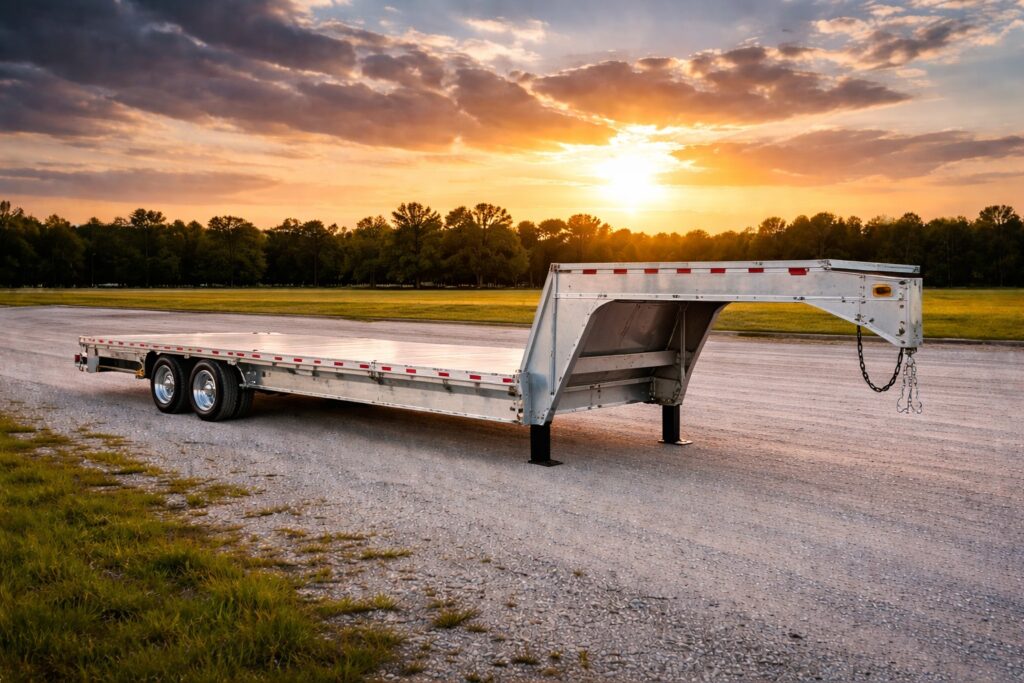
Buying a gooseneck trailer gets easier when you focus on four things first: what you haul, how much it weighs, how often you tow, and what truck you own. The right size is not the biggest trailer on the lot. It is the one that fits your cargo, stays stable on the road, and leaves room for safe loading.
What size gooseneck trailer do I need?
Most buyers should choose trailer size based on cargo length, loaded weight, and truck capacity. A 20 to 25 foot trailer works for compact equipment and light vehicles. A 30 to 35 foot trailer fits larger machines, multiple units, or longer loads. Start with your real-world use, not your wish list.
If you only tow a skid steer, small tractor, or one car, a shorter trailer usually makes more sense. It costs less, turns easier, and stores more easily. If you haul hay, multiple ATVs, a larger tractor, or long materials, you may need more deck length and more axles.
Here is a simple way to think about common sizes:
| Trailer size | Best for | Main advantage |
|---|---|---|
| 20 to 25 ft | Small equipment, one vehicle, light farm work | Easier turning and parking |
| 26 to 30 ft | Medium tractors, cars, UTVs, mixed loads | Good balance of space and control |
| 32 to 35 ft | Larger equipment, multiple machines, long freight | More deck room and flexibility |
| 40+ ft | Commercial hauling, heavy or oversized setups | Maximum capacity and load options |
Why does cargo type matter more than trailer length alone?
The right trailer size depends on shape and weight, not just overall length. A compact but heavy machine may need a stronger trailer with more axles, even if it fits on a short deck. A long but lighter load may need extra length more than extra rating.
This is where many buyers get it wrong. They measure only the footprint of the load and ignore ramps, tongue weight, securement space, and loading angle. Your machine may technically fit, but you still need room to balance weight over the axles and secure it correctly.
Think about these cargo questions before you buy:
- Do you haul equipment, vehicles, hay, lumber, or mixed loads?
- Do you need ramps, dovetail space, or a flat full deck?
- Will you load from the rear only, or also from the side?
- Do you need room for attachments, buckets, or implements?
- Will your cargo grow in size over the next year?
How do I match trailer capacity to my load?
Choose a trailer with enough GVWR and payload for your heaviest real load, plus a safety margin. Do not shop by empty trailer weight alone. Look at the combined weight of cargo, fuel, attachments, chains, and anything else you load on the deck.
A simple buying mistake happens when someone buys for today’s average load instead of tomorrow’s heaviest job. That trailer may work for a while, but it limits your jobs and pushes you too close to the edge.
Use this checklist:
- Find the weight of your heaviest machine or cargo.
- Add attachments, fuel, tools, and securement gear.
- Compare that number to trailer payload, not just GVWR.
- Make sure your truck can tow and stop that load safely.
How does axle count affect the size I should choose?
Axle count affects carrying ability, stability, tire wear, and ride quality. Tandem axle goosenecks work well for many common jobs. Triple axle trailers can help with heavier loads and longer decks, but they can cost more and scrub tires more in tight turns.
Axles and deck length work together. A longer trailer with too little axle support may not carry weight well. A heavy-duty short trailer may carry dense cargo very well, but it may not fit longer equipment.
Here is a quick guide:
| Setup | Good for | Watch out for |
|---|---|---|
| Tandem axle | Light to medium loads, general use | Less margin for very heavy work |
| Triple axle | Heavy equipment, longer trailers | Higher cost and tighter-turn tire scrub |
How important is my truck when choosing a gooseneck trailer?
Your truck matters just as much as the trailer. The right gooseneck size must match your truck’s towing capacity, payload, bed setup, hitch rating, brakes, and wheelbase. A bigger trailer does not help if your truck cannot control it safely.
Many people shop for the trailer first and the truck second. That can get expensive fast. Your truck determines how much trailer you can actually use. A one-ton truck may handle jobs that would overwhelm a lighter pickup, especially when hauling heavy equipment or navigating steep terrain.
Check these truck-side items:
- Max tow rating
- Payload rating
- Gooseneck hitch rating
- Rear axle rating
- Brake controller setup
- Tire condition and load range
Should I choose a wider or longer deck?
Choose deck width and deck style based on what you load most often. Standard widths work well for many machines and vehicles. Wider decks help when you haul broad equipment, but they may add cost and make daily use less convenient.
Length helps with flexibility. Width helps with fit. If your load barely clears the fenders or sits awkwardly on the deck, loading becomes stressful. If your load is narrow but long, more deck length matters more than extra width.
Common examples:
- Cars and pickups often need balanced deck length and gentle loading angles
- Compact tractors may fit well on mid-length decks with equipment ramps
- Larger tractors and construction equipment often need more deck space and higher ratings
- Hay, pipe, or long material may push you toward a longer trailer even if the load is not very heavy
What mistakes should I avoid when picking a gooseneck trailer size?
The biggest mistakes include buying too small, buying too big, ignoring truck limits, and forgetting how the trailer will get used day to day. A trailer should make work easier, not harder to load, store, insure, and maneuver.
Avoid these common mistakes:
- Buying only by price
- Looking at deck length but ignoring payload
- Forgetting attachments and securement gear
- Choosing a long trailer that is hard to park at home or on job sites
- Ignoring ramp angle and load balance
- Failing to check state rules for weight, brakes, and registration
How can I choose the right gooseneck trailer size with confidence?
Start with your heaviest normal load, then choose deck length, width, and axle setup around that job. Match the trailer to your truck, not just your budget. Leave room for safe loading and future growth, but do not pay for capacity you will never use.
A smart buyer thinks in terms of jobs, not specs alone. If you haul one kind of load every week, buy for that reality. If your work changes often, choose a more flexible size that gives you room to grow without making daily towing a headache.
FAQ
What is the best gooseneck trailer size for a tractor?
The best size depends on the tractor’s length, width, and weight. Many compact and mid-size tractors fit well on 20 to 30-foot goosenecks. Larger farm tractors may need a longer and heavier-rated trailer, especially if you haul attachments too.
Is a 30-foot gooseneck trailer enough?
A 30-foot gooseneck trailer is enough for many buyers. It often gives a strong balance between deck space, maneuverability, and hauling flexibility. It works well for cars, UTVs, compact equipment, and some medium tractors.
Should I buy a tandem or triple axle gooseneck trailer?
Choose tandem axles for general use and moderate loads. Choose triple axles when you haul heavier equipment or want a longer deck with more support. Make sure your truck, tires, and braking setup match that heavier trailer.
How much extra capacity should I leave?
Leave a reasonable safety margin above your normal heaviest load. That helps with attachments, tools, future needs, and safer towing. Shopping too close to the limit usually creates problems later.