

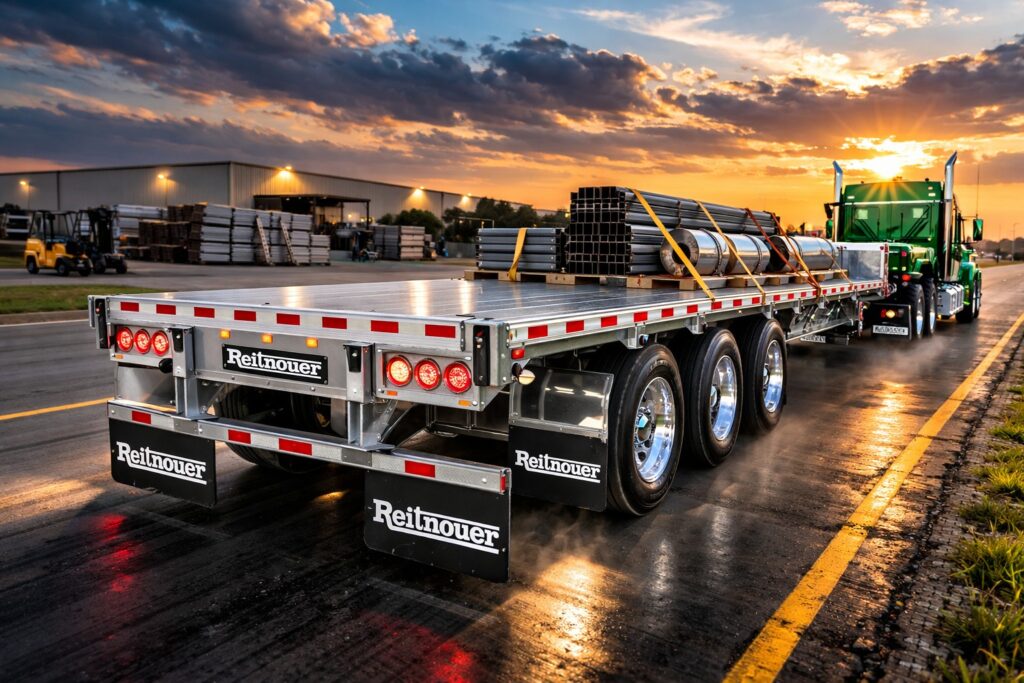
If you haul flatbed or drop-deck freight, Reitnouer usually stands out for three reasons: low weight, strong aluminum construction, and easier long-term maintenance. Other brands still compete well, especially when you want combo or steel-heavy builds, different securement options, or a dealer network that fits your lane and shop relationships.
How do Reitnouer trailers compare at a glance?
Reitnouer trailers compete best on payload-minded aluminum design, corrosion resistance, and repair-friendly construction. Competing brands such as Wilson, Fontaine, and MAC also offer strong options, but many of their best-known comparisons include combo or steel-focused models that trade some weight savings for different durability or spec priorities.
Here is the simple version:
| Brand | Main strength | Best fit |
|---|---|---|
| Reitnouer | Lightweight aluminum focus, easy maintenance, strong payload logic | Owner-operators and fleets that want more cargo capacity and long service life |
| Wilson | Strong all-aluminum options plus combo choices | Buyers who want premium aluminum builds or a mix of weight savings and ruggedness |
| Fontaine | Wide mix of aluminum and combo designs with practical repair features | Fleets that want flexible specs and proven combo trailer options |
| MAC Trailer | Broad flatbed lineup with multi-axle and varied beam ratings | Heavy-duty buyers who want many configuration choices |
This is why Reitnouer gets compared so often. The company positions itself around stronger, lighter, more durable trailers with a long-life design.
Why do many owner-operators choose Reitnouer?
Many owner-operators choose Reitnouer because every pound saved on trailer weight can turn into more legal payload. Reitnouer also leans hard into corrosion resistance, easy parts replacement, and strong concentrated load ratings on models like the MaxMiser and Big Bubba.
That matters in real trucking. A lighter trailer can help when you haul dense freight, machinery, coils, building products, or mixed flatbed loads where gross weight limits come into play. Reitnouer promotes certain models as lighter than comparably equipped combo trailers, which can carry more payload.
Reitnouer also pushes repairability. The company says many aluminum components are precision-punched for easy and inexpensive replacement. That speaks directly to uptime, especially for fleets that cannot let a trailer sit in the yard while waiting for complicated repairs.
On the performance side, the MaxMiser is known for its strong GVWR and concentrated-load capability. Big Bubba is positioned for some of the highest concentrated load ratings in the aluminum flatbed category.
Where do other trailer brands compete well?
Other trailer brands compete well when the buyer wants a different build philosophy. Some brands lean into combo construction, steel main beams, rugged rear structures, or custom spec flexibility instead of chasing the lightest all-aluminum setup.
Wilson is a strong example. Its flatbed and drop deck lines include all-aluminum options, but it also offers combo construction for buyers who want a one-piece steel main beam plus meaningful weight savings.
Fontaine covers both sides, too. Its combo trailers use steel main beams and aluminum in key areas. Its aluminum line also includes practical details like bolt-on parts and sliding winch tracks for easier securement and repair.
MAC Trailer fits buyers who care about lineup depth. Its flatbeds come in multi-axle configurations and varied beam ratings, which appeals to operators who haul both evenly distributed and heavily concentrated loads.
Are Reitnouer trailers better for payload?
Yes, in many flatbed applications, Reitnouer has a strong payload argument. Its all-aluminum focus and lighter trailer weights can help carriers haul more legal cargo, especially when they compare those specs to combo trailers with more steel.
That does not mean Reitnouer wins every buying decision. A trailer purchase should match freight, routes, loading style, shop support, and resale expectations. But if your first question is, “How do I maximize payload without giving up strength?” Reitnouer deserves a serious look.
Quick strengths of Reitnouer
- Lower trailer weight in key models and product families
- Strong aluminum engineering for long service life
- Repair-friendly parts strategy
- Strong concentrated load options in models like MaxMiser and Big Bubba
- Dealer coverage across North America
Which trailer brand makes the most sense for heavy-duty work?
The right brand depends on what “heavy-duty” means in your operation. Reitnouer fits weight-sensitive heavy hauling well. Combo and steel-focused brands can make more sense if your team values steel-heavy architecture, specific beam layouts, or familiarity with brand-specific services.
If you haul machinery, coils, or concentrated loads and still want the benefits of aluminum, Reitnouer offers compelling options. If your fleet prefers steel main beams, combo construction, or a specific dealer relationship, Fontaine, Wilson, and MAC may be a better fit. That is less about one brand being “best” and more about matching trailer design to freight reality.
How should you choose between Reitnouer and other trailer brands?
Start with your freight, then work backward into trailer weight, load concentration, repair needs, and support network. The best trailer is the one that earns more, stays on the road, and fits your securement and loading routine without creating headaches.
Follow this process:
- List your most common loads.
- Check whether the payload or the concentrated load matters more.
- Compare aluminum, combo, and steel construction styles.
- Review securement options, crossmembers, flooring, and beam ratings.
- Confirm repair access, parts support, and dealer coverage.
- Compare total operating value, not just purchase price.
FAQ
Are Reitnouer trailers all aluminum?
Reitnouer is known for aluminum flatbed and drop deck trailers, though some models use steel in specific areas where that improves strength, such as the steel gooseneck design on some drop decks.
Do Reitnouer trailers carry heavy concentrated loads well?
Yes. Models like MaxMiser and Big Bubba are built for strong, concentrated-load performance, and Big Bubba is often cited as one of the stronger options in aluminum flatbeds for concentrated freight.
What is the main advantage of Reitnouer over combo trailers?
The main advantage is a lower trailer weight, which can increase legal payload capacity. Reitnouer also emphasizes corrosion resistance and easier maintenance.
Are other brands still worth considering?
Yes. Wilson, Fontaine, and MAC each offer strong trailer lines with different strengths in all-aluminum, combo, or multi-axle setups. Buyers should choose based on freight type, service support, and preferred build style.