

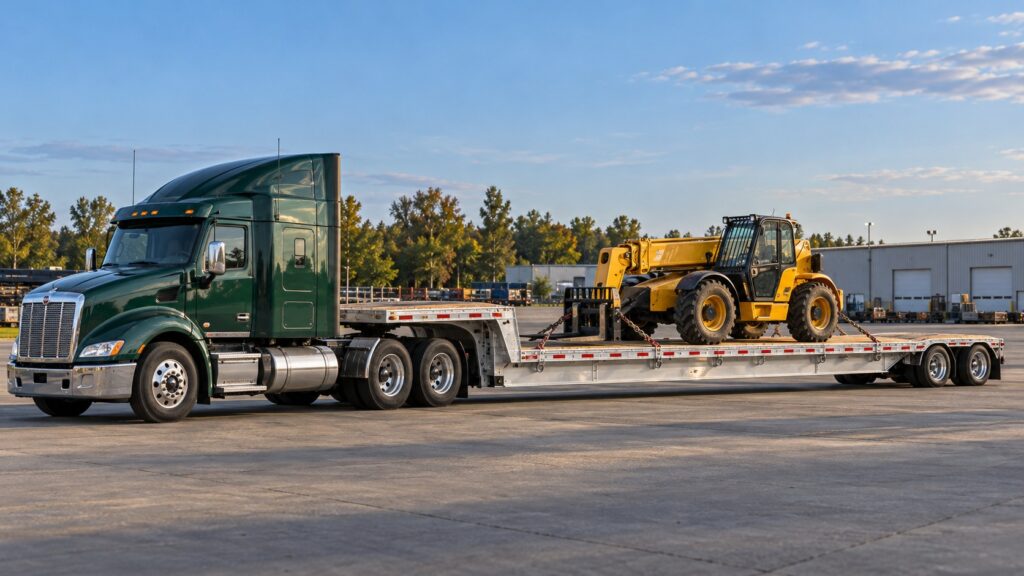
A dropdeck trailer is built for freight that needs more vertical clearance, safer loading angles, and flexible tie-down options. One of the most practical trailer types for machinery, tall cargo, construction materials, and other loads that may be awkward or inefficient on a standard flatbed. For buyers, fleet managers, and owner-operators, knowing where this trailer works best can make equipment transport simpler, safer, and more cost-effective.
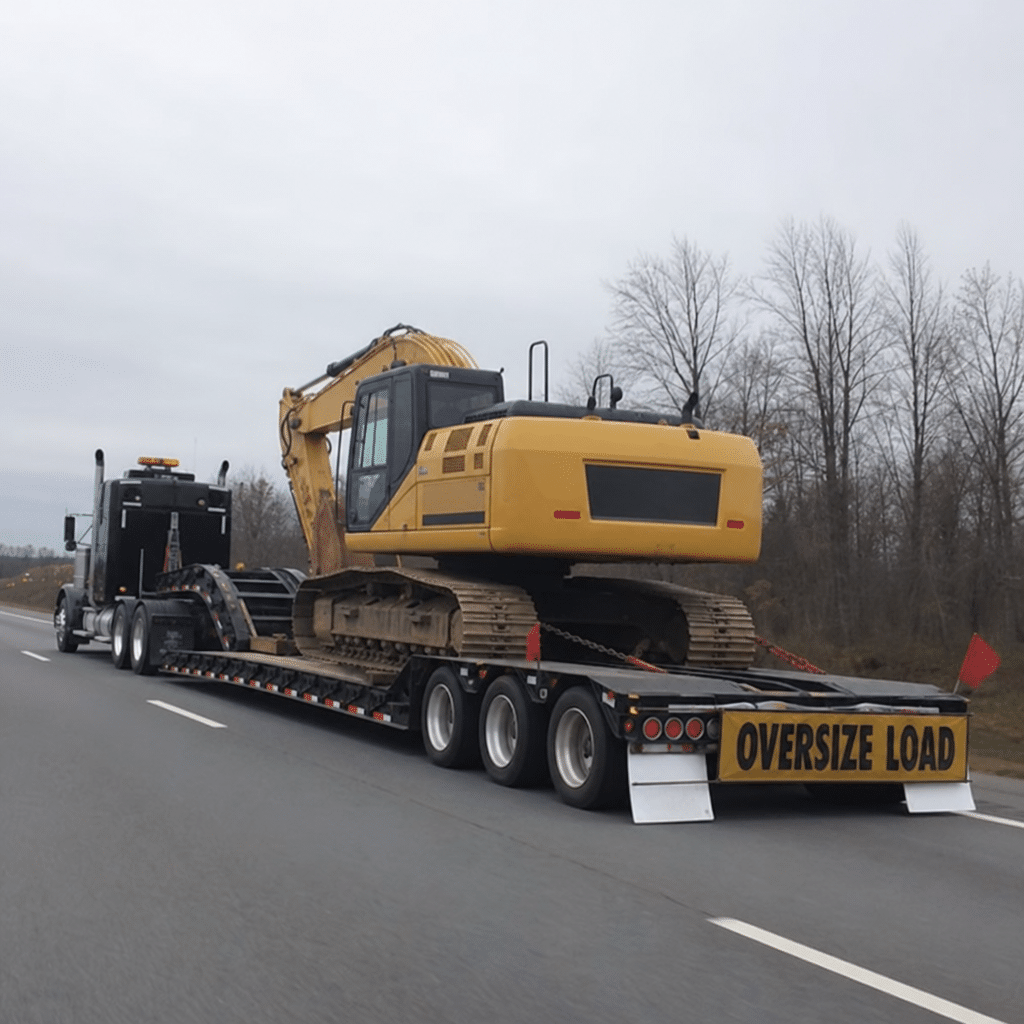
What makes a Drop Deck Trailer different?
A Drop Deck Trailer has two deck levels: a shorter upper deck near the tractor and a longer lower deck behind it. That lower main deck sits closer to the road than a standard flatbed, which adds height room for taller freight. In common hauling language, drop deck and step deck trailer mean the same thing. Some buyers also call it a drop deck semi trailer.
You may also see the spelling dropdeck trailer, but the common industry form is Drop Deck Trailer. The main point is simple: lowering the main deck lets the trailer carry cargo that would otherwise approach or pass legal height limits on a standard flatbed.
This design is especially useful when the freight is tall but not enclosed. Unlike box-style cargo trailers, a Drop Deck Trailer is open, which makes it easier to load from the side, rear, or above. That flexibility matters when cranes, forklifts, ramps, or loading docks are part of the job.
The main advantages for equipment transport
A Drop Deck Trailer earns its place in equipment transport because it solves several real-world hauling problems at once. It can handle taller loads, improve loading access, and give a stable platform for irregular freight. For many haulers, those benefits reduce the need for special handling or more complex routing.
More vertical clearance for taller freight
The biggest advantage is height. Because the lower deck sits closer to the ground, a Drop Deck Trailer can often handle taller cargo than a standard flatbed while still helping the overall load remain within road rules. That makes it a smart choice for equipment such as lifts, loaders, tractors, industrial parts, and oversized crates.
Height matters because going over limits can trigger permits, route limits, bridge-clearance concerns, and extra planning. A Drop Deck Trailer doesn’t eliminate the need to follow regulations but provides more space for shippers to work with.
Easier loading for wheeled or tracked equipment
The lower deck height also improves the loading angle when ramps are used. A softer method can help load forklifts, skid steers, small excavators, and other equipment onto the trailer. This can reduce strain on machines and improve control during loading and unloading.
For freight teams, that ease matters. Time spent fighting steep ramp angles, moving machines, or arranging special lifting gear can slow an entire schedule. A Drop Deck Trailer helps simplify the process when the cargo is a fit for ramp loading.
Flexible access from multiple directions
Open-deck trailers are useful because crews are not limited to a rear door or enclosed interior. A forklift can load a Drop Deck Trailer from the side, a crane can load it from above, or it can be loaded by ramp from the rear when properly equipped. That flexibility makes it easier to match the trailer to the loading site.
This is one reason these trailers work well for construction, agriculture, manufacturing, energy, and heavy service industries. Loads in those settings are not always neat, palletized, or dock-ready. A trailer that can adapt to the cargo and the site is often the better choice.
Common loads that fit a Drop Deck Trailer
A Drop Deck Trailer is not limited to one niche. The low main deck and open layout of this trailer are great for carrying tall, bulky, or awkward freight. The best fit depends on weight, dimensions, securement points, route, and trailer specifications.
Common applications include:
- Construction equipment: skid steers, compact loaders, lifts, attachments, compressors, and site support machinery.
- Agricultural machinery: tractors, implements, sprayers, mowers, and other tall or wide farm equipment.
- Industrial freight: fabricated steel, tanks, generators, machinery bases, and oversized components.
- Building materials: bundled lumber, structural pieces, pipe, precast items, and long materials that need open-deck access.
- Vehicle and specialty hauling: trucks, service bodies, utility equipment, and other cargo that benefits from lower loading height.
The important point is not just whether the cargo physically fits. The load also requires correct securing, proper balancing, and matching to the trailer’s rated capacity. Haulers have options with a Drop Deck Trailer, but they still need to plan carefully.
How does it compare with other trailer types?
A Drop Deck Trailer is best understood by comparing it with other common trailer types. A standard flatbed has one continuous deck, which is useful for many loads but provides less height clearance. Enclosed cargo trailers protect freight from weather and theft, but they limit loading access and interior dimensions. Specialized heavy-haul trailers may carry larger or heavier equipment, but they can add cost and complexity.
Here is a practical comparison:
| Trailer type | Best used for | Key advantage | Main limitation |
|---|---|---|---|
| Standard flatbed | General open-deck freight | Simple, versatile platform | Less vertical clearance |
| Drop Deck Trailer | Tall machinery and oversized freight | Lower main deck for added height capacity | Not enclosed from weather |
| Enclosed cargo trailers | Protected goods and boxed freight | Security and weather protection | Limited side/top loading access |
| Lowboy trailer | Extremely tall or heavy equipment | Extremely low deck height | More specialized and often more complex |
For many hauling situations, the Drop Deck Trailer sits in a useful middle ground. It offers more height flexibility than a flatbed without moving immediately into more specialized heavy-haul equipment. That balance is why it remains a popular option for mixed fleets and equipment-focused operations.
Trailer specifications that matter before you choose
Trailer specifications should guide every decision. A trailer may look right at first glance, but the details determine whether it is safe, compliant, and efficient for the job. Compare the load to the trailer’s size, weight limits, axle setup, deck materials, and safety features before choosing.
Key specifications to review include:
- Deck height and usable deck length The lower deck height affects overall cargo height, while usable deck length determines how much freight can be positioned safely. Check both the upper and lower deck dimensions.
- Gross vehicle weight rating and payload capacity The trailer must be rated to handle the intended cargo after accounting for the trailer’s own weight. Never assume capacity based on appearance alone.
- Axle configuration Axle count and spacing influence weight distribution, legal limits, and ride characteristics. This is especially important for heavy equipment transport.
- Ramp options If you haul drive-on equipment, ramp style, ramp rating, and loading angle are critical. Detachable or built-in ramps should match the machines you plan to load.
- Tie-down points and securement layout Chains, straps, binders, and anchor points must align with the cargo. Proper securement is not optional; it is central to safety.
- Deck material and condition Wood, steel, and combination decks each have different strengths. Inspect for wear, soft spots, corrosion, or damage before committing to a trailer.
A good buying or rental decision starts with the freight, not the trailer. Measure the cargo, verify weight, identify loading requirements, then match those facts to the trailer specifications.
Why businesses value its range
Range is one of the strongest business arguments for a Drop Deck Trailer. A fleet that regularly moves equipment, materials, and unusual freight needs assets that can cover more than one job. This trailer style can handle many of those assignments without being so specialized that it sits idle between projects.
That range can support better scheduling. If one load involves machinery and the next involves tall palletized freight or structural materials, the same trailer may be able to serve both with the right planning. Over time, that can make dispatching simpler and help companies respond to changing freight needs.
The open design also supports faster coordination at job sites. Crews can load from the most convenient direction, use the equipment already available on-site, and secure cargo in visible, easy-to-reach positions. For busy operations, that ease can be just as useful as the extra height clearance.
When is a Drop Deck Trailer the right choice?
A Drop Deck Trailer is the right choice when the load needs open-deck access and extra vertical clearance, but does not need the very low profile of a lowboy or the protection of an enclosed trailer. Especially useful for tall equipment, machinery, and irregular freight that needs flexible loading and strong securement options.
It may not fit every shipment. Weather-sensitive cargo may need tarping or enclosed transport. Extremely heavy, very tall, or highly specialized equipment may require a different setup. Loads that exceed legal size or weight limits may still need permits, escorts, or special routing.
Use this quick checklist before deciding:
- Is the cargo too tall for a standard flatbed?
- Does the freight need side, rear, or overhead loading access?
- Can you properly secure the load on an open deck?
- Do the trailer specifications match the cargo weight and dimensions?
- Is weather protection required, or will tarping be enough?
- Are permits or route checks needed for the loaded height, width, or weight?
If the answers point toward tall, open-deck freight with manageable weight and securement needs, a Drop Deck Trailer is often a strong match.
Finding the right trailer for the job
Choosing the right Drop Deck Trailer comes down to matching real freight requirements with the right equipment. Think beyond the label and focus on deck dimensions, capacity, ramp setup, axle configuration, and tie-down layout. Those details decide whether the trailer will make the job easier or create avoidable complications.
If you are comparing options, browse available step deck trailer inventory and review each unit against the loads you expect to haul. The best choice is the one that fits your cargo, your routes, your loading conditions, and your long-term use.
Final takeaway
A Drop Deck Trailer offers a practical mix of height clearance, loading flexibility, and open-deck use. A strong option for equipment transport, construction freight, agricultural machinery, industrial components, and other tall or awkward loads. To pick the best trailer, check its specs and compare with others for safer loading and efficient hauling.
Q&A
Question: Is a Drop Deck Trailer the same as a step deck trailer?
Short answer: Yes. In common hauling language, drop deck and step deck trailer mean the same thing. Both names describe a trailer with two deck levels: a shorter upper deck near the tractor and a longer lower deck behind it.
Question: What is the main reason to choose a Drop Deck Trailer instead of a standard flatbed?
Short answer: The main reason is added vertical clearance. A Drop Deck Trailer’s lower deck is positioned closer to the road. This design enables the transportation of taller machinery or oversized freight that complies with legal height limits.
The lower deck of a Drop Deck Trailer is closer to the ground. This feature allows for the transportation of taller machinery or oversized freight within legal height limits.
The lower deck of a Drop Deck Trailer is situated closer to the road. This setup facilitates the transportation of taller machinery or oversized freight that adheres to legal height limits.
Question: What types of freight are commonly hauled on a Drop Deck Trailer?
Short answer: Common loads include construction equipment, agricultural machinery, industrial components, building materials, service bodies, utility equipment, and other tall or awkward freight. The best fit still depends on the cargo’s weight, dimensions, securement needs, and the trailer’s rated capacity.
Question: Does a Drop Deck Trailer protect cargo from weather?
Short answer: No. A Drop Deck Trailer is open and lacks weather and theft protection like an enclosed trailer. Weather-sensitive freight may need tarping or a different trailer type.
Question: What specifications should be checked before buying or renting a Drop Deck Trailer?
Short answer: Key specifications include deck height, usable deck length, gross vehicle weight rating, payload capacity, axle configuration, ramp options, tie-down layout, and deck condition. The safest choice starts with measuring the cargo, confirming its weight, and matching those details to the trailer.