

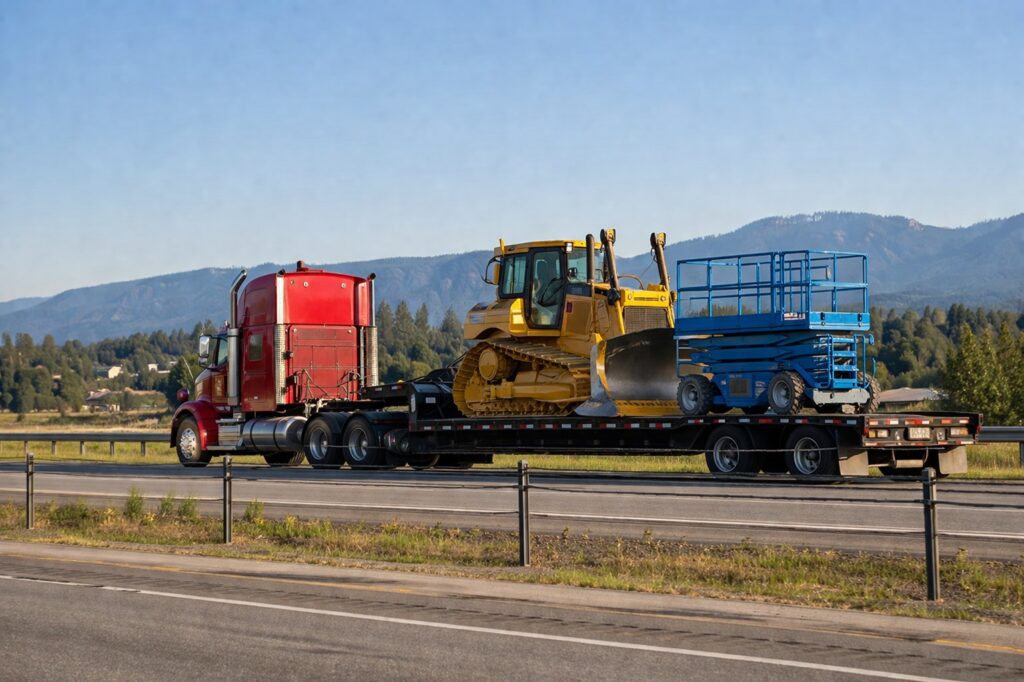
If you haul tall freight, equipment, or awkward loads, step deck trailer dimensions matter more than most people think. A few inches in deck height or a few feet in lower deck length can decide whether a load runs legally, fits safely, or needs extra permits. A standard step deck trailer uses a two-level deck design that provides greater height clearance than a regular flatbed, which is why so many carriers choose it for machinery, construction freight, and oversized cargo.
What are the standard step deck trailer dimensions?
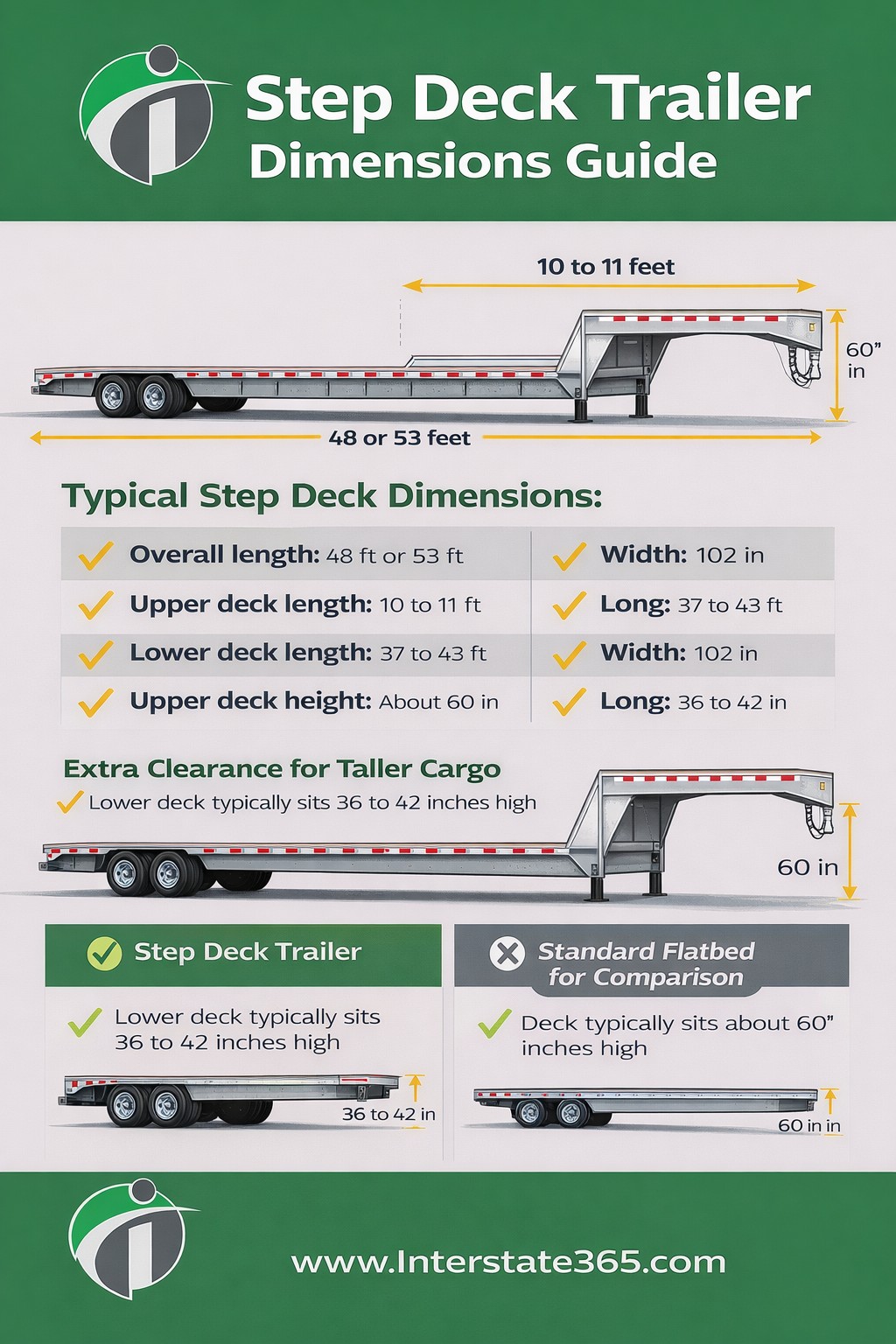
Most step deck trailers come in 48-foot or 53-foot lengths, with a width of 102 inches. The upper deck usually runs about 10 to 11 feet, while the lower deck often runs about 37 to 43 feet. Lower deck height usually ranges from 36 to 42 inches.
That setup is what makes a step deck useful. On a regular flatbed, deck height is usually much higher. On a step deck, the lower deck drops several inches, giving you more vertical clearance for taller cargo. That extra clearance can help you move equipment, containers, or materials that may sit too high on a standard flatbed. If you want a broader overview of the trailer type itself, INTERSTATE 365 already covers that well in its guide to what a step deck trailer is.
How long is a step deck trailer?
The two most common overall lengths are 48 feet and 53 feet. Both sizes are common in trucking, but the 53-foot trailer usually gives you more room on the lower deck, which matters when you haul longer equipment or need more loading flexibility.
In practical terms, a 48-foot step deck often works well for regional work, tighter yards, and loads that do not need every extra foot of deck space. A 53-foot step deck makes more sense when you handle longer freight, want more versatility, or plan to haul a wider mix of machinery and materials. If you are comparing open-deck options, INTERSTATE 365 also has a helpful breakdown of flatbed vs step deck trailers.
What are the upper deck and lower deck dimensions?
The upper deck is usually about 10 to 11 feet long. The lower deck is the main cargo area and usually runs about 37 to 43 feet, depending on the trailer length. That lower section is where most tall freight sits because it gives you the biggest height advantage.
Here is the simple breakdown most drivers use when planning loads:
| Step deck measurement | Typical dimension |
|---|---|
| Overall length | 48 ft or 53 ft |
| Upper deck length | 10 to 11 ft |
| Lower deck length | 37 to 43 ft |
| Width | 102 in |
| Upper deck height | About 60 in |
| Lower deck height | About 36 to 42 in |
These are planning numbers, not a substitute for measuring your exact trailer. Specs vary by brand, suspension, tire size, and configuration. For example, some step deck models listed by INTERSTATE 365 show a 53-foot length, a 102-inch width, a 60-inch upper-deck height, and a 42-inch lower-deck height. You can see an example on this Reitnouer step deck trailer page.
Why does lower deck height matter so much?
Lower deck height is the whole reason many carriers buy a step deck. A lower deck around 36 to 42 inches can help you keep taller freight under common route height limits that would be harder to meet on a flatbed. That lower profile often lets drivers haul taller cargo without running into the same permit issues a standard flatbed can create.
That means deck height directly affects what you can legally load. If your freight already sits tall, every inch matters. The lower the deck, the more flexibility you get. That is why buyers often compare regular step decks with low-profile models before they commit.
What is the difference between a regular step deck and a low-profile step deck?
A regular step deck usually has a lower deck height of about 36 to 42 inches and often runs on 22.5-inch tires. A low-profile step deck sits lower, often at 35 inches or less, and often uses 17.5-inch or 19.5-inch tires. That lower setup helps when you haul taller equipment and want every bit of legal clearance you can get.
It can also improve ramp angle and loading comfort for certain machines. If that is the kind of freight you move, check INTERSTATE 365’s guide on low profile step deck trailers vs regular step decks.
How wide is a standard step deck trailer?
A standard step deck trailer is generally 102 inches wide. That width gives carriers strong cargo flexibility while staying within the standard legal footprint for most open-deck freight.
Width sounds simple, but it matters a lot when you plan machinery loads, side clearance, securement, and route compliance. If your cargo exceeds that width, you may move into oversize territory even if the height works fine on a step deck.
Which step deck size makes the most sense?
The right size depends on the loads you haul most often. A 48-foot trailer can work well if you want easier maneuvering and your freight does not require maximum lower-deck space. A 53-foot trailer fits better if you want more flexibility, more usable deck room, and a setup that aligns with many common freight needs.
If you want to compare real units, visit the main step deck trailer inventory.
In the end, step deck trailer dimensions are not just spec-sheet numbers. They shape how you load, what freight you can book, and how often you stay legal without extra hassle. If you understand total length, lower deck height, upper deck length, and width, you make smarter equipment decisions and avoid expensive mistakes on the road.