

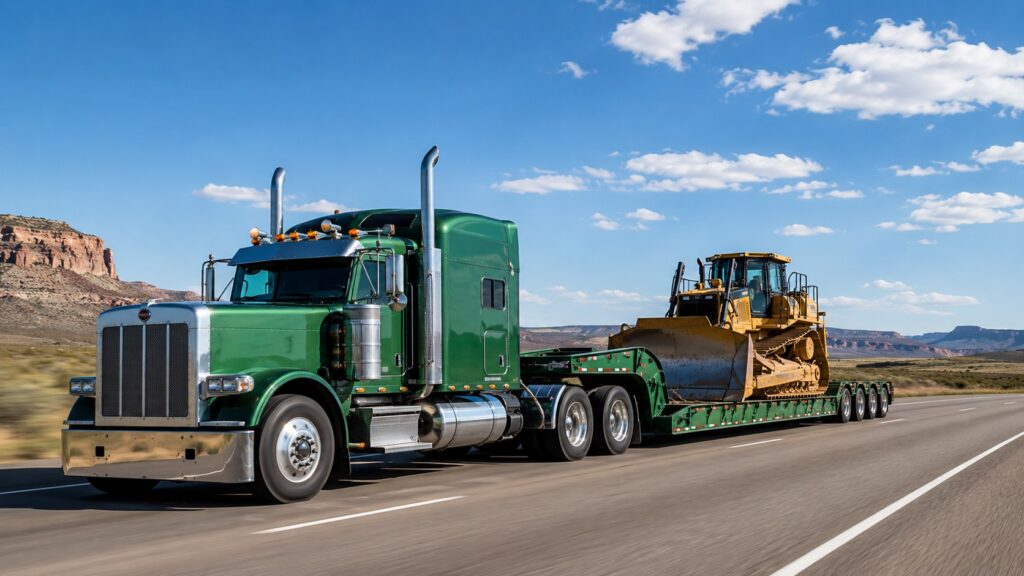
Heavy-duty hydraulic and gooseneck trailers help carriers move equipment and freight that standard flatbeds cannot handle safely. These trailers support heavy machinery, oversized industrial cargo, construction equipment, energy components, and long freight that needs better deck height, weight distribution, and loading control.
In specialized hauling, the trailer does more than carry the load. It decides how safely the freight loads, how well the weight spreads across the axles, how easily the driver handles the route, and how efficiently the carrier can serve customers with demanding cargo.
What Are Heavy-Duty Hydraulic and Gooseneck Trailers?
Heavy-duty hydraulic and gooseneck trailers are specialized trailers built for large, heavy, tall, or awkward freight. They often serve construction, agriculture, energy, manufacturing, and heavy equipment transport.
A gooseneck trailer connects to the tractor through a strong front neck structure. In heavy haul work, detachable gooseneck trailers give operators a major advantage because the front of the trailer can separate from the main deck. This allows equipment to load from the front, often with a smoother and safer approach than ramp loading.
Hydraulic detachable gooseneck trailers use hydraulic power to detach, lift, lower, and reconnect the neck. This setup helps drivers handle heavy equipment with better control. Mechanical detachable gooseneck trailers use a simpler design and can offer strong hauling capability with less hydraulic complexity.
Both options serve serious freight. The right choice depends on the load type, loading environment, driver preference, budget, and daily operating needs.
Why Heavy-Duty Trailers Matter in US Logistics
Specialized trailers play a major role in American logistics because many industries rely on cargo that does not fit inside a dry van or on a standard flatbed. Contractors need excavators and dozers moved between job sites. Energy companies need large equipment transported to remote locations. Manufacturers need oversized machinery delivered safely. Infrastructure projects need beams, tanks, and heavy parts moved on schedule.
When one key machine arrives late, a job site can lose an entire day. When a transformer, crane component, or industrial unit gets damaged in transit, the cost can reach far beyond the freight bill. Heavy-duty trailers help reduce those risks by giving carriers the right deck height, axle layout, tie-down options, and loading design.
This is why buyers often compare specialized trailer brands before investing. Carriers that want dependable heavy haul equipment can explore XL Specialized trailers when they need trailers built for demanding freight, including construction equipment, energy components, and oversized loads. The XL lineup includes detachable gooseneck, extendable, trunnion axle, drop deck, sliding axle, hydraulic tail, multi-axle, wind turbine, dolly, folding gooseneck, flat deck, and custom trailer options.
Hydraulic Detachable Gooseneck Trailers
Hydraulic detachable gooseneck trailers fit haulers who need power, control, and speed during loading. The hydraulic system helps lower and detach the neck, which creates front access to the main deck. That makes loading easier for equipment like excavators, loaders, dozers, compactors, and other tracked or wheeled machines.
These trailers often work well when operators load and unload frequently. They also help when job site conditions are not perfect. A hydraulic neck can save time and reduce strain because the driver does not need to fight with a more manual setup on every load.
Hydraulic detachable trailers usually cost more than mechanical options, but many fleets accept the higher price because the trailer gives them better daily efficiency. For carriers that move high-value equipment or serve construction customers, speed and safety often matter more than the lowest purchase price.
XL Specialized XL 90 HDE Defender
The XL Specialized XL 90 HDE Defender is a strong example of a hydraulic detachable extendable trailer built for serious heavy haul work. It offers a 90,000 lb overall capacity, a hydraulic detachable classic gooseneck, an extendable main deck, a 20-inch loaded deck height, and a 7-position variable ride height. It also includes XL’s Extend-A-Trac system, Apitong decking, 8 bent D-rings per side, chain drops on 24-inch centers, removable swing-out outrigger brackets, 25,000 lb air ride suspension, and prep for a 2-axle booster.
This type of trailer fits operators who need flexibility. The extendable deck helps with long freight, while the hydraulic detachable gooseneck supports easier front loading. That combination makes sense for carriers that move mixed heavy equipment, oversized industrial cargo, and long components.
A trailer like this can help solve several hauling problems at once:
- Lower deck height for taller cargo
- Hydraulic control for easier loading
- Extendable length for longer freight
- Strong tie-down layout for securement
- Booster prep for heavier future configurations
- Air ride suspension for smoother transport
For fleets that want one trailer to handle a wider range of jobs, a hydraulic detachable extendable design can create more freight opportunities.
Mechanical Detachable Gooseneck Trailers
Mechanical detachable gooseneck trailers also serve heavy haul operations, but they use a simpler neck system. They can offer strong front-loading access without relying on hydraulic neck operation. This can appeal to operators who want durability, lower complexity, and a practical setup for daily heavy haul work.
Mechanical detachable trailers can make sense when a carrier wants the benefits of a detachable gooseneck but does not need full hydraulic convenience on every load. They often work well for experienced operators who understand the loading process and want a straightforward design.
The main advantage comes from simplicity. Fewer hydraulic components can mean fewer maintenance concerns. The trailer can also weigh less than a comparable hydraulic setup, depending on configuration. That matters because empty weight affects payload, legal capacity, and operating efficiency.
XL Specialized XL 90 MDE Trailer Warrior
The XL Specialized XL 90 MDE Trailer Warrior gives operators a mechanical detachable extendable option with serious capability. It offers a 90,000 lb overall capacity, a mechanical detachable full-width gooseneck, a 48-foot overall length, 102-inch width, 20-inch loaded deck height, and a main deck that extends from 29 feet to 50 feet 4 inches. It also includes XL’s patented Extend-A-Trac system, 24-inch extension stops, 14 half-inch chain drops per side, 8 bent D-rings per side, removable swing-out outrigger brackets, a lockable toolbox with chain rack and light, and prep for a 2-axle power booster.
This setup works well for carriers that need reach and strength but prefer a mechanical neck. It gives fleets the ability to haul longer equipment, steel, machinery, and oversized freight while keeping the trailer practical for regular work.
The Warrior also fits operators who want to control purchase cost without giving up heavy haul capability. The page lists the Warrior at $143,000, while the hydraulic Defender page lists the Defender at $167,200, with both prices shown on INTERSTATE 365 at the time reviewed.
Hydraulic vs Mechanical Gooseneck: Which One Fits Better?
The choice between hydraulic and mechanical detachable gooseneck trailers depends on how the trailer will work every week.
Choose a hydraulic detachable gooseneck when you need faster loading, easier neck control, and more convenience on frequent equipment moves. It can help when drivers work in tougher job site conditions or handle many loads that require front loading.
Choose a mechanical detachable gooseneck when you want a strong, simpler setup with less hydraulic complexity. It can fit experienced operators who load heavy equipment regularly and want a practical trailer for long-term use.
Both designs can serve serious freight. The better choice depends on your cargo, routes, drivers, budget, and how often you load from the front.
Key Features Buyers Should Compare
Before choosing a heavy-duty hydraulic or gooseneck trailer, buyers should compare more than price. The trailer needs to match real freight, not just look good on paper.
Important features include:
- Capacity: Make sure the trailer can support your regular loads, not only rare maximum loads.
- Loaded deck height: A lower deck can help with taller freight and legal height limits.
- Main deck length: Extendable decks help when cargo length changes from load to load.
- Neck type: Hydraulic necks add convenience, while mechanical necks offer simpler operation.
- Axle setup: Axle capacity and spacing affect weight distribution and permit planning.
- Tie-down points: D-rings, chain drops, and outriggers help secure different cargo types.
- Decking: Strong decking, such as Apitong, supports heavy equipment and repeated loading.
- Booster prep: Future booster options can expand capability as your freight changes.
- Empty weight: Lower empty weight can help with payload, depending on the setup.
- Warranty and support: Heavy haul equipment needs dependable structural backing and parts support.
A good trailer purchase starts with the load list. Write down what you haul now, what you want to haul next year, and what freight you turn down because your current trailer cannot handle it. That gives you a better path to the right configuration.
Choosing the Right Trailer for Specialized Heavy Hauling
Heavy-duty hydraulic and gooseneck trailers play a major role in specialized hauling. They help carriers move freight that standard trailers cannot handle well, including heavy machinery, oversized equipment, long industrial cargo, and construction assets.
Hydraulic detachable gooseneck trailers give operators strong loading control and daily convenience. Mechanical detachable gooseneck trailers offer a simpler, durable setup for fleets that still need serious capacity. Extendable designs add another layer of flexibility by helping carriers handle longer freight without buying a one-purpose trailer.
For carriers that want to grow in heavy haul, the right trailer can create access to better freight, stronger customer relatio