

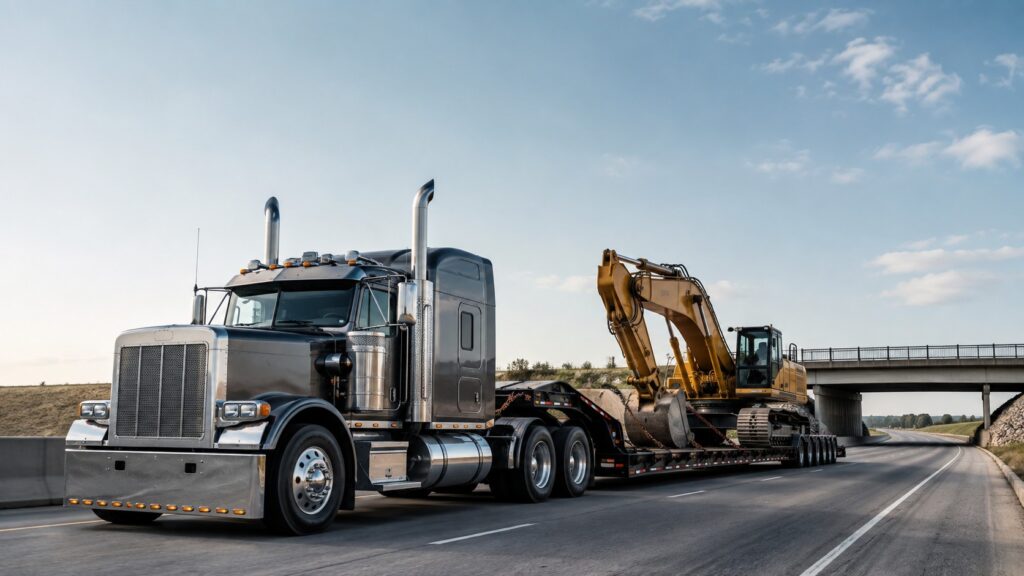
Lowboy trailers are the workhorses of heavy equipment transport, built to move tall, heavy machines while keeping overall height down and stability up. If you’ve ever dealt with trailer deck height limits, ground clearance problems hauling equipment, or tight routes where low-clearance bridge-avoidance tips matter, a lowboy can be the difference between a smooth haul and a costly delay.
This guide breaks down the real-world advantages of Lowboy Trailers, the most common lowboy trailer types, and practical buying/operating pointers, including cost, loading, permits, and upkeep.
Why Lowboy Trailers Are a Go-To for Heavy Equipment
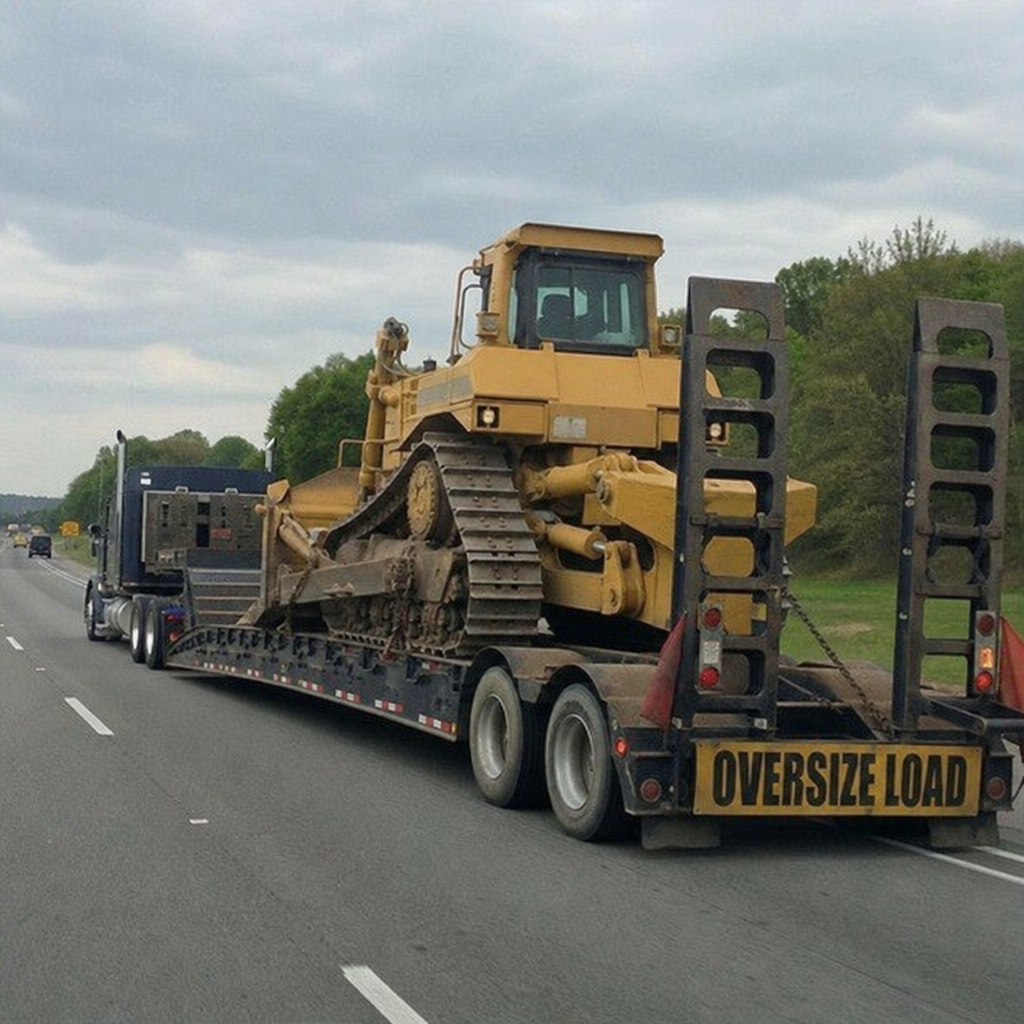
A lowboy is designed with a “dropped” deck that sits lower than a standard flatbed or many deck-over designs. Compared with a step deck vs low clearance discussion (where step decks help, but not always enough), lowboys typically win when equipment is extra tall or when route height is the main constraint.
Key advantages of lowboy trailers include:
- Reduced overall load height to help stay under bridge/utility clearances
- Better stability thanks to a lower center of gravity
- Easier loading for tracked equipment using ramps or detachable necks
- More flexibility for hauling oversized machinery within legal limits (or closer to them)
Lowboy Trailer Dimensions: What “Low” Actually Means
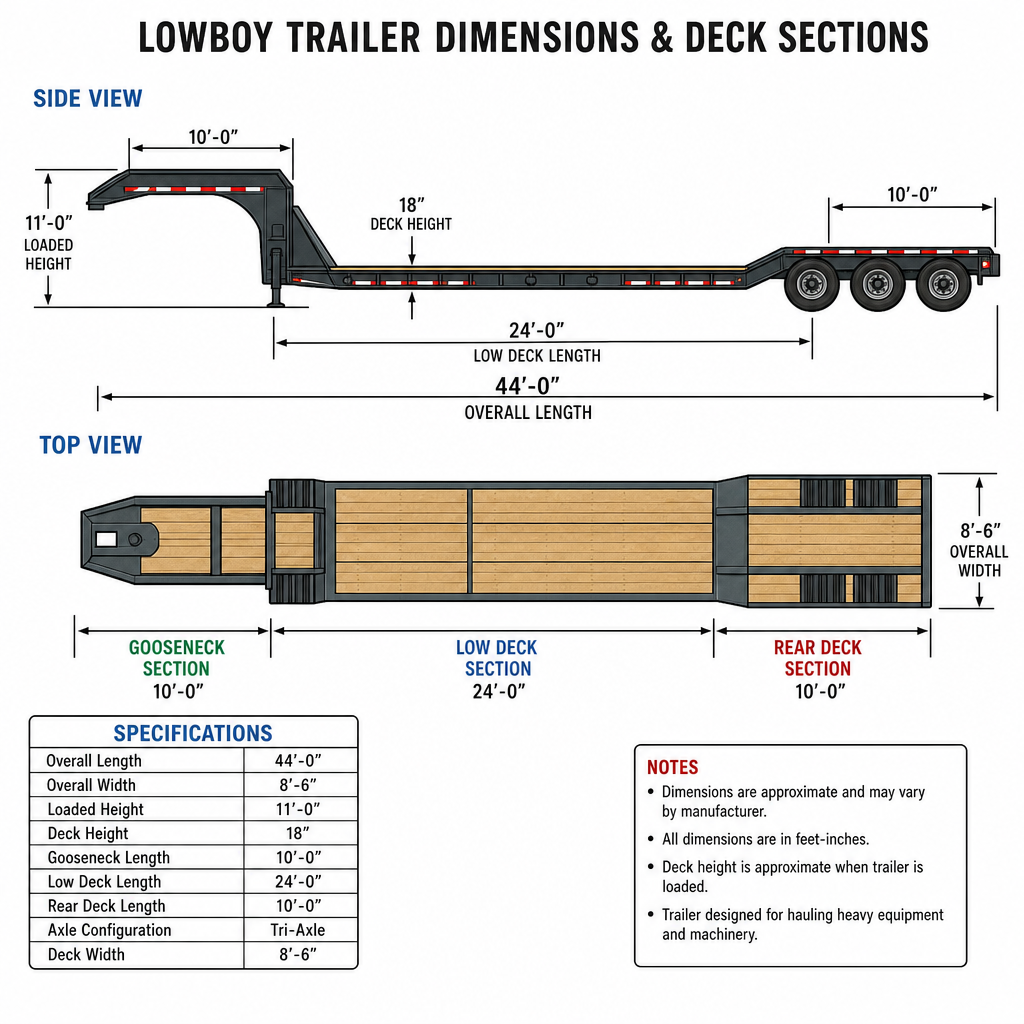
Understanding lowboy trailer dimensions is essential for planning loads, permits, and routes. While exact measurements vary by manufacturer and configuration, the main point is that the deck height is significantly lower than many other heavy haul trailer types.
When evaluating lowboy trailer specs, focus on:
- Deck height (critical for clearance and compliance)
- Well length and width (what fits between the axles/over the well)
- Loaded overall height (equipment height + deck height)
- Turning radius considerations (especially with multi-axle setups)
A useful rule: the “best” lowboy isn’t the lowest deck possible; it’s the one that keeps you legal, stable, and efficient while matching your equipment roster.
Stability and Safety: Lower Center of Gravity, Better Control
One of the biggest advantages is stability. By lowering the deck, you reduce the load’s center of gravity, improving handling in:
- Crosswinds
- Curves and ramps
- Uneven jobsite entrances
- Emergency braking scenarios
This matters even more when you’re close to maximum tractor-trailer axle weight distribution limits or when hauling top-heavy machines like excavators with booms tucked but still tall.
Air Ride Suspension for Heavy Equipment: When It Helps
Choosing air ride suspension for heavy equipment can reduce shock loads and protect both trailer and cargo, especially on rough roads. Benefits include:
- Smoother ride for sensitive components
- Less wear on tires and suspension parts
- Improved load stability for longer hauls
That said, some fleets prefer mechanical suspension for durability in harsh off-road conditions. Match suspension to routes and jobsite realities.
Lowboy Gooseneck Trailers: Fixed vs Detachable Options
Many buyers narrow choices to lowboy gooseneck trailers because the gooseneck style affects loading, maintenance, and flexibility.
Removable Gooseneck Trailer Benefits (RGN)
The removable gooseneck trailer benefits are a major reason RGNs dominate equipment hauling:
- Drive-on/drive-off loading from the front (often safer for tracked equipment)
- Better approach angles than some rear-ramp setups
- Efficient for frequent loading cycles (rental fleets, contractors, dealers)
RGNs shine when you’re frequently asking, “What’s the best trailer for bulldozer transport?”—because dozers load cleanly and securely on many RGN configurations.
Fixed Gooseneck vs Detachable
In the fixed gooseneck vs detachable debate:
- Fixed gooseneck trailers can be lighter, simpler, and sometimes less expensive upfront.
- Detachable (RGN) models add versatility and can speed loading, but may cost more and add components to maintain.
The right answer depends on how often you load, the types of machines you move, and whether jobsite conditions favor front-loading.
Loading Advantages (and How to Load an Excavator Safely)
Lowboys make loading heavy machines easier because the deck sits closer to the ground. That said, safe loading is never automatic; process and setup matter.
How to Load an Excavator Safely: Practical Checklist
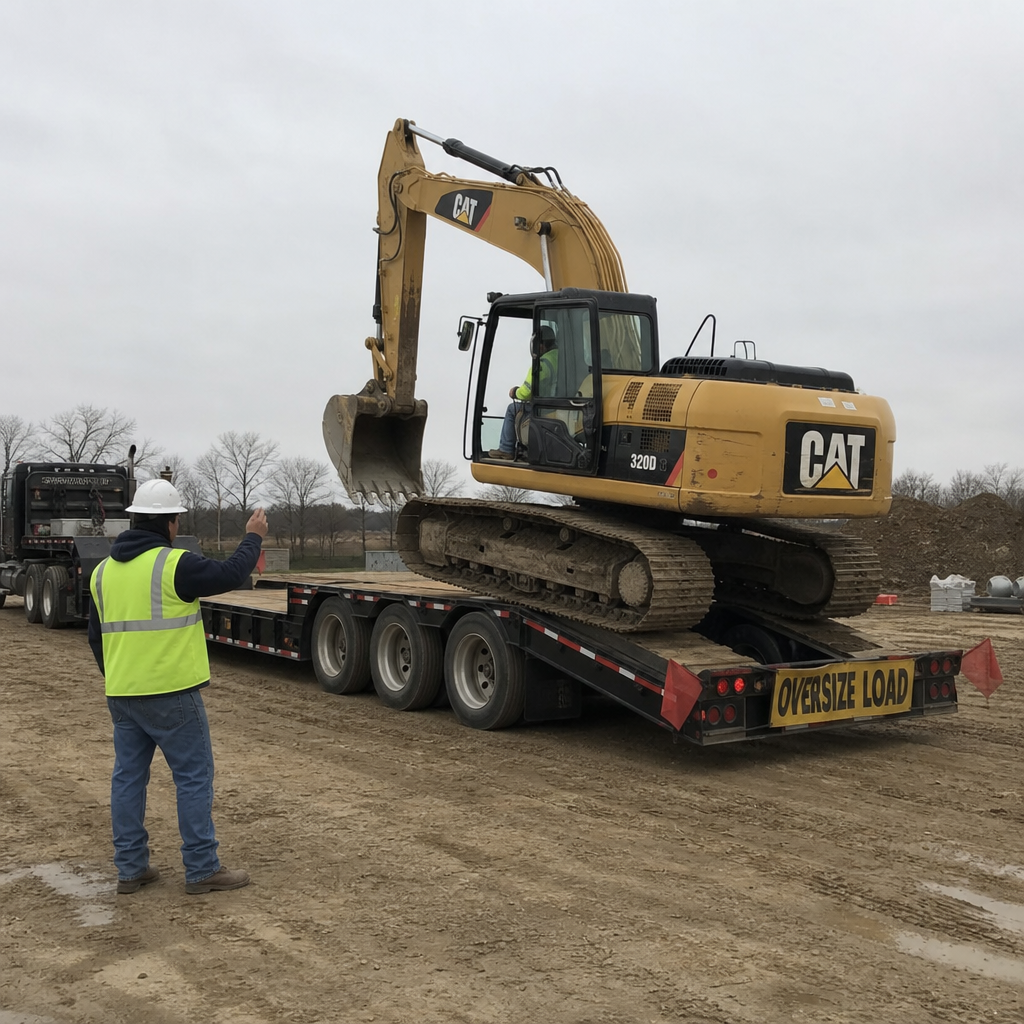
If your crew is training or standardizing procedures, use a repeatable method:
- Inspect ramps/neck, deck surface, and traction conditions (mud, oil, ice)
- Verify ground firmness and alignment before driving on
- Keep the boom low and centered; travel slowly and smoothly
- Spotter uses clear hand signals/radio; no one stands in pinch zones
- Set excavator on the deck to support axle weight goals (not just “where it fits”)
- Lower attachments to reduce movement; engage travel lock if applicable
Loading position also affects tractor-trailer axle weight distribution, which impacts legality, tire wear, and handling.
Hydraulic Ramps Troubleshooting: Common Issues
If your unit uses hydraulics, build basic hydraulic ramps troubleshooting into pre-trip:
- Slow movement may indicate low fluid, cold temps, or air in the system
- Drifting ramps can suggest seal wear or valve issues
- Uneven lift may point to cylinder imbalance or binding pivots
Catching these early prevents dangerous loading conditions and downtime.
Compliance and Planning: Permits, Height, and Route Strategy
Lowboy trailers can help reduce overall height, but many loads still trigger regulations. If your haul is wide, tall, long, or heavy, you’ll likely face oversize load permit requirements.
Plan for:
- State-by-state differences in permit rules and travel times
- Escort vehicle requirements for certain dimensions/weights
- Restricted routes, curfews, and holiday travel bans
- Bridge formulas and axle group limits that affect allowable weights
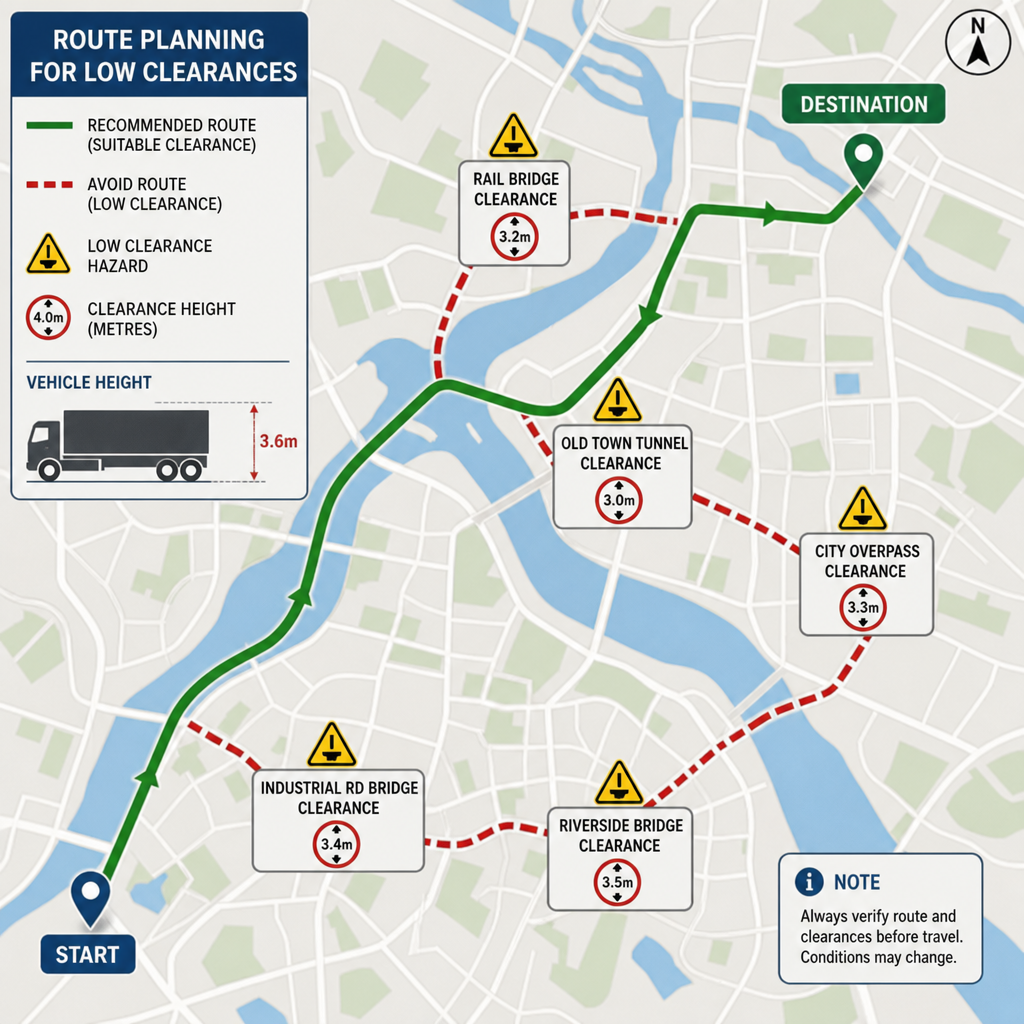
Low Clearance Bridge Avoidance Tips
Even with a lowboy, route planning is critical:
- Measure actual loaded height (don’t rely on “equipment brochure” heights)
- Consider tire pressure, suspension setting, and attachment position
- Avoid last-minute detours—some alternates have worse clearances
- Use vetted routes and height databases where available
A lowboy’s advantage is that it often keeps you under problematic heights—but it doesn’t remove the need to confirm.
Tie-Down Confidence: Chains, Binders, and Securement Basics
A low deck supports more stable securement geometry; shorter tie-down angles can reduce rocking and shifting. Still, the hardware and method matter.
Tie Down Chains and Binders Guide (Quick Best Practices)
Use a consistent tie-down chains and binders guide approach:
- Match chain grade and working load limit (WLL) to the machine’s weight and regulations
- Inspect hooks, grab links, binders, and chain for deformation or cracks
- Protect against sharp edges (use corner protectors where needed)
- Re-check tension after the first few miles and at regular intervals
- Secure attachments/buckets separately if required
Solid securement reduces incidents, equipment damage, and negative outcomes that show up later in lowboy trailer reviews.
Equipment Protection and Fewer Clearance Headaches
Lowboys help reduce:
- Overhead clearance conflicts
- “Too tall” surprise rework (removing stacks, folding ROPS when possible, repositioning booms)
- Risk exposure in windy conditions due to tall loads
They also help with certain ground clearance problems hauling equipment because the transition angles can be more manageable, especially with front-loading RGNs, though extremely low decks can still scrape on steep driveway transitions.
Cost and Buying: Prices, Specs, Weight, and What Drives the Numbers
If you’re shopping lowboy trailer for sale listings, you’ll notice lowboy trailer prices vary widely. The true equipment transport trailer cost factors usually include:
- Axle count and capacity class
- Deck length, width, and well configuration
- Suspension choice (including air ride)
- RGN vs fixed neck design
- Hydraulic features (ramps, neck, power unit)
- Tire package, brakes, and optional steer axles
- Build quality, warranty, and brand support
Lowboy Trailer Weight: Don’t Ignore Payload Math
Lowboy trailer weight affects how much you can legally carry. A heavier trailer can reduce payload under gross limits, even if the trailer’s rated capacity is high. When comparing lowboy trailer specs, balance durability with tare weight so you’re not “buying capacity you can’t legally use.”
Choosing Among Lowboy Trailer Types
Common lowboy trailer types include:
- Fixed gooseneck lowboys
- RGNs (detachable neck)
- Hydraulic detachable gooseneck models
- Double-drop configurations for extra-low deck needs
- Multi-axle heavy haul units for extreme weights
Think in terms of your top 10 most common machines, and your top 3 “problem loads.” The best purchase is the trailer that covers daily work while minimizing permit complexity and loading time.
Lowboy Trailer Maintenance: Keeping Uptime High
Good lowboy trailer maintenance protects safety and resale value. A simple program should include:
- Daily/weekly: tires, lights, airlines, brake function, visible cracks, hydraulic leaks
- Monthly: torque checks, suspension components, wear points, deck condition
- Quarterly/seasonal: brake adjustment/inspection, fluid service, corrosion control
Maintenance discipline also improves your long-term results in the market, because buyers scanning lowboy trailer reviews often look for reliability patterns tied to upkeep.
Takeaway: When Lowboys Make the Most Sense
If your work involves heavy equipment with height constraints, frequent loading cycles, or stability concerns, Lowboy Trailers deliver clear advantages: lower overall height, safer handling, and efficient loading, especially with lowboy gooseneck trailers where RGNs offer notable flexibility. Compare lowboy trailer dimensions, dial in tractor trailer axle weight distribution, plan for oversize load permit requirements, and treat securement and lowboy trailer maintenance as non-negotiable. Do that, and a lowboy becomes more than a trailer—it becomes a reliable profit tool that reduces risk on every run.