Buying a flatbed goes beyond a price decision. It is a safety decision and a profit decision. A good trailer helps you haul heavy loads with fewer breakdowns and less downtime. A bad trailer can hide costly repairs, failed brake systems, and frame-strength issues that surface after the deal closes.
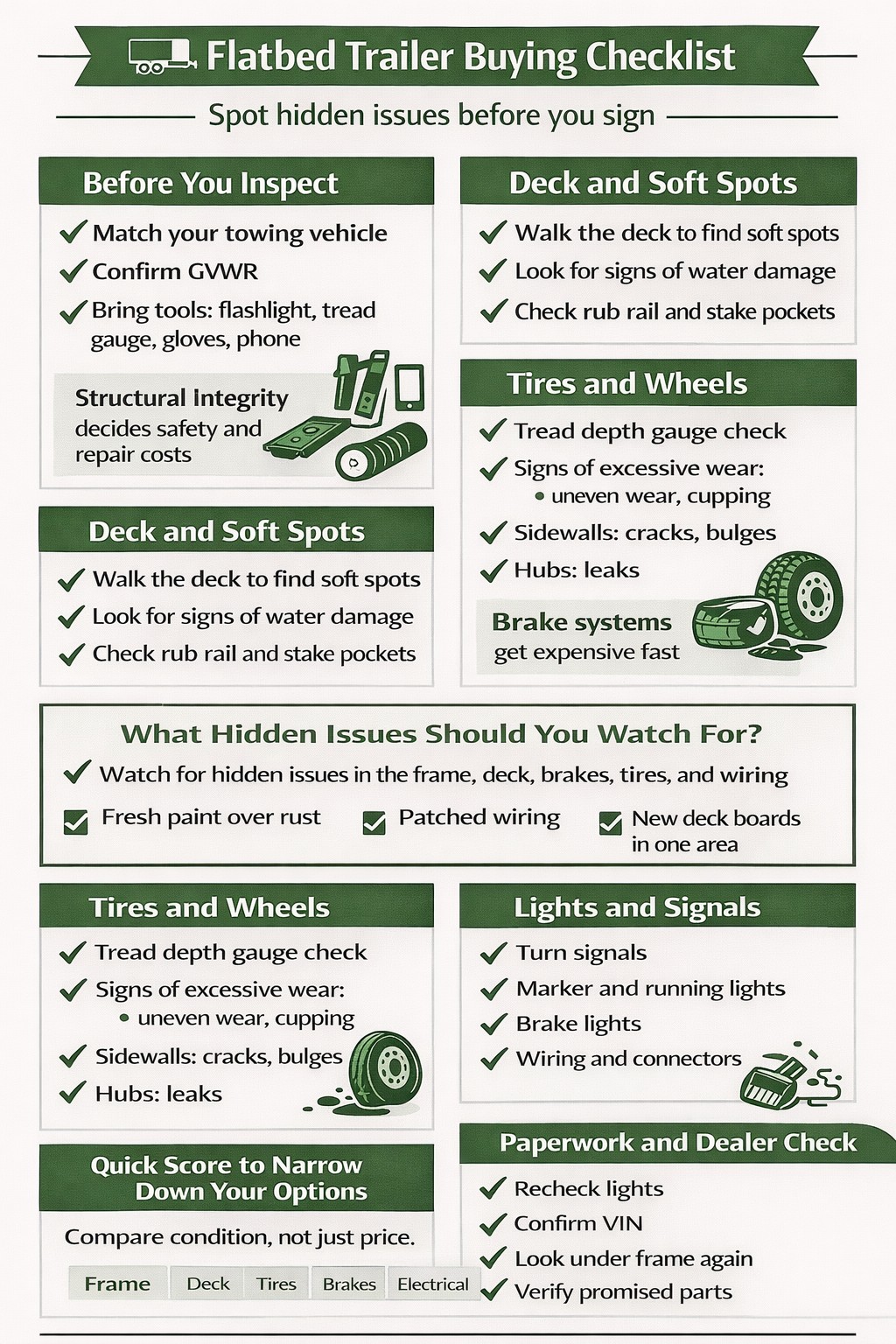
This Flatbed Trailer Buying Checklist walks you through the buying process step by step.
You can use it for new or used trailers. You can use it to compare different trailer types.
This helps you narrow down your options. You can choose from standard flatbeds, enclosed trailers, dump trailers, and more.
Before you inspect anything, confirm fit and numbers
Start with your towing vehicle and your typical freight.
Know your numbers:
Gross vehicle weight rating GVWR, payload targets, axle setup, deck length, and legal weight limits for your lanes.
Match the trailer to your work:
If you haul construction freight, you may want a tougher deck and stronger crossmembers. If you haul long steel, you may want a different layout or tie-down spacing. If you look at other trailer types, like enclosed or dump trailers, keep the same GVWR and brake requirements to compare fairly.
Bring tools:
A flashlight, gloves, a tire tread gauge, a small hammer or screwdriver for tapping, a rag, and a phone for photos.
Frame and structural integrity checks
Walk the trailer slowly from front to back. Look at it from multiple angles. Focus on the parts that carry weight.
Inspect the main frame rails:
Look for bends, waves, and mismatched repairs. A frame should look straight and consistent.
Check crossmembers:
Look for cracks, heavy dents, or evidence of previous impacts from forklifts. Crossmembers support the deck. Damage here can lead to deck flex and long-term failure.
Look at welds:
Good welds look consistent and clean. Poor welds can look messy, uneven, or patched. Pay attention to stress points like the neck, suspension mounts, and landing gear.
Watch for surface rust:
Surface rust is common on used equipment and does not always mean trouble. Heavy scaling, flaking metal, or deep rust around joints can signal bigger issues.
Deck condition and soft spots
A deck can look fine from a distance but fail under load.
Check boards or floor material:
Look for splits, missing fasteners, and uneven sections.
Test for soft spots:
Step carefully across the deck. Soft spots can mean rot or weak structure. You can also tap the deck with a tool handle. A dull sound can suggest hidden problems.
Look for signs of water damage:
Dark staining, warped boards, and repeated patchwork can point to water intrusion. These signs of water damage matter even more if the trailer sat unused for long periods.
Check the rub rail and stake pockets:
They take hits. Look for bends, cracks, and broken welds.
Tires, wheels, and tread depth
Tires tell the story of alignment, maintenance, and wear.
Measure tread depth:
Use a tread depth gauge and check multiple spots. Uneven tread can signal alignment issues or suspension problems.
Look for signs of excessive wear:
Cupping, scalloping, or worn edges often point to suspension wear or poor alignment.
Inspect sidewalls:
Look for cracking, bulges, and cuts. These problems may cause to blowouts.
Check wheels and hubs:
Look for oil or grease around hubs. That can signal seal leaks. Check lug nuts for damage or missing pieces.
Brake systems and suspension
Brakes can cost real money, and they affect safety on every trip.
Inspect brake components:
Look at drums or rotors, slack adjusters, air lines, and chambers. Look for cracked hoses and loose fittings.
Inspect brake operation:
You should confirm that air builds correctly and holds pressure. You should also look for air leaks.
Inspect brake wear:
Ask for maintenance records if possible. If the seller cannot explain the brake condition, assume you will do a full service soon.
Check suspension:
Look at airbags, hangers, bushings, torque arms, and shocks if equipped. Cracks, dry rot, and loose parts may cause unstable handling and uneven tire wear.
Lights and signals
Electrical issues can turn into constant headaches.
Test all lights:
Running lights, marker lights, turn signals, and brake lights are brake functions.
Look for wiring damage:
Look for hanging wires, taped sections, and corrosion in connectors. Poor wiring can cause random failures on the road.
Check reflectors and DOT items:
Make sure reflective tape meets basic visibility needs and is in good condition.
Landing gear, kingpin, and coupler area
These parts take stress every day.
Inspect landing gear:
Crank it up and down. Listen for grinding. Look for bent legs and loose mounts.
Inspect the kingpin area:
Look for cracks around the plate and signs of heavy wear. A worn kingpin can create coupling problems and unsafe play.
Check the glad hands and air fittings:
Look for cracks, leaks, and worn seals.
Paperwork and dealer checks
A trailer can look great and still cause problems if the paperwork is messy.
Confirm VIN and title status:
Match the VIN on the trailer to the title.
Ask for service history:
Brake work, tire replacements, and major repairs matter. Good records signal better ownership habits.
Work with a reputable dealer when you can:
A reputable dealer usually offers more transparent paperwork and a more consistent inspection checklist process. Private sales can work, but you need to inspect harder.
What hidden issues should you watch for?
Watch for hidden issues in the frame, deck, brakes, tires, and wiring. These problems may seem small at first, but can become costly later. Start with structural strength, then check for soft spots in the deck, and then verify the brake systems and lights. Use tread depth and wear patterns to spot suspension or positioning issues.
Hidden issues often show up as small clues:
Uneven tire wear, patched wiring, fresh paint over rust, or new boards in one section of the deck. Ask why those changes happened. If the answers sound vague, treat them as a risk.
Narrowing down your options across trailer types
Once you finish your inspection checklist, compare what you found across your shortlist.
Use a simple scoring approach:
Frame condition, deck condition, brake condition, tire condition, and electrical condition.
Do not compare only price:
A cheaper trailer with weak brakes and bad tires can cost more within the first month.
Think about fit:
Make sure the trailer matches your towing vehicle and your freight. A trailer that does not match your daily work will never feel like a good deal.
Quick final walk before you sign
Do one more full lap around the trailer. Recheck lights.
Look under the frame again. Confirm the VIN matches the paperwork. Make sure the seller included any promised parts, like spare tire carriers or toolboxes.
After you complete this checklist, you will feel confident in the buying process and less likely to get surprised by repairs later.
Flatbed Trailer Buying Checklist FAQ
What should I inspect first on a used flatbed?
Start with the frame and crossmembers for structural strength, then check the deck for soft spots and water damage.
How do I judge tire condition fast?
Measure tread depth, then look for uneven wear and sidewall cracks as signs of excessive wear.
Do surface rust and paint touch ups matter?
Surface rust often stays normal, but heavy scaling and fresh paint over problem areas can hide more serious damage.