If you move freight that won’t fit in a box trailer, you’re likely using flatbeds. Flatbed trailers speed loading, offer flexible angles, and handle odd-shaped cargo. This guide explains the main flatbed types, important specs, and the best uses for each.
What makes a flatbed trailer different
A standard flatbed trailer has an open deck with no walls and no roof. You load from the side, the rear, or the top. That sounds simple, but it changes everything about how you plan loads.
You control securement. You think about weight limits, deck heights, wind, and road spray. You pick tarps, straps, chains, and edge protection based on the freight.
Flatbeds offer more flexibility than enclosed trailers, but you give up weather protection. Enclosed trailers are best for secure, protected cargo. Flatbeds are better for quick loading and oversized loads.
Flatbed Trailers 101: Types of flatbed trailers you will see most often
Standard flatbeds
A standard flatbed trailer can carry a wide range of freight. Carriers and shippers like them because they load quickly and fit most docks and yards.
Best uses:
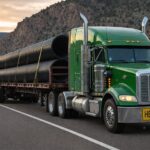
Construction materials, palletized freight, steel beams, lumber, pipe, and general heavy loads.
Step decks and drop deck trailers
Many drivers use ‘step deck’ and ‘drop deck’ as synonyms. Both have a lower deck behind the gooseneck, allowing you to carry taller loads without breaking height rules. If you often haul tall freight, a step deck gives you more options than a standard flatbed.
Best uses:
Taller loads, equipment with higher profiles, and freight that needs lower deck heights without going to an RGN.
Extendable flatbed trailers
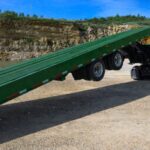
An extendable flatbed can be extended to accommodate longer loads. It’s useful for long steel beams, poles, and other special construction materials. You’ll need to plan weight placement and turns carefully, so it’s best for drivers who plan ahead.
Best uses:
Long freight, specialty building components, and certain heavy-duty projects that exceed standard deck length.
Key specs that matter in real work
You can look at trailers all day, but the specs determine what you can actually haul. Start by zeroing in on these key numbers.
Length: why 53 feet long matters
Many US shippers use 53-foot trailers because they fit a wide range of freight and routes. A 48-foot flatbed also works well, but some markets prefer 53 feet. Consider your usual routes and customers before deciding.
Deck heights: standard vs lower decks
Deck height affects legal limits, loading angles, and stability. Standard flatbeds are higher than step decks. Step decks and drop decks keep tall loads lower, which helps with bridges, wires, and permits.
If you often haul heavy machinery or equipment with tall frames, pay close attention to deck height. Just a few inches can mean the difference between running legal or needing permits.
Weight limits and axle ratings
Every load plan starts with weight limits. Know your trailer rating and axle setup, and think like a scale inspector. You can haul heavy loads, but if you place the weight incorrectly, you could still run into problems.
Practical reminders:
You decide where to place the freight and set the tandems. Check axle spacing rules for your routes. Also, remember to include the mass of securement gear, tarps, and dunnage in your plan.
Heavy-duty build details
Heavy-duty can mean different things. Check the frame, crossmembers, and deck. Think about your typical loads. If you haul heavy equipment often, choose a trailer that can handle point loads and repeated forklift use without flexing.
Best uses by freight type
Construction materials
Flatbeds work well for construction materials because you can load quickly and unload at tough job sites. Lumber, rebar, bundled products, and mixed pallets all fit. Just use a solid securement routine and protect the corners.
Steel beams and long metal products
Steel beams and long products can challenge your securement plan. A standard flatbed usually works, but an extendable flatbed is useful for extra-long loads. In both cases, plan for chains, binders, edge guards, and proper blocking.
Heavy equipment and heavy machinery
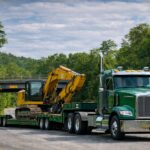
Heavy equipment loads may require step decks, drop decks, or even RGNs, depending on height and how you load. For many machines, a step deck gives you the lower deck you need and is simpler than an RGN.
Always think about:
Consider machine height, ramp angle, ground clearance, and tie-down points. Also, plan your route carefully. Oversized loads can affect your entire day.
Oversized loads and taller loads
Flatbeds support oversized loads when the freight overhangs or exceeds the width. Step decks help with taller loads. Each change can bring permit rules, route limits, and escort needs. You should build your trailer choice around what you plan to haul most days, not the one weird load that shows up twice a year.
How to choose the proper setup for your lanes
Use this quick guide to flatbed decision-making:
If you haul general freight, construction materials, and steel beams most weeks, start with a standard flatbed trailer.
If you often haul taller loads or constantly run into height limits, consider a step deck or a drop deck.
If you regularly haul long freight that runs beyond a normal deck, consider an extendable flatbed.
If you rarely haul open-deck freight and want theft and weather protection, enclosed trailers might be a better fit than a flatbed.
A few habits that make flatbed work smoother
Flatbed trucking works best for drivers who follow a system.
Create a consistent pre-trip routine to check securement and deck condition.
Measure your loads instead of guessing. Height-related mistakes can cost you time and money.
Take photos of your securement. This helps with claims and training.
Keep your gear organized. A messy box wastes time on every stop.
What to do next: compare real options before you decide
Specs matter, but inventory matters too. If you want to compare different flatbed trailer setups in one place, browse the available flatbed trailers here.
Flatbed Trailer Guide: FAQ
What are the main types of flatbed trailers?
The most common types are standard flatbeds, step decks (also called drop decks), and extendable flatbed trailers. Designers create each for different deck heights and load types.
When should I choose a step deck instead of a standard flatbed trailer?
Choose a step deck when you haul taller loads, and you want more legal height clearance without moving to an RGN.
Can a 53-foot-long flatbed handle heavy loads?
Yes, as long as the trailer rating and axle setup support the weight and you plan the placement correctly. Always check weight limits and axle distribution before you go.
What freight works best on flatbeds?
Flatbeds are great for carrying construction materials, steel beams, heavy equipment, and other heavy items. Just make sure to secure everything well and plan for the weather and the route.