

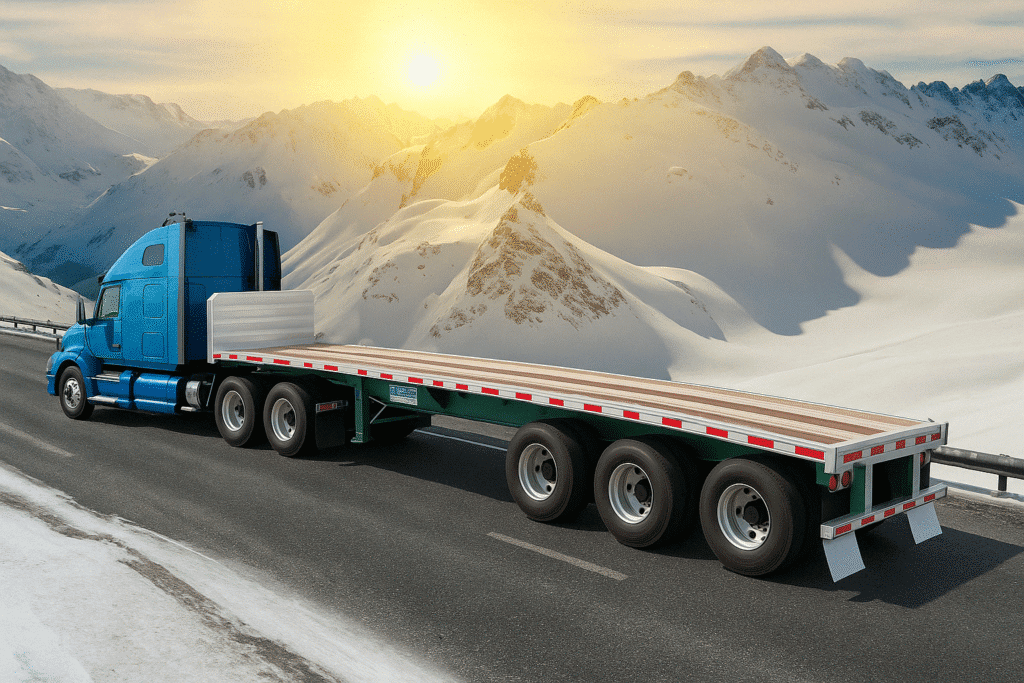
Choosing the right flatbed trailer size is an important decision for any shipper, truck owner, or logistics manager, because the wrong match can raise cost, fuel use, legal risk, and road danger. People who compare truck trailer sizes, trailer sizes, or a flatbed trailer for rent often start here. Some even search flat bed trailer rentals near me when they need a quick answer.
This guide explains flatbed trailer sizes in simple terms. It covers common uses, load limits, and hauling power. It also helps when you compare enclosed trailer dimensions, semi truck and trailer dimensions, or other truck and trailer size options.
What Is a Flatbed Trailer?
A flatbed trailer is an open-deck trailer with no sides or roof. A flat bed trailer can carry many kinds of cargo. Unlike enclosed trailers, flatbeds can be loaded from the top, sides, or rear. That makes them a good fit for large or oddly shaped items.
Flatbeds are often used to haul:
- Construction materials
- Steel coils
- Palletized goods
- Crates and containers
- Oversized machinery
- Construction equipment
Because the deck is open, flatbeds are highly flexible. They still need proper load securement and size checks.
Why Flatbed Trailer Size Matters
Choosing the right size is about more than making the load fit. It helps you:
- Stay within federal and state rules
- Use payload space well
- Avoid delays from reloading or shifting freight
- Protect gear from overload and bad weight balance
When the load fits the trailer, you save time, cut costs, and lower accident risk.
Common Flatbed Trailer Sizes
The most common flatbed trailer sizes in the U.S. are 48-foot and 53-foot models. Longer extendable units are used for extra-long cargo.
| Trailer type | Length | Width | Deck height | Max freight height | Max weight |
|---|---|---|---|---|---|
| Standard flatbed | 48-53 ft | 8.5 ft (102 in) | 60 in | 8 ft 6 in (102 in) | 48,000-52,000 lb |
| Extendable flatbed | 48-80+ ft | 8.5 ft (102 in) | Varies | Varies | 43,000-45,000 lb |
1. Standard Flatbed Trailer
This is the most common flatbed trailer in the industry. Standard flatbeds usually come in 48-foot and 53-foot lengths.
- Best for: Lumber, building materials, pallet loads, and general cargo
- Benefits: Easy loading and unloading, broad access, lower cost
- Limits: The max freight height is usually 8 feet 6 inches
If your freight is under 8 ft 6 in tall, this flatbed trailer size should work well.
2. Extendable Flatbed Trailer
An extendable trailer, also called a stretch flatbed, can reach 80 feet or more. It is useful for long items like beams, wind turbine blades, or bridge parts.
- Best for: Extra-long cargo that is too long for a standard 48- or 53-foot trailer
- Key feature: Adjustable length for easier transport when it is not fully extended
- Rules: Special permits are often needed, based on the load and route
Factors to Consider When Choosing a Flatbed Trailer Size
Picking the right flatbed trailer dimensions takes more than a quick look at length.
1. Load Dimensions
Measure length, width, height, and weight before you book a trailer. If the load is too tall or too wide, you may need an oversize permit.
2. Load Type
Are you hauling fragile goods, building materials, or construction equipment? Some trailers support heavy or tall cargo better than others.
3. Road Regulations
DOT rules limit height, length, and weight. Check both federal and state laws, especially for oversized or overlength freight.
4. Loading and Unloading Method
Will you use a forklift, crane, or ramp? Some trailers work better for side or top loading. Others give you a lower deck for heavy equipment.
Flatbed Trailer Size and Weight Limits: Legal Overview
In most U.S. states, these are the usual limits for loads carried on flatbed trailers without special permits:
- Max load width: 8 feet 6 inches (102 inches)
- Max load height: 8 feet 6 inches (102 inches)
- Max trailer length: 53 feet, though some states allow up to 57 feet
- Max gross weight: 80,000 to 110,000 pounds, including truck and trailer
These limits are different from enclosed trailer dimensions or semi truck and trailer dimensions used in other setups. If your load goes beyond these limits, you may need an oversize or overweight permit. You may also need signs or pilot cars.
Conclusion: Match Your Load to the Right Trailer
Knowing flatbed trailer sizes helps you move cargo safely and with less waste. With so many options, the goal is not just to pick the longest trailer. It is to choose the one that fits the load, the gear, and the rules.
Whether you are hauling light freight on a standard flatbed or moving construction equipment on a step deck, the trailer size and type affect the result. The same sizing rules apply to a flatbed trailer truck, a flatbed semi trailer, a flatbed tractor trailer, or a flatbed semi truck trailer. Measure the cargo, check the rules, and choose the right fit.
When in doubt, work with a transportation specialist or freight broker. They can match your freight to the right trailer, reduce risk, cut costs, and help make delivery smooth. If you are comparing tractor trailer truck dimensions or truck and trailer size, they can help you choose the best option.
Q&A
Question: What is the most common flatbed trailer size?
Short answer: The most common flatbed trailer sizes are 48 feet and 53 feet. These standard flatbeds are popular because they are easy to load, widely available, and cost-effective.
Question: When should you choose an extendable flatbed trailer instead of a standard flatbed?
Short answer: Choose an extendable flatbed trailer when the cargo is longer than a standard 48- or 53-foot trailer can handle. It is often used for beams, wind turbine blades, bridge parts, and other extra-long materials, but it may need special permits.
Question: What measurements should be checked before selecting a flatbed trailer?
Short answer: Check the cargo length, width, height, and weight before you choose a trailer. These measurements help you see whether the load can travel legally without permits and whether the trailer can support the weight.
Question: What happens if a flatbed load exceeds standard legal size or weight limits?
Short answer: If a load goes beyond standard width, height, length, or gross weight limits, the shipper will likely need an oversize or overweight permit. Depending on the route and load, signs or pilot cars may also be required.
Question: Why is trailer size important beyond simply fitting the cargo?
Short answer: Trailer size affects legal compliance, payload capacity, safety, fuel use, and delivery cost. Choosing the wrong size can cause delays, citations, unsafe weight balance, or the need to reload freight.