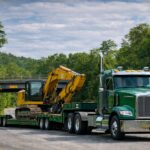
A sliding axle trailer helps you fine-tune axle position so your trailer fits the job, not the other way around. When you move the axle group forward or back, you can practically adjust weight distribution and overall length. Drivers use this setup to handle different load placements, dock situations, and rules that change from one state to the next.
What a sliding axle trailer actually does
On a standard trailer, the axle group is fixed in one spot. On a sliding axle trailer, the axle group rides on rails, so you can reposition it. People often call the setup a sliding axle, and the action looks simple, but it solves real problems.
Moving the axles forward often shortens the trailer’s overall length from the kingpin to the rear axle. That can help in tighter yards, and it can support certain bridge or length rules depending on where you run. Move the axles back to create more clearance behind the tractor.
This can improve stability in some situations. It helps most when the load sits farther back.
You still need to follow your equipment limits and the law. But a sliding setup gives you options when the load is not perfectly placed.
Sliding axle trailer and weight distribution
Weight matters more than most people admit, because a load can look fine and still put you over on an axle group. Sliding the axle group helps you shift weight across the tractor drives and the trailer axles.
If your trailer tandems feel heavy, you can slide the axle group forward to move some weight toward the tractor. If your drives feel heavy, you can slide the axle group back to put more weight on the trailer. Small changes can make a significant difference at scale, especially when a shipper loads you nose-heavy or tail-heavy.
This is also where sliding trailer axles earn their keep. You do not need to rework the load every time. You can often solve a scale problem by moving the sliding trailer axles a few holes at a time, then rechecking.
When do you need a sliding axle trailer?
You need it when your freight and lanes change a lot. Think mixed freight, multiple shippers, and loads that land in different spots on the deck. A sliding axle trailer also helps in places with tight turns, small yards, or awkward docks, where every inch matters.
It also helps when you haul long items, where overall length planning becomes part of the dispatch conversation. Sometimes you need the axle group in a set position to meet local rules. It also helps keep the rig easy to handle.
Sliding axle trailer: Is it only about legal limits?
Not only. Legal limits matter, but drivers also use a sliding axle trailer daily.
The axle position can change how the trailer tracks in turns. It can also affect backing into a dock. It also changes how much space you need to clear obstacles.
When you slide the axle group, you can make the rig feel less stubborn in tight places. You can also get better control when the load is in an awkward spot, and you want the trailer to feel balanced.
That said, do not treat a slide like magic. You still need proper loading and securement. You still need a clean scale ticket.
How to use sliding trailer axles without wasting time
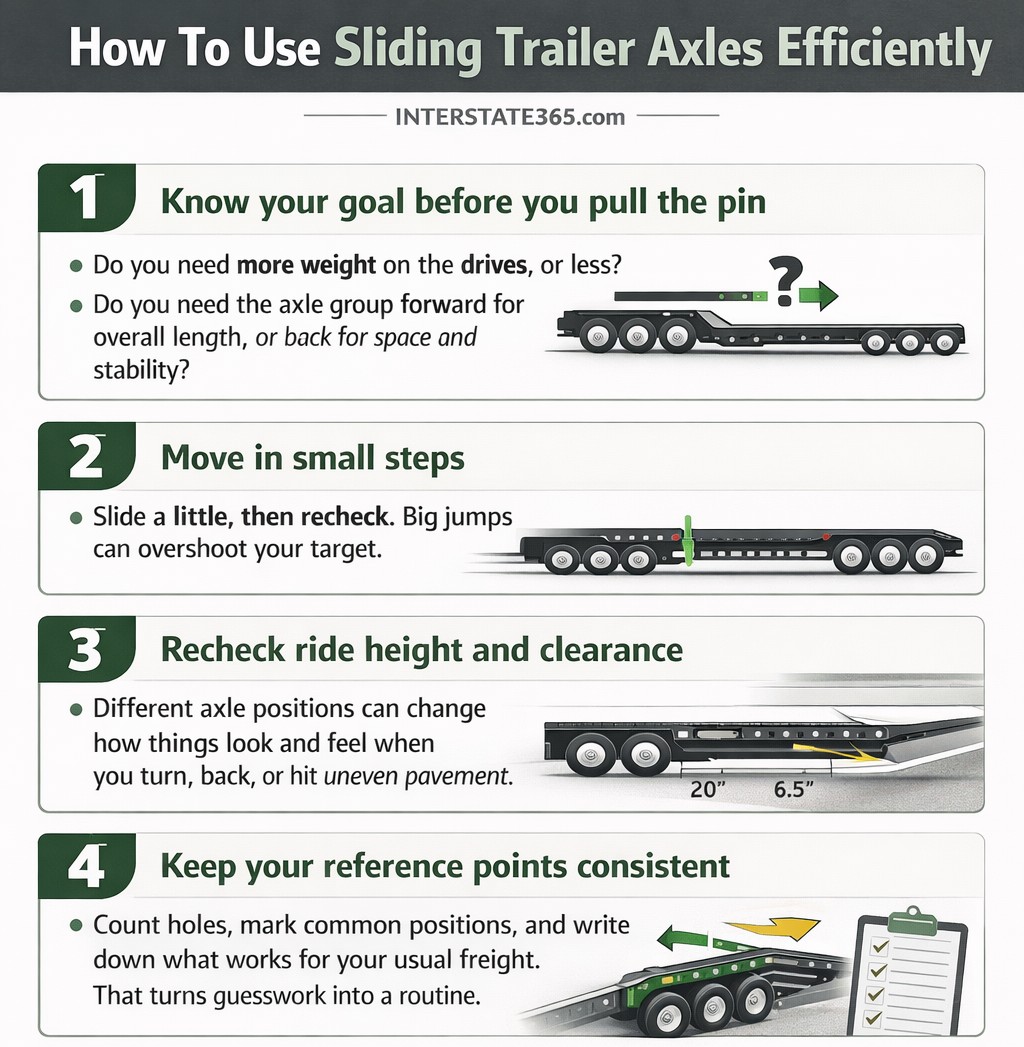
1) Know your goal before you pull the pin.
Do you need more weight on the drives, or less? Do you need the axle group forward for overall length, or back for space and stability?
2) Move in small steps.
Slide a little, then recheck. Big jumps can overshoot your target.
3) Recheck ride height and clearance.
Different axle positions can affect how a vehicle looks and feels when you turn, back up, or encounter uneven pavement.
4) Keep your reference points consistent.
Count holes, mark common positions, and write what works for your usual freight. That turns guesswork into a routine.
Common mistakes
One mistake occurs when someone chases one number while ignoring the others. You fix the trailer axles and end up heavy on the drives. Or you slide for length and forget how the load sits, then the trailer feels unstable.
Another mistake: sliding under tension or on uneven ground. Take the extra minute to set up safely and straight, or you risk a jam, a hard pull, or a bad day.
Quick take
A sliding axle trailer lets you adjust the axle position, helping with weight balance, handling, and length planning. If you haul mixed freight or face uneven loads, sliding trailer axles can save time. They also help you stay legal with fewer reloads and fewer scale disputes.