
Aluminum trailers are changing hauling. They are light, tough, and efficient, and many aluminum cargo trailers give businesses a clear edge over steel. They resist rust naturally and let you carry more cargo with less strain. If you are comparing an aluminum trailer for sale with a steel model, the weight savings are easy to see.
Whether you are moving heavy equipment, construction materials, or perishable goods, these trailers do the job well.
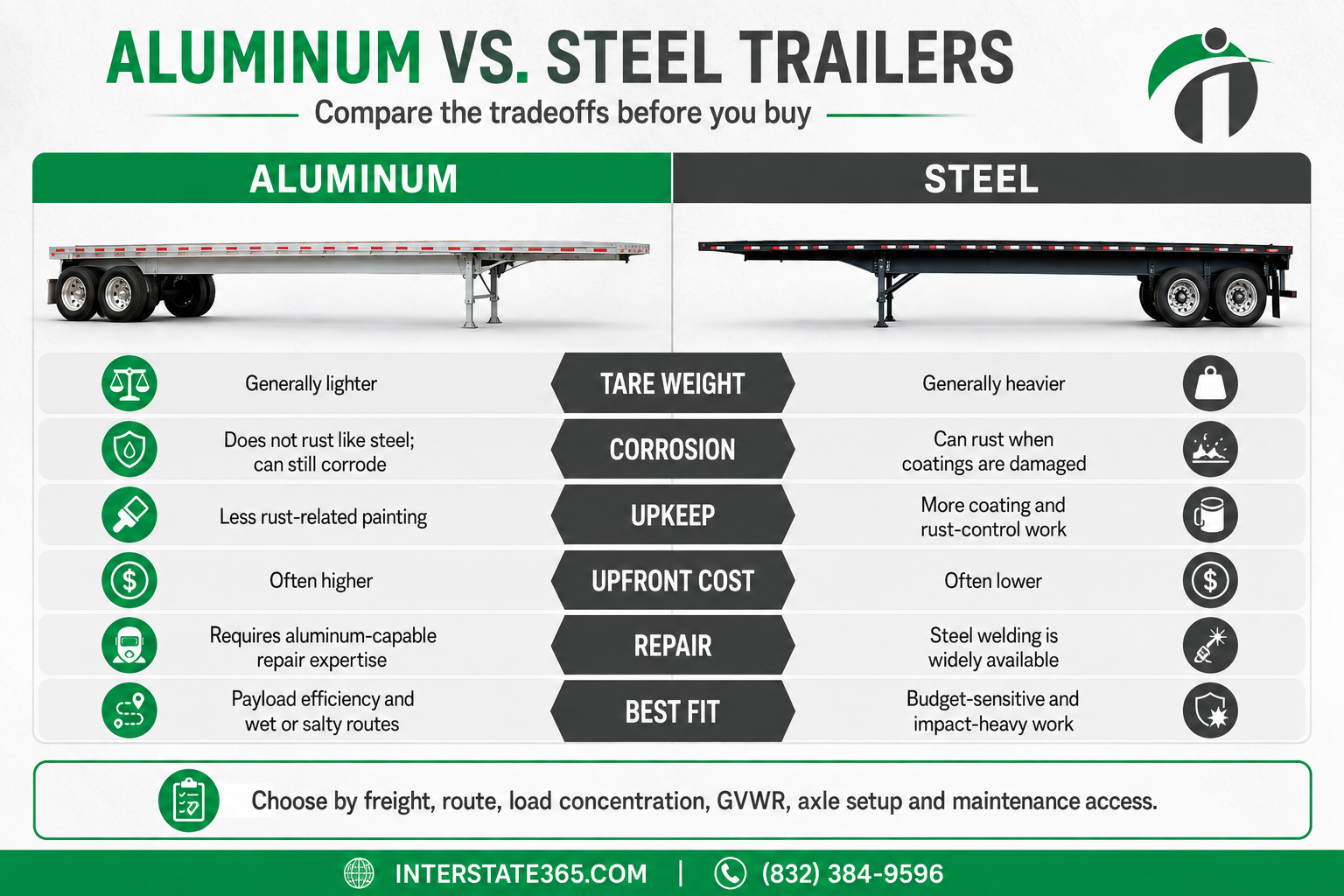
Lightweight Trailers on the Road
Aluminum trailers are known for their light build. That lower weight can improve fuel use and make towing easier. Compared with steel trailers, many aluminum cargo trailers weigh up to 30% less, which creates a real payload advantage.
A lighter trailer also means more goods in each haul. For an aluminum equipment trailer, that can mean fewer trips, lower running costs, and faster work.
Why Aluminum Resists Rust
One of aluminum’s best traits is its natural resistance to corrosion. When air touches aluminum, it forms a thin oxide layer. That layer helps block rust.
This makes aluminum trailers a strong choice for wet or salty places. They hold up well in harsh weather and stay in good shape for years, which helps cut maintenance costs.
More Cargo, Fewer Trips
Aluminum trailers give you a strong mix of strength and low weight. Because they are lighter than steel, they can handle higher payloads without hurting safety.
Every pound saved in trailer weight is a pound you can use for cargo. That is why aluminum utility trailers are a smart fit for businesses that want more load capacity. It means moving more goods in fewer trips, cutting running costs and boosting output.
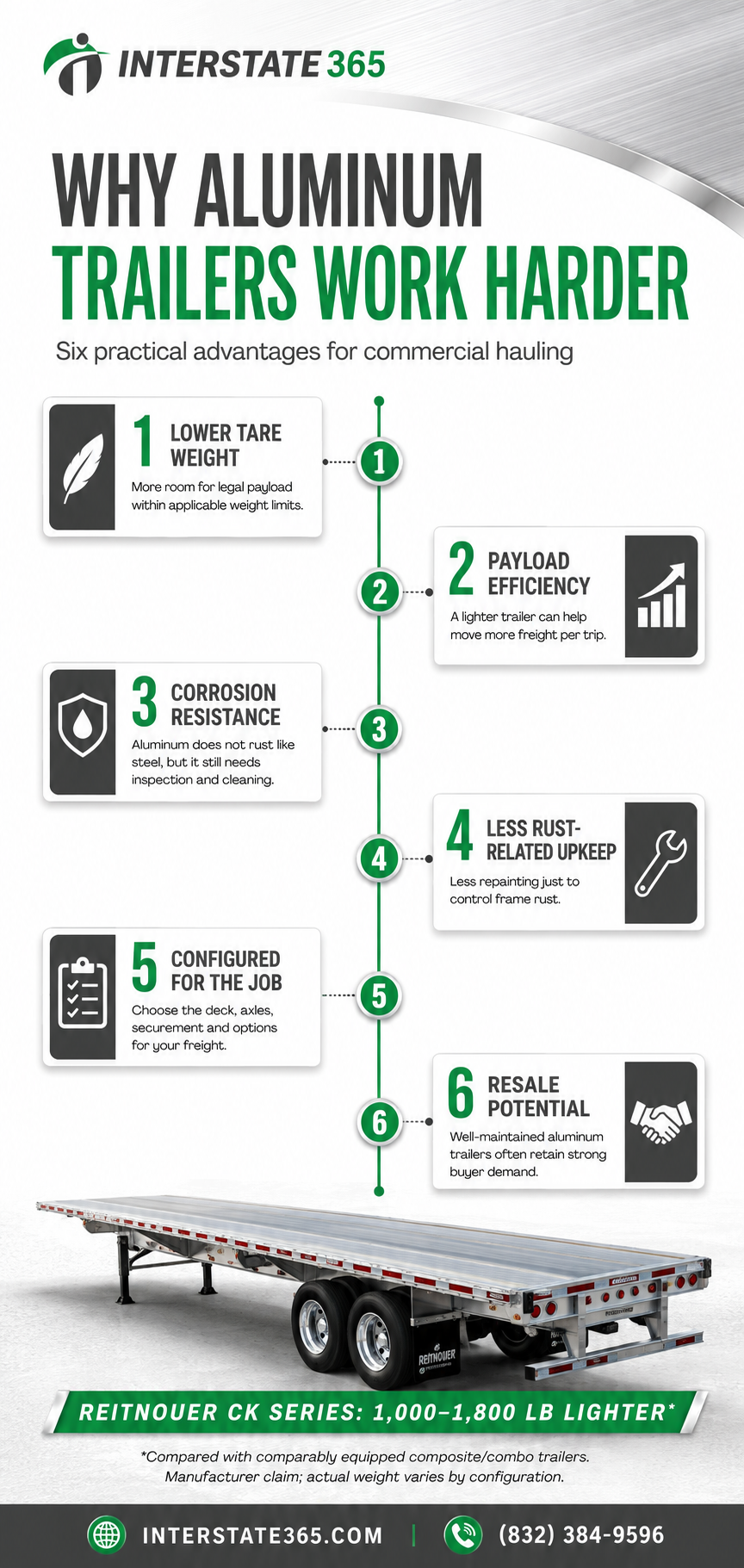
Strong and Flexible
Aluminum is light, but it is also tough. Trailer-grade alloys are built for strength and a little flex.
Aluminum trailers can handle heavy hauling without bending or warping. They are also less likely to crack or deform over time. This mix of durability and flexibility helps them perform well under hard use and gives fleet owners a long service life.
Easy to Maintain
Because aluminum resists rust and stands up well to daily use, upkeep is simple. Aluminum trailers need less routine maintenance than steel trailers. In many cases, a quick wash is enough to keep them in good shape.
That easy care saves money and reduces downtime. Businesses can keep trailers on the road longer and avoid costly repairs or rust fixes.
Strong Resale Value
Aluminum trailers often keep their value better than steel trailers. Their durability and corrosion resistance help them look good and perform well for longer.
That can return more of the original cost when it is time to sell or upgrade. For many owners, that makes aluminum a smart long-term buy.
Custom Fit: Tailoring Aluminum Trailers to Your Needs
Aluminum trailers are easy to customize, so businesses can match them to their hauling needs. You can adjust the deck size and add ramps, walls, or other features.
This makes it easy to fit different cargo types, industries, and work sites. Flatbed, enclosed, or refrigerated, aluminum trailers adapt well and stay useful in many jobs.
Protecting Sensitive Cargo
For food, drinks, or other perishable goods, aluminum trailers offer another edge: better temperature control. Their reflective surface helps slow heat buildup, which is useful when cargo needs to stay cool.
That is why many businesses use aluminum trailers for sensitive freight. These aluminum trailers create a stable environment. They help protect cargo from spoilage and keep products in better shape on arrival.
Lower Cost Over Time
Aluminum trailers may cost more at first, but their total cost is often lower than steel. Lower upkeep, better rust resistance, stronger fuel use, and good resale value all help reduce lifetime cost.
With fewer repairs and fewer replacements, these trailers can save money over time. That makes aluminum trailers a solid choice for the future.
From Flatbeds to Reefers
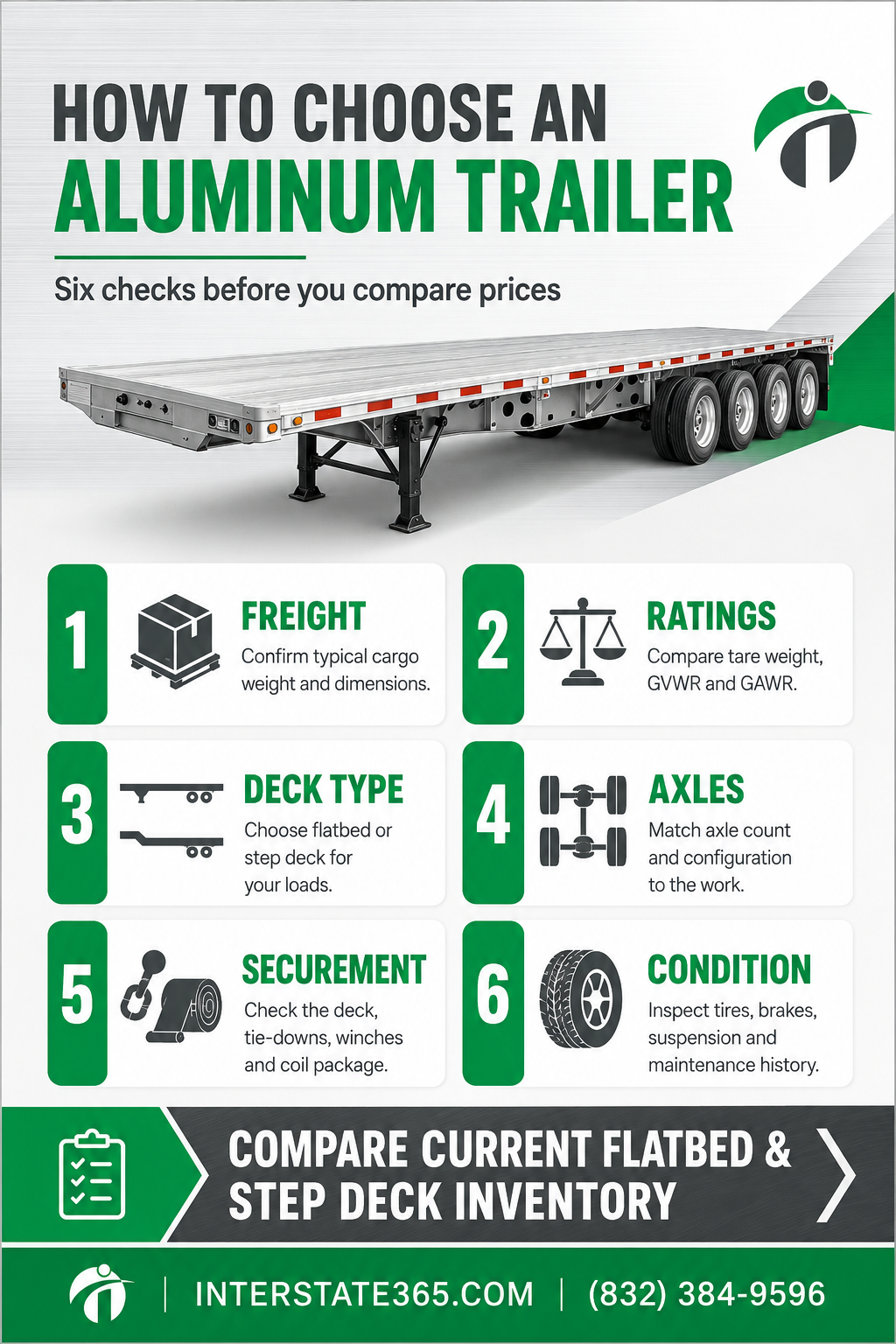
Aluminum trailers come in many styles for different jobs. Flatbeds, enclosed trailers, and refrigerated models, or reefers, are common options. Aluminum flatbeds work well for construction materials and heavy equipment. Enclosed trailers protect cargo. Reefers use aluminum’s temperature benefits to move perishables.
If you are looking for an aluminum trailer for sale, choose the style that best fits your work. The range of options gives businesses the benefits of aluminum without giving up the features they need.
Q&A
Question: Why are aluminum trailers more fuel-efficient than steel trailers?
Short answer: Because they weigh less. That lighter build reduces strain on the tow vehicle, can improve fuel use, and lets teams haul more on each trip.
Question: How does aluminum resist rust and corrosion?
Short answer: Aluminum forms a thin oxide layer when it meets air. That layer helps shield the metal from rust and corrosion, even in wet, salty, or harsh environments.
Question: Are aluminum trailers strong enough for heavy-duty hauling?
Short answer: Yes. Trailer-grade aluminum alloys are built for strength, flex, and durability, so they can carry heavy loads without bending, warping, cracking, or deforming.
Question: Why might an aluminum trailer cost less over its lifetime even if the upfront price is higher?
Short answer: Lower maintenance, better corrosion resistance, improved fuel use, fewer repairs, and strong resale value can bring down the total cost over time.
Question: What types of cargo are aluminum trailers best suited for?
Short answer: They work well for heavy equipment, construction materials, valuable cargo, and perishable goods. Flatbeds fit equipment and materials, enclosed trailers protect cargo, and reefers help move food, drinks, and other temperature-sensitive products.


