
A 53-foot flatbed trailer provides a large, open space for transporting materials, equipment, machinery, lumber, steel, and other items that can’t fit in a closed trailer.
Choosing the right one means looking beyond length and price to match the trailer’s structure, deck, securement options, and condition to the work it needs to do. Use this guide to compare features confidently before you buy flatbed trailer equipment for your fleet or business.
What should you check first in a 53ft flatbed trailer?
Start by confirming the trailer’s length, deck style, weight rating, and condition match the freight you’ll haul most often.
A 53ft flatbed trailer for sale may look like any other at first. But small differences in deck material, frame, axle setup, tie-down points, and maintenance history can affect daily performance.
Before comparing cosmetic details, focus on whether the trailer is built for your load type, route demands, and loading process.
A practical first pass should include:
- Trailer length and usable deck space: Make sure the full 53ft layout supports your freight dimensions and loading method.
- Frame and crossmember condition: Look for signs of structural wear, corrosion, cracks, or repairs.
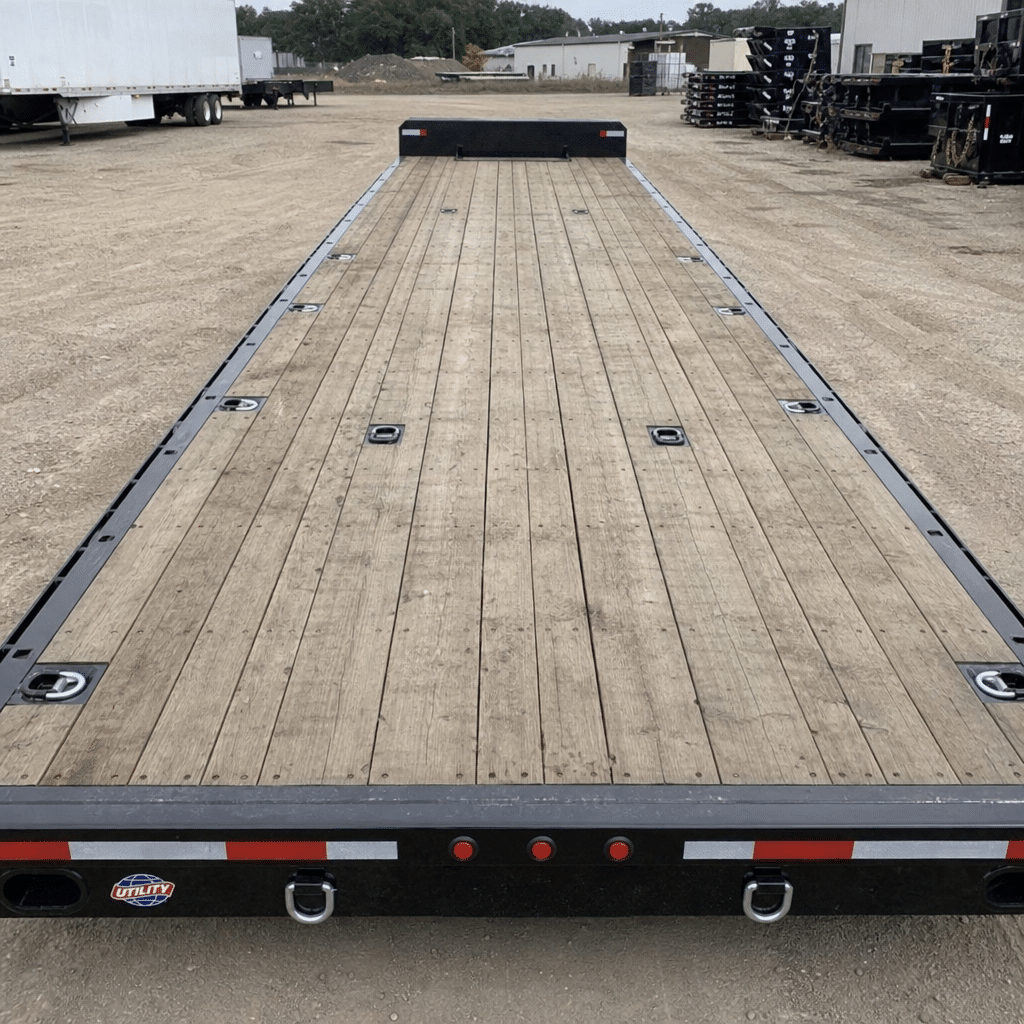
- Deck surface: Check whether the deck is clean, even, secure, and appropriate for forklifts, pallets, equipment, or building materials.
- Securement system: Review winches, rub rails, stake pockets, D-rings, and chain tie-down options.
- Tires, brakes, and suspension: These affect safety, compliance, and near-term operating costs.
1. Define the freight you plan to haul
Begin with the load, not the listing. A 53ft flatbed can haul many freight types, but the best trailer for steel beams may not suit palletized building supplies, machinery, or oversized equipment. Write down the typical length, width, height, and weight of the cargo you expect to move, then compare those needs against the trailer’s usable deck space and load rating.
This step helps prevent overbuying or underbuying. If your loads require frequent side access, an open flatbed design helps because forklifts and cranes can reach the cargo more easily than an enclosed trailer. If the freight needs tarping, consider whether the trailer layout leaves room for safe tarp placement, edge protection, and secure tie-down angles.
2. Inspect the trailer frame and main beams
The frame is one of the most important features of any 53ft flatbed trailer for sale. Inspect the main beams, crossmembers, welds, rear impact area, and suspension mounting points. Surface wear is normal on used equipment, but deep rust, bending, cracks, or poorly finished repairs warrant closer inspection before purchase.
A strong frame supports better load distribution and helps the trailer handle repeated use. When comparing flatbed trailer inventory, ask for clear photos or, if possible, an in-person inspection of the underside. Watch for areas where moisture, road debris, or heavy loads can cause stress over time.
3. Evaluate the deck material and surface condition
The deck is where the trailer meets the freight, so it shouldn’t be an afterthought. Wood, aluminum, and combination deck designs each have practical advantages depending on the application. What matters most is a stable, properly attached surface that suits the equipment used during loading.
Walk the deck if you are inspecting in person. Look for soft boards, missing fasteners, uneven panels, gouges, oil saturation, or damaged edges. A worn deck may still be serviceable, but replacement or repair can add cost after purchase, so include that in your decision when comparing a 53ft flatbed trailer for sale in Texas or any other market.
4. Review tie-down and cargo securement features
Cargo securement is a daily-use feature, not an accessory. A good flatbed setup should provide flexible anchor points for different load shapes and weights. Common features include stake pockets, rub rails, sliding winches, chain spools, D-rings, and winch tracks.
Look at both placement and condition. Tie-down points should allow proper angles for straps and chains without forcing awkward routing around sharp edges. If hardware is bent, seized, missing, or heavily worn, the trailer may still be usable, but you should budget for replacement parts before putting it into regular service.
5. Check the axle, suspension, tire, and brake setup
A flatbed’s running gear affects how it rides, stops, and carries weight on the road. Review the axle configuration, suspension type, tire condition, wheel ends, brake components, air lines, and lights.
While these features may not be as noticeable as the deck, they can significantly affect safety and maintenance.
Ask when the brakes, tires, and suspension components were last serviced if that information is available. Uneven tire wear can point to alignment, suspension, or loading issues. Address damaged air lines, weak brakes, or mismatched tires before hauling freight.
6. Compare weight, capacity, and compliance details
Before you buy flatbed trailer equipment, confirm that the trailer’s specifications align with legal and operational requirements for your routes. Review gross vehicle weight rating, axle ratings, empty weight, and any available manufacturer information. The goal is to understand how much payload the trailer can realistically support once connected to the tractor and loaded.
Do not rely on appearance alone. Two 53ft trailers can differ in weight, construction, and capacity even when they look similar in photos. If you haul across state lines or carry specialized freight, make sure the trailer can support your compliance needs before you commit.
How do you compare listings without getting overwhelmed?
Use a short checklist to compare listings, then rank each trailer by fit, condition, and total expected cost. Price matters, but the lowest upfront number may not be the best value if the trailer needs immediate tires, deck repairs, brake work, or securement upgrades. A simple comparison process helps you separate a good deal from a costly project.
Use this buying checklist as you review options:
- Confirm the trailer is the correct length and configuration for your freight.
- Review photos of the deck, frame, underside, tires, brakes, and lights.
- Ask about maintenance history, title status, and known issues.
- Estimate repair or upgrade costs before comparing final prices.
- Consider location, pickup logistics, and whether the trailer is ready to work.
- Save comparable listings so you can evaluate value side by side.
If you are actively shopping, browse available 53ft options here. Reviewing current flatbed trailer inventory helps you understand common features, available condition levels, and how different listings match your hauling needs.
7. Match location and use case before making an offer
Location can affect convenience, transport cost, and timing. If you are searching for a 53ft flatbed trailer for sale in Texas, factor in whether the trailer is close enough for inspection, pickup, or delivery. A nearby trailer may save time, but it should still meet your structural and operational requirements.
Think through how soon the trailer needs to enter service. If you need it immediately, prioritize road-ready condition, dependable running gear, and complete securement hardware. If you can handle repairs before use, a trailer needing minor work may still be worth considering, but only after you price those repairs honestly.
8. Make a final inspection before you buy
Before closing the deal, perform one final review of the features that matter most: frame, deck, tires, brakes, suspension, lights, securement points, and paperwork. If possible, inspect the trailer in person or request detailed photos and documentation. This final step protects you from surprises and helps confirm that the listing matches the equipment.
A good 53ft flatbed trailer will help with your freight, loading, and schedule. It can also help prevent extra repair issues.
To compare listings and choose equipment that is ready for work, check the structure, deck, securement system, running gear, and compliance details in that order.


