

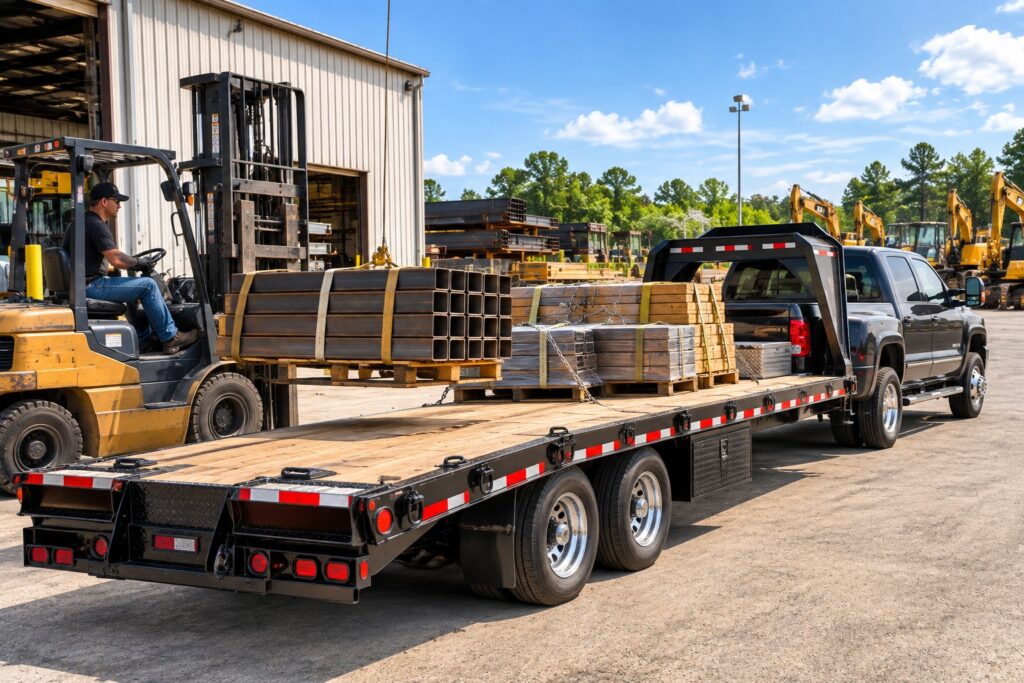
A fifth wheel flatbed trailer is a flatbed-style trailer that connects to a tow vehicle through a fifth wheel hitch. Many buyers also use the term to describe gooseneck flatbed trailers, especially in equipment hauling and hotshot trucking. These trailers offer strong stability, good weight distribution, and open-deck loading space for machinery, vehicles, building materials, farm equipment, and commercial freight.
A fifth wheel flatbed trailer works best when the load needs more deck space and better towing control than a bumper-pull trailer can provide. Buyers should compare deck length, GVWR, axle setup, tire rating, ramp style, hitch type, brake system, and payload before choosing one.
What is a fifth wheel flatbed trailer?
A fifth wheel flatbed trailer is an open-deck trailer that connects near or over the rear axle of the tow vehicle. This hitch position helps spread the trailer weight more evenly. It also improves turning control and towing stability.
In common use, many people say “fifth wheel flatbed trailer” when they mean a gooseneck flatbed trailer. The two systems do not use the exact same coupler, but buyers often compare them because both connect inside the truck bed instead of behind the bumper.
A standard flatbed trailer gives you a long, open platform. That makes loading easier from the side, rear, or top. It also works well for freight that does not fit inside an enclosed trailer.
If you need commercial open-deck equipment, you can compare available flatbed trailers for sale through INTERSTATE 365.
Fifth wheel flatbed trailer vs gooseneck flatbed trailer
Many buyers confuse fifth wheel and gooseneck trailer setups. They both connect in the truck bed, but the hitch design differs.
| Feature | Fifth wheel flatbed trailer | Gooseneck flatbed trailer |
|---|---|---|
| Hitch style | Kingpin and fifth wheel hitch | Ball and coupler |
| Common use | RVs, some commercial and custom trailers | Hotshot, farm, equipment, and commercial hauling |
| Turning control | Strong stability | Strong stability |
| Bed space impact | Requires fifth wheel hitch plate | Uses gooseneck ball |
| Common flatbed market term | Less common | More common |
| Best for | Buyers with fifth wheel hitch setups | Equipment, freight, and hotshot hauling |
For most commercial buyers, the gooseneck flatbed trailer is more common. But the search phrase “fifth wheel flatbed trailer” still matters because many users use both terms during research.
What can you haul with a fifth wheel flatbed trailer?
A fifth wheel flatbed trailer can handle many freight types. Its open deck gives you room for loads that need side access or overhead loading.
Common uses include:
- Farm equipment
- Compact machinery
- Skid steers
- Small loaders
- Vehicles
- Lumber
- Steel
- Pipe
- Palletized freight
- Hay
- Building materials
- Landscaping equipment
- Hotshot freight
The trailer works well when freight has odd dimensions. It also helps when the load does not need walls, a roof, or climate control.
Why buyers choose fifth wheel flatbed trailers
The biggest reason comes down to control. A trailer that connects over the rear axle usually tows better than a bumper-pull trailer with the same load class.
Key benefits include:
- Better weight distribution
- More stable towing
- Better turning control
- Higher payload options
- Stronger commercial use cases
- Easier loading from multiple angles
- More deck space than many bumper-pull trailers
- Better fit for hotshot and equipment hauling
A flatbed design also gives buyers more flexibility. You can secure freight with chains, straps, binders, stake pockets, rub rails, winches, and other tie-down systems.
When does a fifth wheel flatbed trailer make sense?
A fifth wheel flatbed trailer makes sense when you need more trailer control and more open deck space. It also helps when the load changes from job to job.
Choose this trailer type when:
- You haul equipment often
- You need side loading
- You carry long or wide materials
- You need better towing stability
- You want more payload than a smaller trailer can offer
- You move mixed freight
- You run hotshot or regional hauling jobs
- You need a trailer for farm, construction, or commercial work
A smaller utility trailer may work for light jobs. But it will not give you the same deck space, towing control, or freight flexibility.
What size fifth wheel flatbed trailer do you need?
The right size depends on the cargo. Many buyers compare trailer length, width, axle count, and gross vehicle weight rating before deciding.
Common deck lengths include:
- 20 ft
- 25 ft
- 30 ft
- 32 ft
- 35 ft
- 40 ft
- 45 ft
- 50 ft
Shorter trailers suit local equipment work. Longer trailers suit hotshot freight, building materials, and longer machines.
Width also matters. Many flatbed trailers use a deck width around 102 inches. That width gives buyers more space for equipment and freight. Buyers still need to check state rules, route limits, and load dimensions before hauling oversized freight.
Fifth wheel flatbed trailer vs semi flatbed trailer
A fifth wheel flatbed trailer usually refers to a trailer pulled by a pickup or medium-duty truck. A semi flatbed trailer connects to a tractor and handles larger commercial freight.
| Feature | Fifth wheel / gooseneck flatbed | Semi flatbed trailer |
|---|---|---|
| Tow vehicle | Pickup or medium-duty truck | Semi tractor |
| Common users | Hotshot haulers, farms, contractors | Fleets, carriers, owner-operators |
| Load size | Light to medium commercial freight | Full commercial freight |
| Trailer length | Often 20–50 ft | Often 48–53 ft |
| Best use | Equipment, farm, regional, hotshot | Long-haul flatbed freight |
If you need a larger commercial trailer, review INTERSTATE 365’s full trailers for sale inventory to compare flatbeds, step decks, RGNs, and other open-deck options.
What to check before buying
A fifth wheel flatbed trailer should match your freight, truck, and route. Do not buy only by length or price. Check the full setup.
Important buying factors include:
Payload capacity
Payload tells you how much freight the trailer can carry after subtracting trailer weight from GVWR. A heavy trailer may reduce your usable payload.
Axle setup
Tandem dual axles can support heavier work than single-wheel axle setups. Always compare axle rating, tire rating, and brake setup.
Deck length
Deck length should match your usual freight. A trailer that is too short limits jobs. A trailer that is too long can reduce maneuverability.
Deck material
Steel decks can take hard use. Wood decks can work well for many commercial loads. Aluminum options may reduce empty weight.
Ramps
Equipment buyers should check ramp length, load angle, and ramp rating. Low-profile equipment may need a gentler approach angle.
Tie-down options
Look for stake pockets, rub rails, D-rings, chain slots, and winch track options. Better tie-down access makes loading faster and safer.
Hitch compatibility
Make sure your truck has the right hitch system. A fifth wheel hitch and a gooseneck ball do not connect the same way.
Which brands should buyers compare?
For pickup-pulled flatbed and gooseneck trailers, buyers often compare brands such as Big Tex, Diamond C, Kaufman, PJ Trailers, Load Trail, Gatormade, and similar manufacturers.
For larger commercial flatbed needs, buyers may also compare full-size trailer brands. Reitnouer, for example, has a strong name in aluminum flatbed and step deck trailers. Buyers who want lightweight commercial open-deck equipment can review Reitnouer trailers from INTERSTATE 365.
The best brand depends on the job. A farm trailer, hotshot trailer, and long-haul flatbed trailer may all need different specs.
Final answer: Is a fifth wheel flatbed trailer worth it?
A fifth wheel flatbed trailer is worth it when you need better towing stability, more deck space, and stronger freight flexibility than a bumper-pull trailer offers. It works well for equipment, farm, construction, hotshot, and commercial hauling.
Most buyers should also compare gooseneck flatbed trailers, since that term covers many similar use cases. Focus on payload, axle rating, deck length, ramps, tie-downs, and hitch compatibility before buying.
If your hauling needs move beyond pickup-pulled trailers, compare larger commercial flatbeds, step decks, and open-deck trailer options before choosing the final setup.
FAQ
Is a fifth wheel flatbed trailer the same as a gooseneck flatbed trailer?
No. A fifth wheel trailer uses a kingpin and fifth wheel hitch. A gooseneck trailer uses a ball and coupler. Many buyers still compare them because both connect inside the truck bed.
What is a fifth wheel flatbed trailer used for?
A fifth wheel flatbed trailer can haul equipment, vehicles, farm supplies, lumber, steel, pipe, building materials, and hotshot freight.
Is a fifth wheel flatbed trailer better than a bumper-pull trailer?
It can be better for heavier loads because the hitch position improves stability and weight distribution.
What size flatbed trailer should I buy?
Choose the size based on your cargo. Many buyers compare 20 ft, 30 ft, 40 ft, and 50 ft flatbed trailer options.
What should I check before buying one?
Check payload, GVWR, axle rating, tire rating, brakes, deck length, ramps, tie-down points, and hitch compatibility.