
What Should a Semi Trailer Inspection Checklist Cover?
A semi trailer inspection checklist covers visible tires, wheels, brakes, air lines, lights, coupling, suspension, frame, and cargo securement.
Inspect the combination from a safe position, report defects, and follow your carrier’s procedures and applicable regulations.
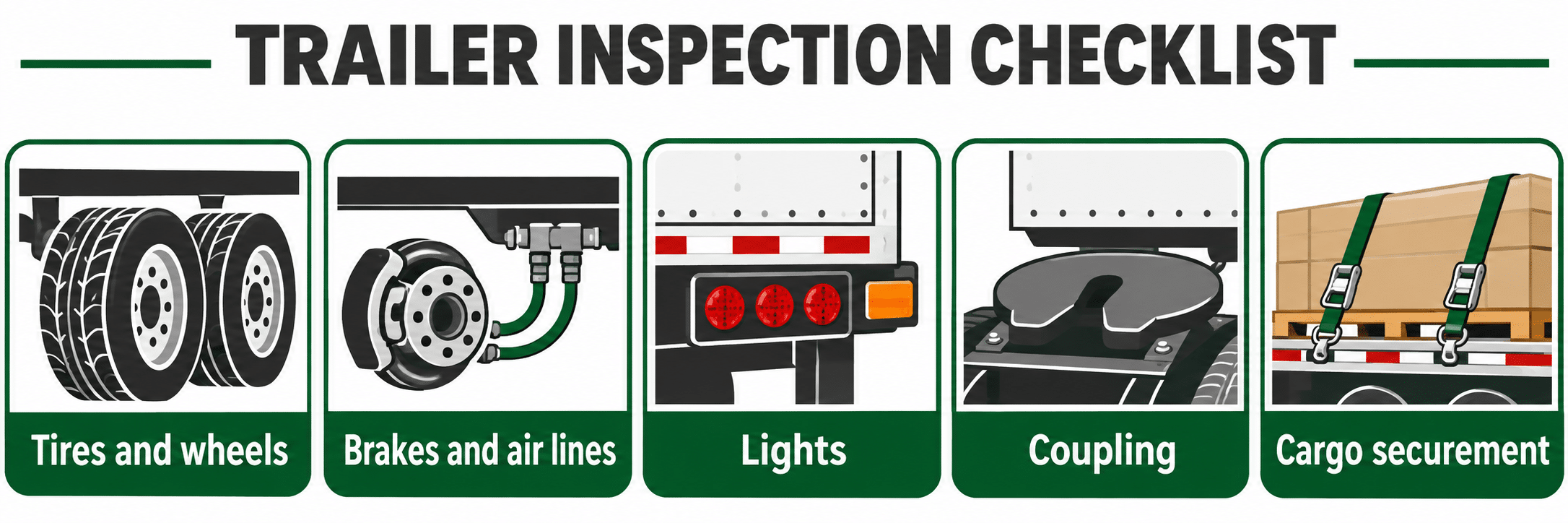
How Should You Inspect Tires and Wheels?
Look for cuts, bulges, exposed material, objects between dual tires, damaged rims, missing hardware, and unusual wear.
Check inflation with an appropriate gauge according to the manufacturer’s instructions. A visual check alone cannot reliably establish the correct pressure. Report suspected wheel-end leaks or damage.
What Should You Check Around the Brakes?
Inspect readily visible brake components and connections, listen for air leaks, and check hoses for abrasion or damage. Confirm that indicator lights behave as required by the equipment. A qualified technician should examine brake defects and carry out repairs. Never work under an unsupported vehicle.
How Should Your Trailer Inspection Checklist Cover Lights?
Include the electrical cable and connector in your semi trailer inspection checklist, then check the required lamps, reflectors, turn signals, and brake lights.
A second person or a safe testing method can help verify rear lights. Clean dirty lenses and report cracked housings or lamps that do not function.
What About the Coupling and Landing Gear?
Check the fifth-wheel connection and locking mechanism according to the tractor and trailer instructions.
Verify that the trailer is properly coupled and the air and electrical lines have adequate clearance. Inspect landing gear for obvious damage and confirm it is secured in the travel position.
How Should You Review the Trailer Structure?
Walk around the unit and look for damaged crossmembers, cracked welds, loose floor sections, bent components, or signs of corrosion. Check the suspension and visible mounting points. Do not assume that a recently painted surface proves the structure is sound.
How Do You Check Cargo Securement?
Confirm that the load is positioned and secured for its size, weight, and commodity. Inspect straps, chains, binders, hooks, and anchor points for damage. Applicable FMCSA requirements include cargo-specific rules and reinspection duties, subject to their exceptions. Follow your carrier’s procedures and the rules for the load.
How Can You Make the Walk-Around Consistent?
Follow the same route around the combination each time so that important areas are less likely to be missed. Start with the coupling and lines, continue along one side, check the rear, and return along the other side. Use your carrier’s approved inspection process and avoid distractions. A checklist is most useful when the driver actually looks at each item rather than simply marking boxes.
What Information Should a Defect Report Include?
Identify the trailer and the location of the problem, then describe what you observed. For example, record a damaged hose at a specific connection or an inoperative lamp at the rear. Include a photo when your carrier’s system permits it. Clear descriptions help maintenance staff locate the problem and decide whether the trailer can be dispatched.
Frequently Asked Questions
Does a Semi Trailer Inspection Checklist Change by Type?
Yes. A semi trailer inspection checklist should account for the equipment fitted to the unit. A driver inspecting flatbed trailers should pay close attention to deck and tie-down points. Step deck trailers may have ramps or upper-deck equipment to check. RGN trailers may have detachable-neck and hydraulic components with their own instructions.
What Should You Do If You Find a Defect?
Record and report the issue under your carrier’s system. Do not operate equipment that is unsafe or fails applicable requirements. A qualified person should assess and repair the issue, with completion documented before the unit returns to service. A checklist supports inspection but does not replace the regulations or manufacturer guidance.
Can You Inspect a Trailer in Poor Weather or Darkness?
Yes, but lighting and safe footing matter when using a semi trailer inspection checklist in poor weather or darkness. Use a suitable flashlight, wear high-visibility clothing where appropriate, and avoid traffic and slippery surfaces. Do not place yourself under a trailer that is not supported for the work. If conditions prevent a required check, move to a safe location where it can be completed before the trip.
Does a Semi Trailer Inspection Replace Periodic Inspection?
No. A driver’s pre-trip inspection and required periodic inspections serve different purposes. A maintenance program should also follow the manufacturer’s recommendations and the rules that apply to the operation. Keep records of defects and completed repairs so dispatch and maintenance know when the trailer is ready.


