
What Is a Trailer Tire Inflation System?
A trailer tire inflation system helps maintain tire pressure by supplying air to trailer tires when pressure falls below a set target.
Systems differ in design and functions. Some monitor or regulate additional conditions, so verify the exact model and its manufacturer’s instructions.
How Does a Trailer Tire Inflation System Work?
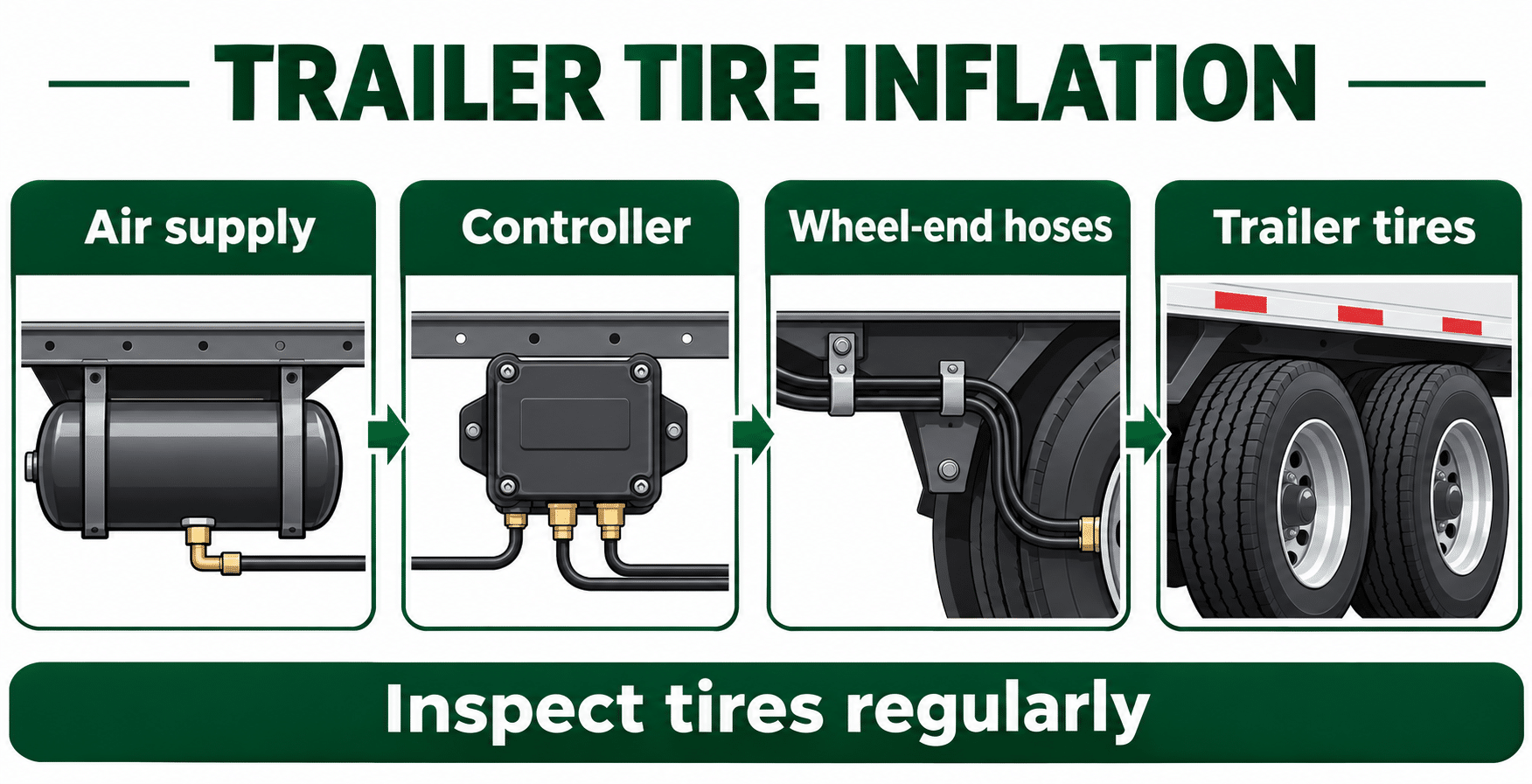
A trailer tire inflation system often uses compressed air from the trailer’s air supply.
A controller directs air through lines and wheel-end connections to the tires. When a tire needs air, the system can supply it while the trailer’s air supply is available. A warning lamp may indicate sustained inflation or a system fault, depending on the design.
What Problems Can It Help Manage?
Tires gradually lose pressure and can develop slow leaks. Maintaining the specified pressure can support tire performance and help operators detect problems sooner. A system cannot repair punctures, damaged sidewalls, worn tread, or faulty valves. Drivers still need to inspect tires and respond to warning indicators.
How Should Drivers Check a Trailer Tire Inflation System?
When checking a trailer tire inflation system, look for visible tire damage, objects lodged between dual tires, damaged hoses, leaks, and unusual wear.
Confirm the warning lamp behavior described in the manufacturer’s guide. Check cold tire pressure with a suitable gauge according to the tire and vehicle manufacturer’s instructions. Never ignore a persistent warning.
Which Trailers Can Have a Tire Inflation System?
Depending on the unit and its configuration, these systems may be fitted to flatbed trailers, step deck trailers, or RGN trailers. Equipment varies by listing. Confirm the model, installation, current condition, and service history with the seller before purchasing.
What Should Buyers Ask About Trailer Tire Inflation Systems?
Ask for the system manufacturer, model, target pressure settings, warning-light instructions, maintenance records, and whether all wheel positions are connected. Check how replacement hoses and parts are sourced. On a used trailer, request a demonstration or qualified inspection and budget for any needed repairs.
How Should a Fleet Record Inflation-System Problems?
Record the trailer number, time, observed warning, tire position, and any pressure reading obtained safely.
Note whether the warning appeared during inflation, continued while parked, or returned after service. Send the information to the maintenance team with a photo if useful. A consistent record makes recurring leaks and damaged hoses easier to investigate.
What Should a Used-Trailer Buyer Inspect?
Ask whether the system was installed at the factory or later, whether the seller has manuals, and what repairs have been performed. Inspect visible hoses and fittings for damage, but do not open or dismantle pressurized components without the appropriate training. A qualified inspection can confirm the system’s condition and identify missing components or service needs.
Is a Trailer Tire Inflation System Worth the Investment?
To evaluate a trailer tire inflation system, compare the price of the option or retrofit with installation, replacement parts, service, and the trailer’s expected use. Review your fleet’s tire pressure and repair records before projecting savings. Benefits depend on operating conditions, maintenance, and the system selected. Ask for a written equipment specification and an explanation of warranties and service support.
Frequently Asked Questions
Is Automatic Inflation the Same as Tire Pressure Monitoring?
No. An automatic inflation system supplies air; a tire pressure monitoring system reports pressure information. Some equipment combines functions or connects to monitoring software, but the systems are not interchangeable. Ask which hardware and alerts are fitted to the specific trailer.
Are All Systems Designed to Release Excess Pressure?
No. Basic inflation systems and more advanced pressure-control systems offer different features. For example, some Hendrickson TIREMAAX models can inflate, equalize, and relieve pressure, while capabilities vary by model. Confirm the equipment’s specification instead of assuming every automatic system provides the same functions.
Can an Inflation System Replace Tire Maintenance?
No. Pressure control does not replace routine inspections, correct tire selection, wheel-end maintenance, or a repair plan. A persistent leak or repeated pressure loss needs investigation by a qualified technician. Follow the system and tire manufacturer’s service procedures, and never work beneath an unsupported trailer.
What Happens When a Tire Loses Air Quickly?
A trailer tire inflation system can compensate for some loss, but its air supply and flow are limited. A large puncture, damaged hose, or failed connection may exceed its ability to maintain pressure. Follow the warning-light instructions for the installed system and stop safely when inspection is needed. A technician should find the source of the loss and repair the tire or equipment before the trailer returns to service.


