
What Is the Weight Capacity of a Flatbed Trailer?
Flatbed trailer weight capacity depends on manufacturer ratings, empty weight, tractor and trailer configuration, axle weights, and applicable road limits.
There is no safe capacity that applies to every flatbed. Check the trailer’s rating plate and loading instructions, then verify the loaded combination on a scale.
What Is the Difference Between GVWR and Payload?
Gross vehicle weight rating, or GVWR, is the maximum weight assigned to the vehicle by its manufacturer.
Payload is the weight of cargo and other load the trailer can carry within its applicable ratings. Subtracting the trailer’s actual empty weight from its GVWR can provide a starting estimate, but axle, tire, component, loading, and legal limits can reduce the allowable payload.
Why Does the Tractor Matter?
A trailer does not carry the load alone. Cargo placement changes the weight transferred through the kingpin to the tractor and the weight carried by the trailer axles. The tractor’s ratings, axle configuration, fuel, equipment, and combined vehicle limits all matter. A load that looks acceptable on the trailer specification sheet can still overload an axle on the road.
Why Does Load Distribution Affect Flatbed Trailer Capacity?
Flatbed trailer weight capacity also depends on how the cargo is distributed.
Weight concentrated in a short section of deck can exceed the trailer’s concentrated load rating even when the total cargo weight appears acceptable. Manufacturers may list separate ratings for loads spread over different lengths. Compare the actual load footprint with the trailer’s rated loading conditions, and use appropriate supports when the manufacturer specifies them.
How Do Axle Limits Affect Flatbed Trailer Weight Capacity?
Axle spacing and the weight carried on each axle affect compliance.
On the US Interstate System, federal limits and the Bridge Formula apply, subject to exceptions; state and route rules can also matter. Do not assume that the same cargo placement will be legal across every route. Confirm axle weights and route requirements before departure.
How Can You Verify Your Actual Weight?
Weigh the tractor and trailer with the cargo, fuel, and equipment needed for the trip. Review gross weight and axle-group readings, then compare them with vehicle, tire, axle, and legal limits. If a group is overweight, work with the shipper to reposition or reduce the load and weigh again. Do not exceed a rating simply because the total appears within a general highway limit.
Does a Longer Flatbed Always Carry More?
A longer flatbed does not necessarily have a higher flatbed trailer weight capacity. Length alone does not establish capacity. Frame design, axle configuration, materials, trailer weight, tire ratings, and manufacturer loading requirements all affect what a trailer can carry. When comparing a flatbed trailer, review its actual specifications and match them to the cargo you intend to haul.
Can You Haul a Heavy Load If It Is Secured Properly?
Securement is essential, but it does not increase the trailer’s structural or legal weight limits. Drivers must use suitable securement for the load and meet applicable federal and state requirements. If the cargo exceeds legal limits, determine whether an oversize or overweight permit is available for the specific load and route before moving it.
What Should Buyers Ask Before Choosing a Flatbed?
Request the GVWR, empty weight, axle ratings, tire specifications, concentrated load ratings, and axle configuration for the exact unit. Ask how accessories change empty weight and whether the trailer is suitable for your freight. Availability, condition, and specifications can vary between listings.
The Bottom Line
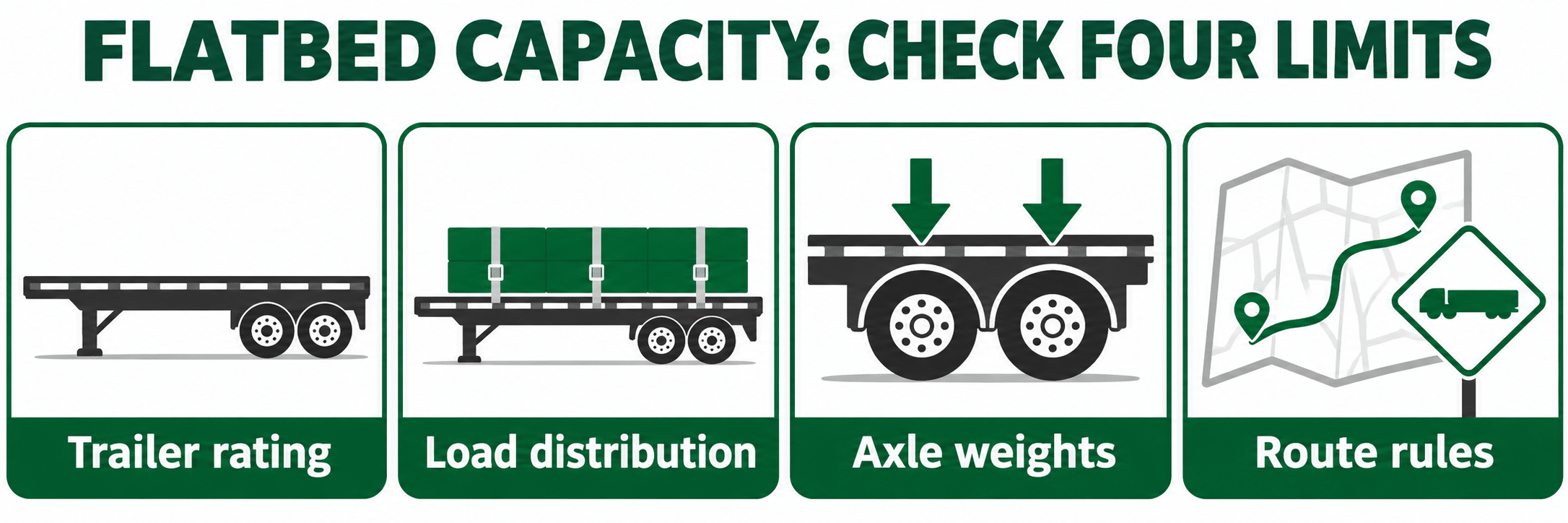
Safe capacity is the lowest applicable limit after considering equipment, load distribution, actual axle weights, and the route. Read the manufacturer’s documentation, plan the load, secure it correctly, and confirm your weights on a scale before heading out.
How Do Tire and Axle Ratings Affect Flatbed Capacity?
Flatbed trailer weight capacity is also limited by the ratings of the tires and axles fitted to the unit. The maximum supported load depends on the equipment fitted and the applicable tire inflation and operating conditions. A replacement tire is not automatically equivalent to the original specification. Compare the ratings on the actual tires and axles with the trailer documents and ask a qualified professional about any mismatch.
Why Is Empty Trailer Weight Only a Starting Point?
A published empty weight may describe a standard configuration without every accessory. Tarps, toolboxes, ramps, securement equipment, and later modifications can change what a particular trailer weighs. Tractor fuel and additional equipment also affect the weight of the combination. Use actual scale readings when planning a specific load, rather than assuming every trailer of the same model has identical weight.
How Do You Handle Steel Coils and Other Concentrated Loads?
Dense freight can place a large load over a limited area of deck. Review the trailer manufacturer’s concentrated-load ratings, cargo-specific securement rules, and loading instructions before accepting the freight. Use the equipment and support specified for that trailer and load. A coil package alone does not authorize a load above the trailer’s structural or legal limits.
What If an Axle Group Is Overweight?
Stop and work with the shipper or a qualified operator to change the load or configuration safely. Depending on the equipment, that may mean repositioning cargo, selecting an approved sliding-axle position, or removing weight. Reweigh after any change. Do not assume that moving an axle will resolve every problem, and check route-specific rules before resuming the trip.


