

If you haul machinery or oversized equipment, you have probably heard people say step deck and rgn in the same breath. Some even ask, is a step deck and RGN the same? They are not. Both are common heavy haul trailers, but they solve different problems based on trailer build, loading method, and legal height.
This guide breaks down the difference between step deck and RGN trailers in plain terms: loading, height, ramp angle, upkeep, and how to choose the best trailer for your freight.
Step deck trailer vs RGN trailer: quick definitions
Step deck trailer
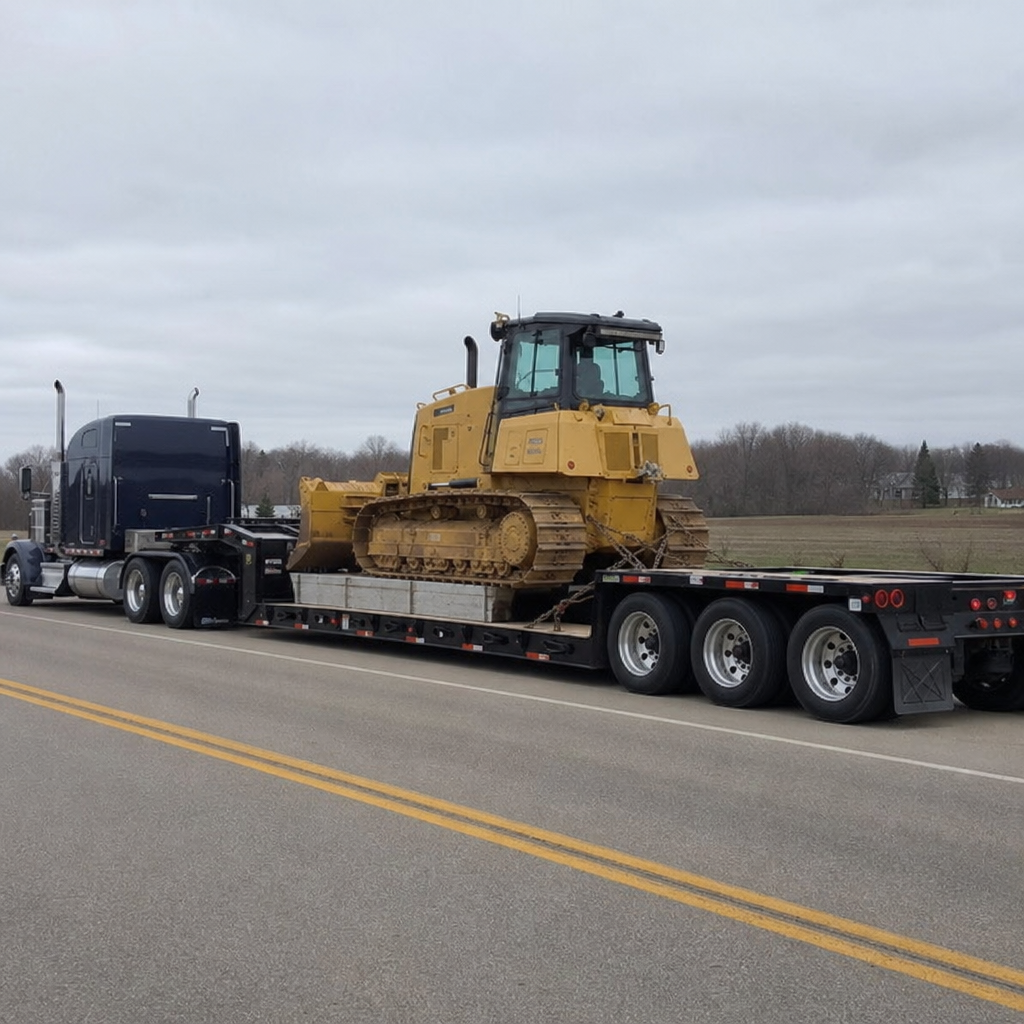
A step deck trailer has two deck levels:
- An upper deck near the tractor
- A lower deck, or step down
The main benefit is more legal height room than a standard flatbed, without moving to a true lowboy trailer.
If you want examples, see step deck trailers for common setups.
RGN trailer meaning
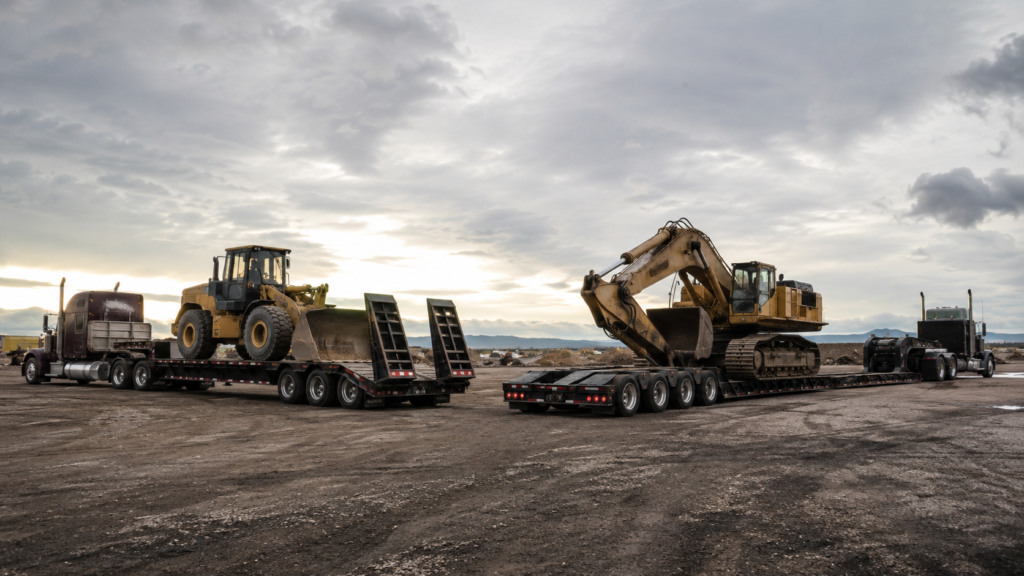
An RGN trailer, also called a removable gooseneck trailer, detachable gooseneck trailer, or detachable gooseneck trailer, has a neck that comes off the front. When the neck is off, the deck can sit on the ground so equipment can drive on.
If you are comparing options, browse RGN trailers for common deck lengths, axle setups, and heavy equipment specs.

What’s the difference between an RGN and a step deck?
When people ask what’s the difference between an RGN and a step deck, or the difference between RGN and step deck, the short answer is: loading method and deck height flexibility.
1) Loading method
Step deck: Loaded by forklift, crane, or rear ramps if equipped. Great for pallet freight, crated machinery, and steel.
RGN trailer: Loaded by driving equipment on after detaching the neck. Best for tracked or wheeled machines that can self-load, or be winched.
This is often the key when choosing a trailer for heavy equipment.
2) Deck height and low capability
Step deck load height limits are better than a flatbed, but they do not match a true lowboy trailer.
- The lower deck gives you more room for taller freight and better stability.
An RGN, especially in a low deck setup, can act more like a lowboy trailer for height limits, depending on the model and axle group.
3) Structure and freight type
- Step deck vs flatbed for machinery: Step decks often win when height is the main issue and you still want simple loading and lighter tare weight.
- Best trailers for oversized equipment: RGNs often win when the equipment is self-propelled, very heavy, or awkward to crane.
Difference between RGN and step deck in real use
When a step deck trailer is the better call
Choose a step deck when:
- Your freight is loaded with a forklift or crane
- You haul mixed freight
- You need extra clearance but not true lowboy low
- You want simpler operation with fewer moving parts than detachable systems
Common step deck freight:
- Skid steers, if you have ramps
- Small lifts
- Crated industrial machines
- Bundled material, tanks, and fabricated parts
When a removable gooseneck trailer RGN is the better call
Choose an rgn trailer when:
- The equipment can be driven or winched on
- You are moving heavy machines that would be slow or expensive to crane
- You need ground-level loading
- You often haul tracked machines like dozers, excavators, and pavers
Common RGN freight:
- Excavators, dozers, and wheel loaders
- Large compressors or power units
- Oversized or overweight equipment that needs stable loading
This is why step deck vs RGN comparisons usually end the same way: step decks are versatile freight haulers; RGNs are equipment specialists.
Step deck trailer dimensions vs RGN: what to know before you quote a load
Step deck trailer dimensions
While specs vary by maker and model, many step decks follow a familiar pattern:
- Upper deck and lower deck setup
- Lower deck is where height-sensitive freight goes
- Often used when overall height planning is critical
When dispatch asks about step deck trailer dimensions, focus on:
- Lower deck length
- Loaded deck height
- Rear approach angle if you use ramps
RGN deck and ramp geometry
With an RGN, the key geometry questions are different:
- Can the machine clear the transition points?
- Is the deck low enough to avoid over-height?
- What is the RGN trailer ramp angle during loading, and how does it affect low-clearance equipment?
Because you drive equipment onto it, the angle matters more on an RGN than on most step decks.
Legal height for step deck loads and why it changes the choice
Height is where step decks often beat flatbeds, but you still have limits.
Planning for height: step deck vs RGN vs lowboy trailer
- A step deck helps when you want to stay under the legal height for step deck loads, often around 13’6″ in many states, but always verify by route.
- An RGN may give similar or better height room, depending on deck height, tire size, suspension, and axle setup.
- A lowboy trailer is usually the answer when height is the main limit, and you need the lowest deck possible.
If you are near the limit, plan early for permits for over-height loads:
- Route surveys for bridges and utility lines
- Escort requirements
- Travel time limits
Tip: Do not guess. Measure machine height carefully, including exhaust stacks, beacons, and cab A/C units, then add deck height.
How to load a step deck trailer and keep it legal and damage-free
When dispatch or a new driver asks how to load a step deck trailer, the goal is the same: correct weight balance, stable securement, and no deck damage.
Practical loading tips:
- Load heavier pieces on the lower deck when possible for stability
- Keep the center of gravity low and centered
- Watch for deck edge damage when setting skids or steel bases
- Confirm axle weights as you place the load
Common step deck tie-down points
Most step decks offer several securement options. Before loading, locate:
- Side rail tie-downs or rub rail pockets, if equipped
- Stake pockets
- D-rings on some builds
- Winch tracks when fitted
Use edge protection and rated chains or straps that fit the machine and the rules.
How to detach an RGN gooseneck
Drivers often search how to detach an RGN gooseneck because it is the feature that makes the trailer useful, and also the part that needs the most care.
At a high level, detaching an RGN gooseneck usually means:
- Parking on stable, level ground
- Following the trailer’s hydraulic or mechanical detachment steps
- Checking locking pins and safety devices
- Making sure the deck is supported before driving equipment on
Important: exact steps vary by maker and model. Always follow the manual and company SOPs.
Removable gooseneck trailer advantages
- Faster loading of self-propelled equipment
- Less risk of ramp slip than some rear-ramp setups
- Better loading control for tracked machines
- Often a better fit for jobsite-to-jobsite heavy equipment work
Maintenance realities: step deck vs RGN
Step decks are mechanically simpler. RGNs add detachment systems that need care.
RGN trailer maintenance checklist
Build a routine that covers:
- Hydraulics: hoses, fittings, leaks, and fluid level
- Pins and locks: wear, bend, and proper engagement
- Electrical and air lines: chafe and secure routing
- Deck and transition points: cracks, loose fasteners, and fatigue
- Tires, suspension, and brakes, especially on multi-axle heavy setups
A step deck maintenance routine is usually simpler: deck, brakes, tires, lights, and securement hardware. But either trailer can become unsafe fast if you neglect it.
Step deck and RGN: a direct comparison
Here is a quick step deck vs RGN breakdown to settle the recurring question of the difference between RGN and step deck:
- Best for: Step deck: general freight plus moderate machinery
- RGN: heavy equipment that can drive or winch on
- Loading: Step deck: forklift, crane, or ramps
- RGN: detach neck, drive on
- Height flexibility: Step deck: good, because the lower deck helps
- RGN: often excellent, depending on deck design
- Complexity: Step deck: simpler
- RGN: more parts, such as hydraulics and locks
- Cost, typical: Step deck: usually less expensive
- RGN: usually more expensive, but can save time on loading
So if your team keeps asking if a step deck and RGN are the same, the answer is no. They are in the same class, but they do different jobs.
Takeaway: choosing the right trailer fast
The fastest way to choose between step deck and RGN is to answer two questions:
- Can the equipment be driven or winched on safely?
- If yes, an RGN trailer is often the faster pick.
- Is height the main limit, but loading is forklift- or crane-based?
- If yes, a step deck trailer is often the cleaner pick.
If you move machines often, both trailer types can earn their keep. Step decks work well for mixed freight and lighter machinery. RGNs are better for dedicated equipment hauling when drive-on loading and low-deck ability matter most.
Frequently Asked Questions
Question: Is a step deck the same as an RGN trailer?
Short answer: No. Both are heavy haul trailers, but they solve different problems. A step deck has two deck levels for more legal height than a flatbed and is usually loaded by forklift, crane, or rear ramps. An RGN has a detachable gooseneck, so the deck can sit on the ground and equipment can be driven or winched on.
Question: When should I choose a step deck over an RGN?
Short answer: Pick a step deck when freight is loaded by forklift or crane, you haul mixed freight, and you need extra height room without moving to a true lowboy. Step decks are simpler, lighter, and often cheaper to run.
Question: When is an RGN the better option?
Short answer: Choose an RGN when the machine can drive or be winched on, especially for dozers, excavators, pavers, and other heavy machines. RGNs give you ground-level loading and often better height flexibility, depending on deck design.
Question: How does legal height affect the choice between step deck and RGN?
Short answer: If you need to stay under common legal height limits, often around 13’6″ in many states, a step deck helps by lowering the freight on its lower deck. An RGN may match or beat that height room, depending on its deck height and setup. If height is the main limit, a lowboy trailer may be needed. Always measure and get permits if needed.
Question: What are the key day-to-day and maintenance differences?
Short answer: Step decks are simpler and easier to maintain, with fewer moving parts. RGNs add hydraulic and mechanical detachment systems, so they need more checks. In use, step decks rely on forklifts, cranes, or ramps, while RGNs detach the neck for drive-on loading. That is faster for self-propelled heavy equipment, but it adds more steps and more upkeep.