
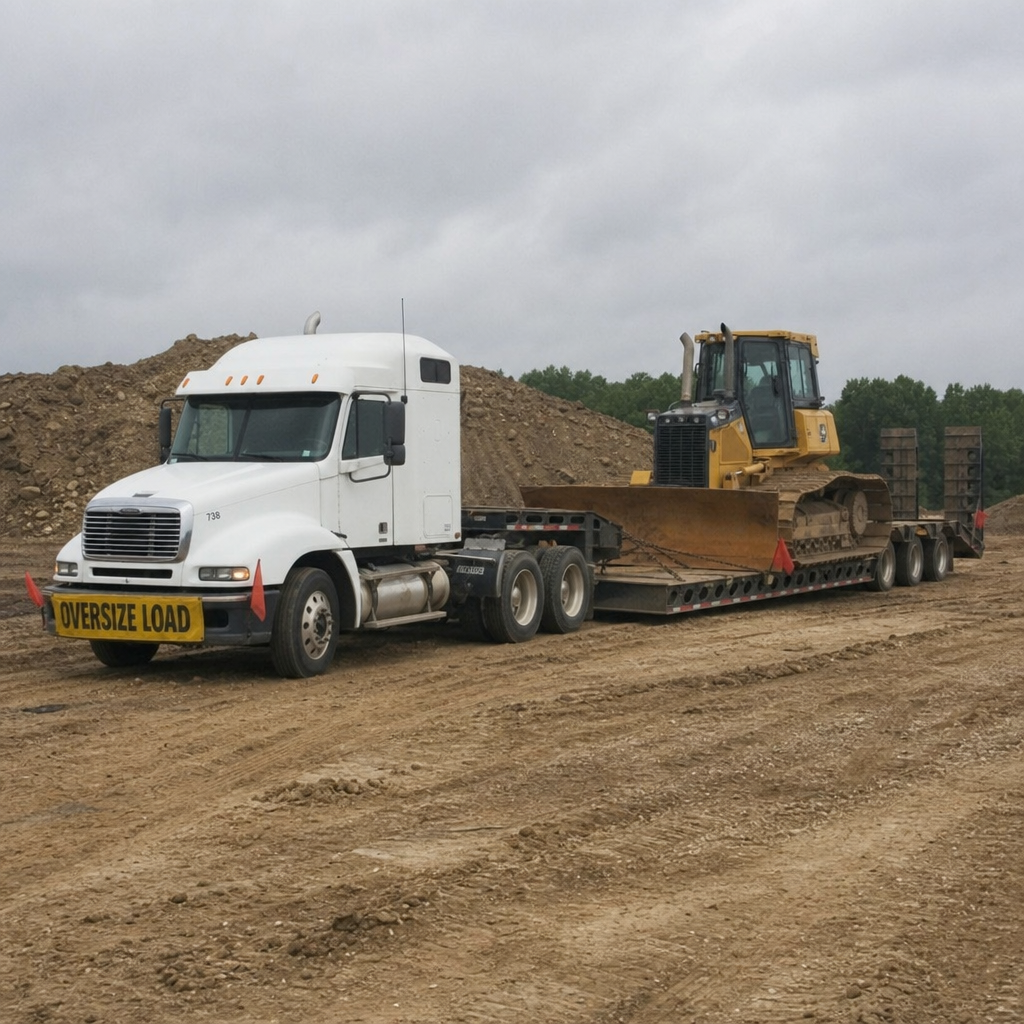
RGN trailers are the workhorses of heavy hauling: built to move tall, heavy, and awkward equipment while keeping overall height as low and road-legal as possible. If you’ve ever asked what an RGN trailer (or what is an RGN trailer) is, the short answer is this: an RGN trailer is a removable gooseneck lowboy-style trailer that can detach at the front so machines can be driven or winched onto the deck.
That single feature changes how you load, what you can haul, and how efficiently you can do it.
What Is an RGN Trailer? (Meaning and Why It Matters)
Let’s clear up the RGN trailer meaning in practical terms.
What is a RGN trailer?
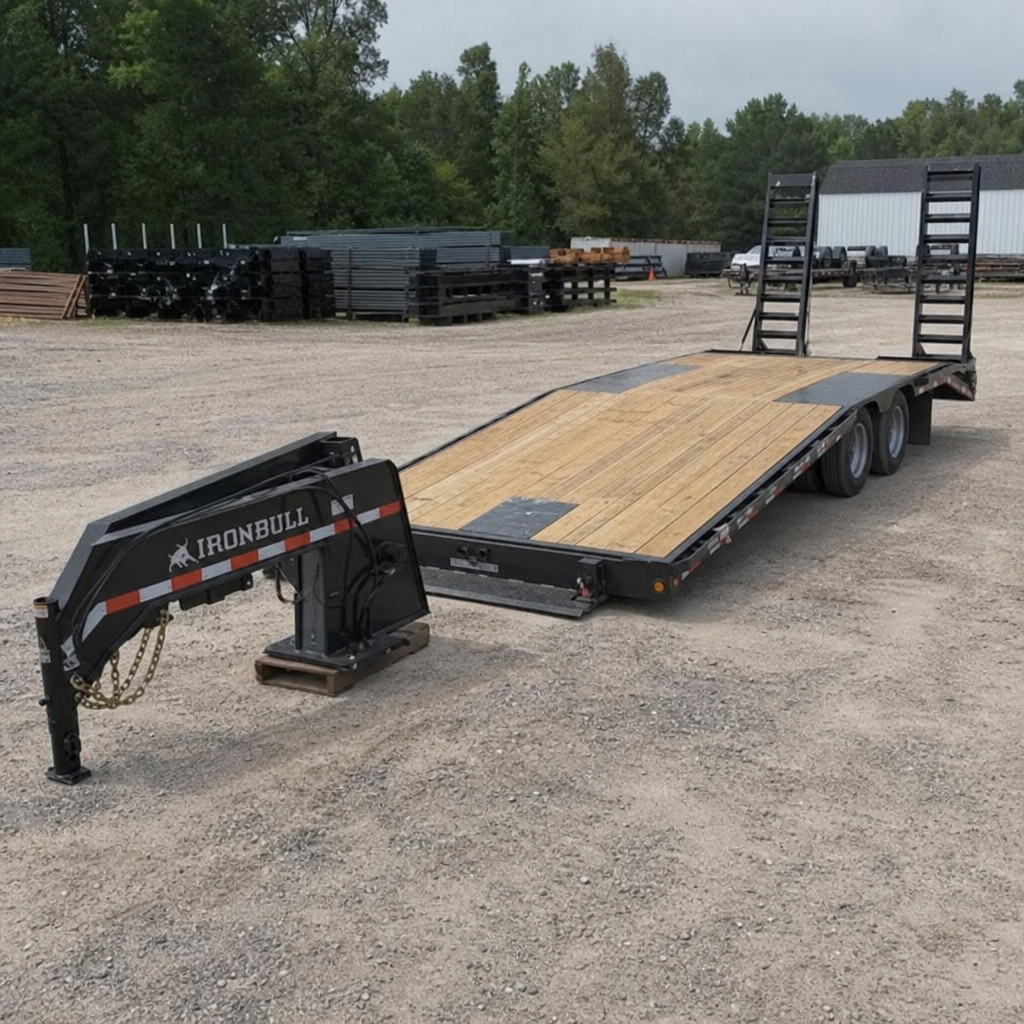
A removable gooseneck trailer (often called RGN) is a heavy equipment transport trailer with a front “neck” that can detach from the deck. Once detached, the deck typically drops to the ground (or near-ground), creating a shallow loading angle.
What is an RGN trailer used for?
Think: machines that are too tall for a flatbed or too heavy for lighter decks. Common removable gooseneck lowboy uses include:
- Excavators, dozers, wheel loaders
- Pavers, rollers, milling machines
- Telehandlers, boom lifts, scissor lifts
- Cranes (components), large generators, industrial tanks
This is why many fleets consider an RGN the best trailer for heavy equipment hauling when height and weight get serious.
RGN Trailer Types: Choosing the Right Configuration
There are multiple RGN trailer types, and the “right” one depends on how you load, your legal route weights, and the equipment mix you haul.
Common RGN trailer types
- Fixed-deck RGN: Strong, simple deck; great for consistent loads.
- Double-drop RGN: Lower well/deck area for extra height-sensitive freight.
- Extendable RGN: Adjustable length for long components (boom sections, pipe).
- Hydraulic detachable neck vs mechanical neck: Hydraulic is faster and easier; mechanical can be simpler and lower-cost.
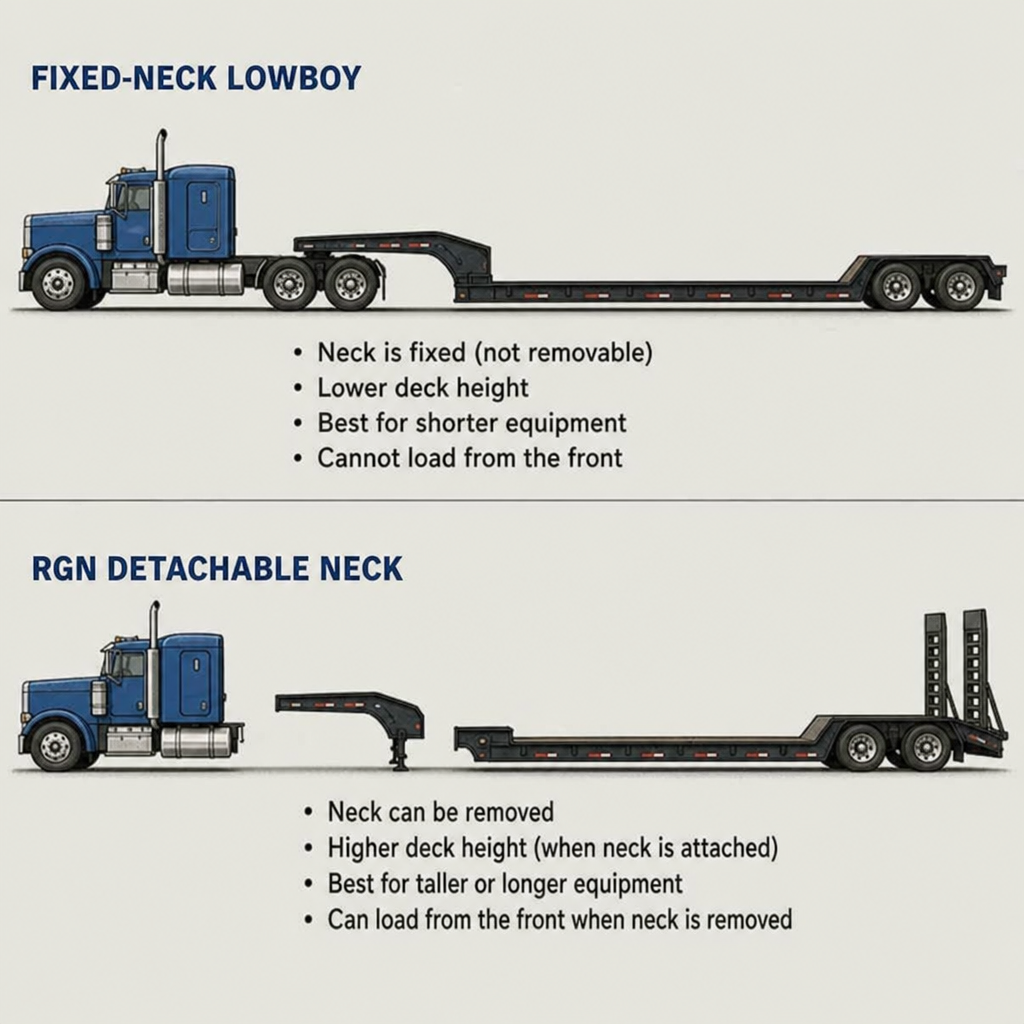
Removable gooseneck vs fixed neck
Comparing removable gooseneck vs fixed neck (and lowboy vs removable gooseneck trailer):
- RGN (detachable neck): Easier drive-on loading; excellent for tracked machines.
- Fixed-neck lowboy: Often lighter and cheaper; requires ramps and more setup.
If your daily reality includes frequent loading and mixed operators, the detachable neck advantage is hard to ignore.
Step Deck Trailer vs RGN: When a Step Deck Wins (and When It Doesn’t)
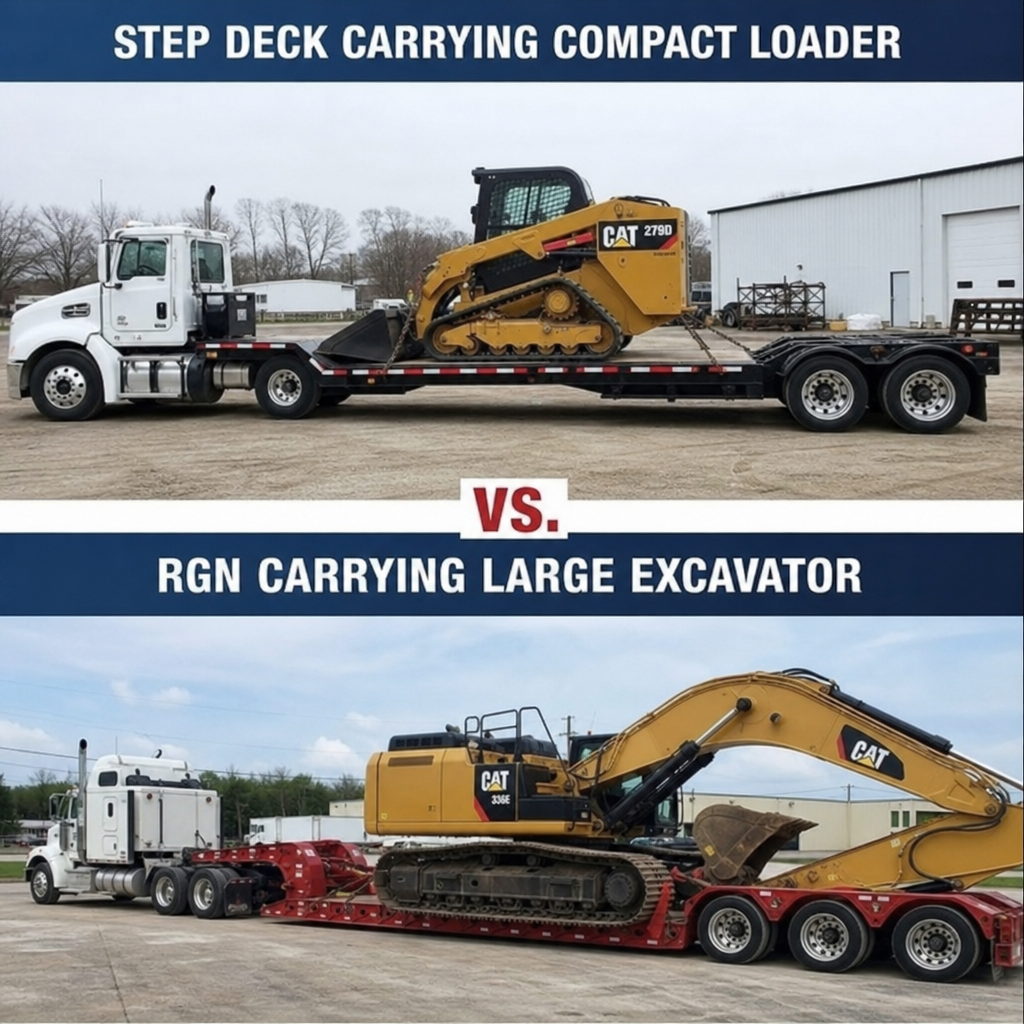
A common question is step deck trailer vs RGN. They’re both used for equipment, but they solve different problems.
Step deck trailer vs RGN—key differences
- Deck height: RGN/lowboy decks are typically lower, improving clearance for tall equipment.
- Loading method: RGNs allow drive-on from the front; step decks usually need ramps.
- Capacity and structure: RGNs are built for heavier point loads (tracks/axles).
A step deck can be great for lighter machines and palletized freight—but when you need low deck height, high capacity, and easy loading, RGN usually leads.
RGN Trailer Specs: What to Look At Before You Buy or Rent
Shopping without understanding RGN trailer specs is a fast way to end up with a trailer that’s “almost right”—and almost always expensive.
RGN trailer dimensions and deck setup
When people ask rgn trailer dimensions, they’re usually asking about:
- Overall length (deck + rear)
- Well/deck length (usable load space)
- Loaded deck height (critical for tall machines)
- Width (often 8’6″ legal; wider with permits)
Because manufacturers and models vary, treat rgn trailer specs as a checklist, not a single standard.
Trailer deck height and ground clearance
Two numbers affect both legality and jobsite practicality:
- Trailer deck height and ground clearance: Lower deck heights help keep loads under height limits, but ground clearance and approach angle still matter on uneven sites.
- Rear ground clearance: Important for loading and avoiding tail drag entering yards.
Trailer axle configuration and weight limits
Your trailer axle configuration and weight limits drive route options and permitting:
- 2-axle, 3-axle, and 4-axle trailers are common in heavy hauling.
- More axles generally increase legal carrying capacity and help distribute weight, but can reduce maneuverability and increase tire/maintenance costs.
If your work includes frequent multi-state travel, build specs around the routes you actually run—not just max capacity on paper.
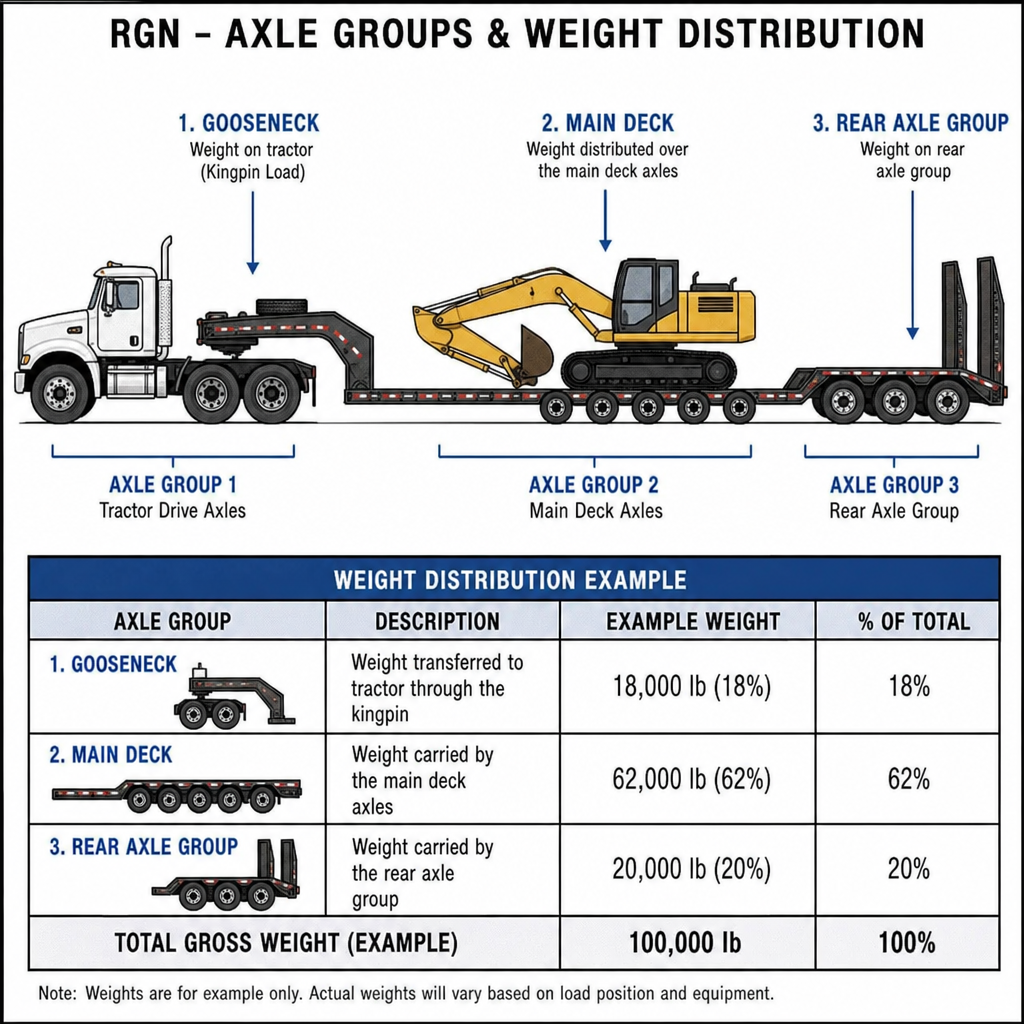
Heavy Equipment Transport Trailer Capacity: Matching Trailer to Machine
A frequent mistake is focusing only on “deck rating” and ignoring concentrated loads.
Heavy equipment transport trailer capacity considerations
To evaluate heavy equipment transport trailer capacity, consider:
- Gross payload capacity (legal and structural)
- Point loads (track pressure, axle loads)
- Center of gravity and load placement
- Deck strength and crossmember spacing
A trailer that can “handle the weight” may still be a poor match if the machine’s track or axle loads are extreme.
Best trailer for heavy equipment hauling: a practical rule of thumb
If you routinely haul:
- Tall machines → prioritize low deck height (RGN/lowboy style)
- Heavy tracked machines → prioritize structural rating + easy drive-on loading
- Mixed freight → consider an RGN that can also accept ramps and accessories
How Does a Removable Gooseneck Work?
Understanding how a removable gooseneck works helps operators stay safe and helps owners reduce downtime.
Detachable gooseneck trailer parts (know the components)
Key detachable gooseneck trailer parts typically include:
- Gooseneck frame and kingpin area
- Hydraulic cylinders (lift/tilt depending on design)
- Locking mechanism/pins (neck-to-deck connection)
- Hydraulic power source (tractor hydraulics or self-contained power pack)
- Electrical and air line connections
Different brands handle the sequence differently, so always follow the manufacturer’s procedures.
Gooseneck Detach Procedure Steps (High-Level Operator Workflow)
Exact steps vary, but these gooseneck detach procedure steps reflect the typical safe sequence:
- Park on firm, level ground and chock if required.
- Lower landing gear/supports (if equipped) and relieve tension.
- Disconnect electrical/air lines as designed for the neck.
- Activate hydraulic neck lift/tilt to transfer weight and align.
- Release locking pins/latches securing the neck to the deck.
- Slowly pull the tractor forward while the deck settles for loading.
- Verify the deck is stable before driving equipment on.
Reverse the process to reattach, confirming pin engagement and performing a tug test/check.
Load Securement for Construction Equipment (What Inspectors Look For)
Proper load securement for construction equipment prevents forward, rearward, lateral, and vertical movement—especially under hard braking and cornering.
Practical securement tips
- Use rated chains/straps and binders sized for the machine weight.
- Secure at approved tie-down points (not hydraulic lines, steps, or guards).
- For tracked equipment, secure at multiple corners and prevent track walk.
- Add edge protection where needed to prevent cutting straps.
- Re-check tension after the first few miles and after rough road segments.
Also plan for attachments: buckets, hammers, and blades often need independent securement.
Oversize Load Permits and Regulations: Height, Weight, and Route Reality
With RGNs, the goal is often to avoid oversize loads; yet many still require paperwork. Oversize load permits and regulations vary by state and can change based on:
- Total height, width, and length
- Axle weights and axle spacing
- Travel time restrictions, escorts, and signage
- Approved routes (bridges, construction zones, seasonal limits)
Build a habit of measuring the machine’s transport height with the boom positioned as hauled, and confirm legal limits for each state on the route.
Hydraulic Gooseneck Operation Troubleshooting (Common Issues)
When a detachable neck doesn’t behave, it can stop a whole day’s work. Common hydraulic gooseneck operation troubleshooting checks include:
- Low hydraulic fluid or aeration (foaming)
- Leaking fittings/hoses or damaged quick couplers
- Contaminated fluid causing sticky valves
- Weak pump output (tractor hydraulic issue or power pack problem)
- Bent pins/misalignment preventing full lock engagement
If the neck won’t seat or pins won’t line up, stop and correct alignment—forcing it often damages locking hardware.
Removable Gooseneck Maintenance Checklist (Keep It Reliable)
A simple removable gooseneck maintenance checklist prevents most surprise failures:
- Inspect locking pins, bushings, and wear surfaces
- Check hydraulic hoses, fittings, and cylinder seals
- Verify couplers are clean and caps are used
- Grease manufacturer-specified points
- Inspect deck boards/steel deck, crossmembers, and weld areas
- Check tires, brakes, lights, and air system leaks
- Review torque specs on critical fasteners
- Document inspections for compliance and resale value
A few minutes per week is cheaper than a neck failure under load.
Where to Explore RGN Options
If you’re comparing builds, capacities, and configurations, you can browse RGN models here: RGN trailers.
Takeaway: Is an RGN Trailer Right for Your Operation?
An RGN shines when you need low height, high capacity, and efficient drive-on loading—especially for tracked and tall construction equipment. Use the ideas above to compare RGN trailer specs, confirm RGN trailer dimensions, evaluate trailer axle configuration and weight limits, and build a repeatable process for load securement for construction equipment and compliance with oversize load permits and regulations. With the right setup and a disciplined maintenance routine, a removable gooseneck can become the most versatile tool in your heavy-haul lineup.


