
When you run a trailer fleet, the right trailer choice matters. The trailer you pick changes the loads you can haul, the way you load freight, and how much weight you can carry. For many fleets, the real choice comes down to a regular step deck or a low profile step deck, sometimes called a low pro step deck.
Both step decks do useful work, but they fit different jobs. A low profile step deck trailer helps with tall freight and ramp loading. A regular model gives you more ground clearance and works better on rough roads.
What Is a Step Deck Trailer?
A step deck trailer, also called a drop deck, has an upper deck and a lower deck. The lower deck sits below the trailer frame, so you can carry taller freight without exceeding height limits. A 53 ft step deck is one of the most common sizes, and many step decks in that length are used in freight, farming, and construction.
What Makes a Low Profile Step Deck Different?
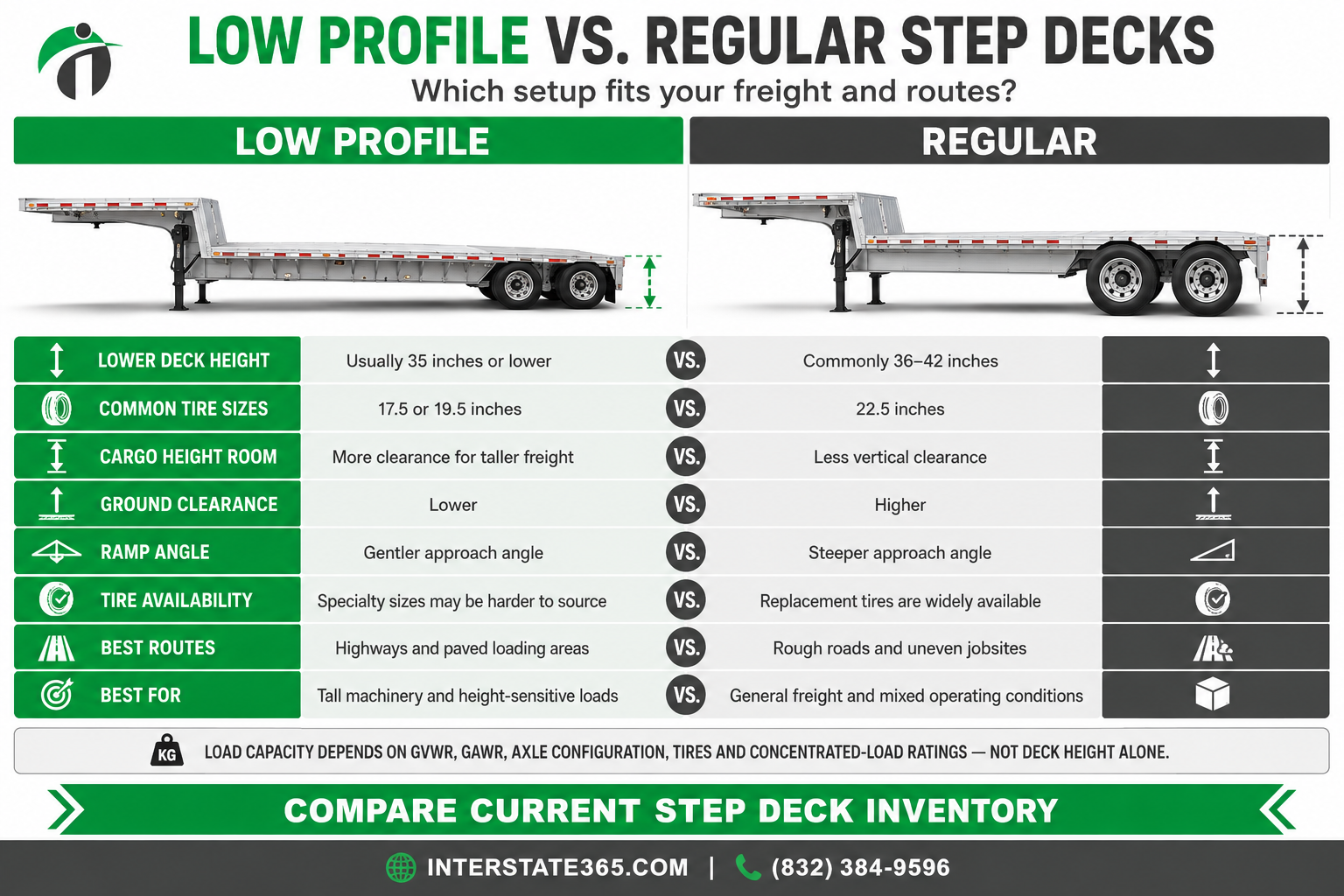
The main difference is deck height. A standard step deck often sits 36 to 42 inches off the ground and usually runs on 22.5-inch tires. A low profile step deck, or low deck trailer, uses smaller 17.5-inch or 19.5-inch tires to bring the deck down to about 35 inches or less. That lower ride height can help when a load must stay under bridge limits or legal height rules.
Some builders add a leveling valve, which can lower the deck even more. That gives the trailer more room for tall machines and helps keep loads under legal limits.
Benefits of a Low Profile Step Deck
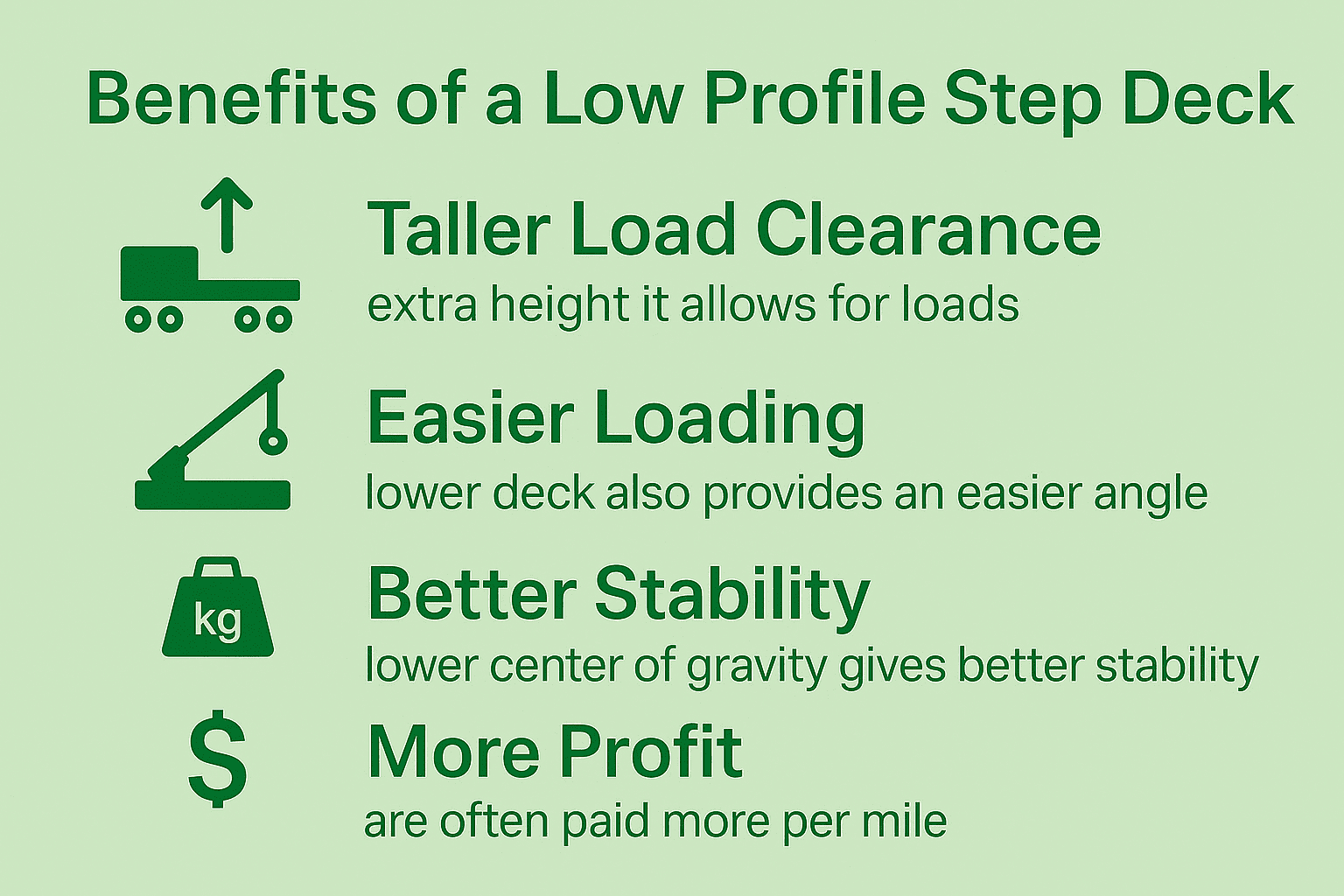
Taller Load Clearance
A lower deck gives you more height clearance. That makes a low profile step deck a good fit for equipment, machinery, and other tall freight. In many cases, it can save time and cut permit needs.
Easier Loading
If your work depends on step deck ramps, the lower deck helps a lot. A step deck with ramps gives you a smoother angle for loading and unloading light machines, forklifts, and similar freight. That can make daily work safer and faster.
Better Stability
A lower deck also lowers the center of gravity. That helps the trailer stay steady in turns and in windy conditions. When you haul tall freight, that extra stability can reduce risk.
More Revenue
Low profile trailers can also reach some loads that pay more, such as freight that would otherwise need a lowboy or RGN. That can make a low deck trailer a strong business tool, not just a hauling tool.
Things to Consider Before You Buy
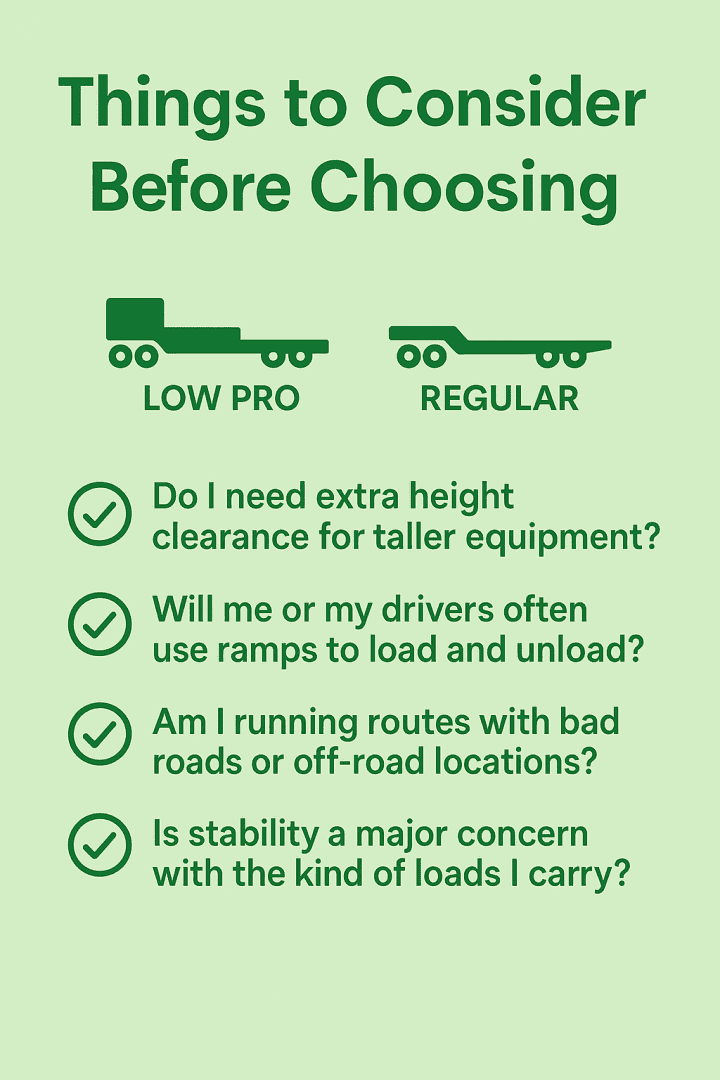
If you are comparing a step deck for sale, a step deck trailer for sale, or step deck trailer leasing, look at more than price. Ask these questions:
- Do I need extra height clearance?
- Do I load with ramps often?
- Are my routes smooth or rough?
- Do I haul more tall freight or more heavy freight?
- Do my drivers have the skill needed for a low profile unit?
The answers usually point to the right setup. Some fleets use both types so they can cover more jobs with less compromise.
Making the Best Decision
Choose a low profile step deck if your loads are tall, your loading angle matters, and your freight often needs more clearance. Choose a regular step deck if your routes are rough, your loads are very heavy, or you need more ground clearance.
Many fleets also look at step deck trailer leasing when they want flexibility, while others buy a step deck for sale when they want long-term value. A smart choice now can save time and money later. The best pick depends on your routes, your freight, and your business plan.
Q&A
Question: What is the main difference between a low profile step deck and a regular step deck?
Short answer: The main difference is deck height. A regular step deck usually rides higher and uses 22.5-inch tires. A low profile model uses smaller tires to lower the deck and give you more usable height.
Question: When is a low profile step deck the better choice?
Short answer: It is often the better choice when you haul tall equipment, use step deck ramps often, or want more stability from a lower center of gravity.
Question: What are the main downsides of a low profile step deck?
Short answer: Smaller tires can wear faster, run hotter, and be harder to replace on the road. The trailer can also need a more skilled driver, especially on rough routes.
Question: Why might a regular step deck be better for some fleets?
Short answer: A regular step deck has more ground clearance, which helps on rough roads and at remote job sites. It can also be a better fit for some heavy loads.
Question: Should a fleet choose only one type of step deck trailer?
Short answer: Not always. Some fleets run both step decks so they can handle tall freight, heavy freight, and rough routes without giving up flexibility.


